Choosing roof ventilation fans for apartments requires balancing airflow, noise, installation limits, and energy use. The right fan can help move trapped heat and stale air from attic-adjacent spaces, garages, utility areas, or other approved locations.
This roundup compares 10 options across powered, solar, gable-mount, and wall-mounted designs so you can narrow your choice by coverage, controls, installation style, and budget.
Best 10 Roof Ventilation Fans for Apartments Picks for 2026
High-Capacity Pick

- Moves up to 1,500 CFM
- Covers attics up to 2,800 sq. ft.
- Includes thermostat and built-in screen
Best For: Large attic spaces with suitable electric wiring
Flexible Solar-Electric Pick

- Runs from solar power or AC adapter
- Offers up to 320 CFM and four speeds
- Includes adjustable thermostat control
Best For: Solar-assisted ventilation with continuous backup power
Wall-Ventilation Alternative

- Delivers up to 960 CFM
- Includes variable speed and thermostat controls
- UL/cUL listed galvanized-steel design
Best For: Approved wall openings in garages, workshops, or utility areas
Solar-Only Value Pick

- Runs from a 25W solar panel
- Reaches up to 240 CFM in sun
- Includes mesh protection and corrosion-resistant cover
Best For: Sunny spaces needing daytime-only ventilation
Best Gable-Mount Pick
High-Output Automatic Attic Ventilator

- 2,339 CFM airflow for large attic spaces
- Adjustable built-in thermostat
- Galvanized steel gable-mount housing
Best For: Large attics with a compatible gable opening
Best Solar Option
40W Controller-Free Roof Exhaust Fan

- Solar-powered operation up to 2,000 CFM
- Pre-connected for simpler setup
- Weather-resistant metal construction
Best For: Sunny roof installations without convenient electrical wiring
Best Smart-Controlled Pick
Variable-Speed Shutter Exhaust Fan

- 10 speeds with temperature and humidity triggers
- Automatic rain-blocking shutter
- 1,500 CFM airflow with EC motor
Best For: Spaces needing responsive, adjustable ventilation
Best for Proven Roof-Mount Performance
1000 CFM Master Flow Attic Fan

- 1,000 CFM capacity for attics up to 1,600 sq. ft.
- Thermostat-controlled, hard-wired electric operation
- Galvanized steel housing; not for tile roofs
Best For: Permanent roof-mount attic ventilation where electrical installation is available
Best for Flexible DIY Ventilation
2500 CFM Adjustable Exhaust Fan
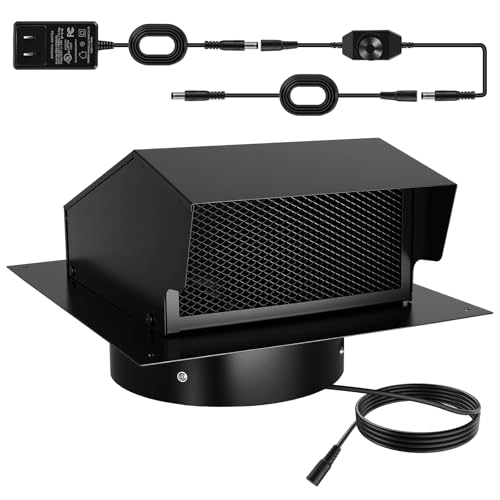
- Up to 2,500 CFM with speed control
- Plug-and-play cords and extension included
- Weather-resistant design for multiple locations
Best For: Garages, workshops, sheds, and compatible roof or wall installations
Best for Hybrid Energy Use
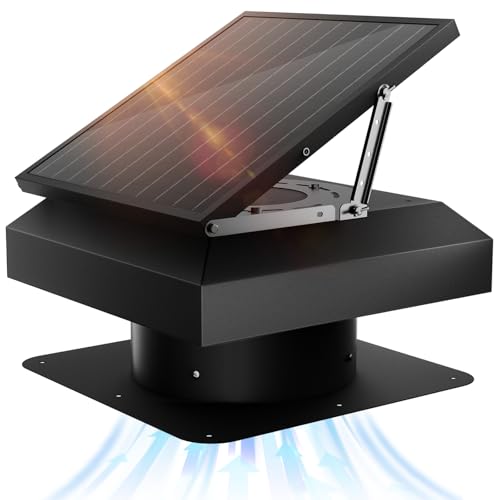
- Solar and AC power automatically switch when connected
- 2,000 CFM capacity with four speed settings
- Thermostat range of 68°F to 113°F
Best For: Attic ventilation with solar assistance and AC backup
High-Capacity Pick – Master Flow 1500 CFM Roof Fan
For apartments with an accessible attic or roof cavity, this Master Flow model is a high-output option among roof ventilation fans for apartments. Its electric motor moves up to 1,500 CFM and includes a hard-wired thermostat controller for temperature-based operation.
Best For: Larger attic spaces up to 2,800 square feet where strong, consistent electric ventilation is available.
Pros:
- High airflow capacity of up to 1,500 CFM.
- Designed for attic areas up to 2,800 square feet.
- Galvanized steel construction with a built-in screen.
- Includes a thermostat controller and weather-resistant design.
Cons:
- Requires hard-wired 120-volt electrical installation.
- Not compatible with tile roofing systems.
- Roof-mount installation may require professional approval or assistance in an apartment setting.
This is the strongest airflow choice in the group, but its roof compatibility and electrical installation requirements should be confirmed before purchase. Apartment residents should also obtain property-management approval for any roof work.
Flexible Solar-Electric Pick – Hon&Guan 25W Smart Fan
The Hon&Guan combines a 25W waterproof solar panel with an AC adapter, making it a flexible choice among roof ventilation fans for apartments. It can use solar power during the day while maintaining operation through the adapter when sunlight is limited.
Best For: Users who want solar-assisted ventilation with dependable AC operation at night or during cloudy weather.
Pros:
- Offers solar and AC power options for 24/7 operation.
- Provides adjustable airflow up to 320 CFM with four performance speeds.
- Includes smart temperature control adjustable from 68 to 113°F.
- Solar panel angle can be adjusted during installation.
Cons:
- Its 320 CFM maximum airflow is lower than the highest-capacity electric model here.
- Requires suitable roof access and installation for the removable 8-inch vent.
- Solar performance depends on available sunlight when operating in solar mode.
This model stands out for flexibility: solar operation can help reduce electricity use, while the AC adapter avoids the complete dependence on sunlight found with solar-only fans. Verify roof permissions and panel placement before installation.
Wall-Ventilation Alternative – iLiving 12-Inch Exhaust Fan
Although it is wall-mounted rather than roof-mounted, the iLiving 12-inch fan can be useful where an apartment has an approved exterior wall opening. It delivers 960 CFM and combines variable speed adjustment with thermostat control for targeted exhaust ventilation.
Best For: Garages, workshops, utility areas, or other apartment spaces with a suitable wall-mounted exhaust location.
Pros:
- Moves up to 960 CFM and covers up to 1,400 square feet.
- Includes variable speed and temperature controls.
- Galvanized steel frame and aluminum shutters resist corrosion.
- UL/cUL listed with a permanently lubricated motor.
Cons:
- Wall-mounted design is not a direct roof-fan replacement.
- Rated noise level is below 65 dB, which may be noticeable in living areas.
- Requires an appropriate wall opening and a standard electrical outlet.
Choose this fan when wall exhaust is more practical than roof penetration. Its controls and substantial airflow are useful, but the installation location makes it better suited to service spaces than bedrooms or shared apartment interiors.
Solar-Only Value Pick – 25W 8-Inch Roof Vent Fan
This 25W solar-only unit is a straightforward option for roof ventilation fans for apartments where daytime ventilation is the priority. Its 8-inch removable roof vent can reach up to 240 CFM in sunny conditions, while the galvanized-steel cover and aluminum mesh help protect the assembly.
Best For: Sunny locations such as attics, sunrooms, garages, or similar spaces where daytime solar ventilation is sufficient.
Pros:
- Uses a 25W solar panel without routine grid power for operation.
- Reaches up to 240 CFM in strong sunlight.
- Galvanized-steel cover has a corrosion-resistant powder coating.
- Aluminum mesh helps keep small animals and birds out.
Cons:
- Does not store electricity and may slow or stop in weak sunlight, clouds, or shade.
- Lower airflow than the electric and solar-AC models in this roundup.
- Requires direct roof exposure and suitable installation space.
This is the simplest solar choice, but its performance is strongly weather-dependent. It makes the most sense for a roof area with unobstructed sun and a ventilation need concentrated during daylight hours.
Best Gable-Mount Pick – High-Output Automatic Attic Ventilator
For apartments or attached homes with a suitable gable opening, the iLiving ILG8G14-12T is a powerful electric option among roof ventilation fans for apartments. Its built-in adjustable thermostat automatically responds to attic temperature, while the 2,339 CFM rating is designed for spaces up to 3,400 square feet.
Best For: Large attic spaces with an accessible gable opening and existing hardwired electrical service.
Pros:
- Moves up to 2,339 CFM and is designed to cool up to 3,400 square feet.
- Adjustable built-in thermostat supports automatic operation.
- Galvanized steel housing and included mounting brackets simplify installation.
- ETL-listed construction with a 14-inch steel propeller.
Cons:
- Gable-mount design may not suit apartments without a compatible opening.
- Hardwired installation is less convenient than plug-in or solar alternatives.
- Its listed 63 dB noise level may be noticeable in nearby living areas.
This model stands out when high airflow and thermostat-based control matter most. Before buying, confirm that your building allows the installation and that the gable structure can accommodate the fan.
Best Solar Option – 40W Controller-Free Roof Exhaust Fan
The 40W Solar Attic Fan is a practical choice among roof ventilation fans for apartments where avoiding electrical wiring is a priority. Its pre-connected solar panel and fan operate automatically from sunrise to dusk, providing up to 2,000 CFM for attics, garages, sheds, and similar spaces.
Best For: Roof or attic installations with strong sun exposure and a preference for controller-free, DIY-oriented operation.
Pros:
- Solar-powered design avoids standard electrical wiring.
- Delivers up to 2,000 CFM from a 40W panel and 12-inch metal blades.
- Pre-connected components support simpler installation.
- Metal housing, copper motor, and IP65 weather-resistant design are suited to outdoor use.
Cons:
- Performance depends on available sunlight.
- It operates automatically at sunrise and dusk without a thermostat or controller.
- At 25.4 pounds, the roof-mounted unit may require careful structural planning.
This fan is appealing for buildings where a low-wiring setup is desirable, but apartment owners should verify roof access, mounting permission, and sunlight conditions before installation.
Best Smart-Controlled Pick – Variable-Speed Shutter Exhaust Fan
The VEVOR 12-inch Exhaust Fan offers flexible control for apartment-adjacent attic, utility, or garage spaces. Its temperature and humidity controller can adjust among 10 speeds, while the automatic shutter closes when the fan is off to help block rain and small debris.
Best For: Spaces where automatic temperature and humidity responses, variable speed, and weather protection are more useful than maximum airflow.
Pros:
- Provides up to 1,500 CFM with 10 selectable speed settings.
- Temperature and humidity triggers support automated ventilation.
- Automatic shutters open during operation and close when powered off.
- All-metal construction and an EC motor are designed for durable, efficient operation.
Cons:
- Its 1,500 CFM capacity is lower than the other listed fans.
- Wall-mount installation may not work for every apartment layout.
- The listed 67 dB noise level may be noticeable.
Choose this model when precise, responsive ventilation is the priority. Confirm the required electrical setup and wall opening before purchase, especially since the listed voltage is 240 volts.
Best for Proven Roof-Mount Performance – 1000 CFM Master Flow Attic Fan
For apartments or other properties with a suitable attic cavity, this roof-mounted Master Flow fan is a conventional electric option among roof ventilation fans for apartments. Its thermostat-controlled 1,000 CFM exhaust is designed for attic spaces up to 1,600 square feet and helps remove hot, humid air.
Best For: Buyers seeking a durable, hard-wired roof fan for a properly vented attic up to 1,600 square feet.
Pros:
- Moves up to 1,000 CFM and includes a thermostat controller.
- Galvanized steel construction and a heavy-duty internal screen help support durability and pest resistance.
- Uses up to 55% less electricity than typical competitor vents, according to the supplied product notes.
- UL Listed and approved for several regional building and product-control requirements.
Cons:
- Requires hard-wired electrical installation.
- Not compatible with tile roofing systems.
- Its roof-mount design may require professional installation, particularly on an apartment building.
The Master Flow is the most straightforward choice here for a permanent attic installation where roof compatibility, electrical access, and building approval are already established. Verify the roof slope and obtain permission before installation.
Best for Flexible DIY Ventilation – 2500 CFM Adjustable Exhaust Fan
This high-output fan offers a flexible alternative for garages, workshops, sheds, and suitable attic areas when comparing roof ventilation fans for apartments. It provides up to 2,500 CFM, includes speed control, and comes with a power cord and extension cord rather than requiring a hard-wired connection.
Best For: Ventilating accessory spaces or compatible roof, wall, or gable locations where adjustable airflow and plug-in installation are priorities.
Pros:
- Up to 2,500 CFM of airflow with adjustable speed control.
- Plug-and-play setup includes a 16.5-foot power cord, adapter, and extension cord.
- Galvanized steel and aluminum construction, an IP68 waterproof motor, and an aluminum mesh guard are designed for outdoor exposure.
- Listed operating noise is as low as about 40–45 decibels in the supplied notes.
Cons:
- The listed 230-volt specification should be confirmed against the available electrical supply before purchase.
- Installation still requires sealing gaps to help prevent water leakage.
- It is described as wall-mounted, so roof installation may require adapting the mounting arrangement.
With strong airflow and speed adjustment, this is a versatile option for nonliving areas and outbuildings. Apartment residents should confirm voltage, mounting compatibility, exterior permissions, and weather-sealing requirements before using it on a roof.
Best for Hybrid Energy Use – 2000 CFM Solar Attic Fan
This solar-assisted model stands out among roof ventilation fans for apartments by combining a 40-watt solar panel with AC backup. It delivers up to 2,000 CFM, offers four speed settings, and can use a thermostat to start the fan at a selected temperature between 68°F and 113°F.
Best For: Buyers who want solar-powered attic ventilation with household-power backup for continuous operation.
Pros:
- Provides up to 2,000 CFM and is designed for spaces up to 2,500 square feet.
- Automatically switches between solar and AC power when the adapter is connected.
- Adjustable solar-panel positioning and four fan speeds help optimize operation.
- Includes an MPPT controller, temperature probe, AC/DC adapter, mounting bracket, and screw kit.
Cons:
- There is no battery backup, so nighttime or cloudy-weather operation depends on household power.
- The solar panel and fan require cable routing and suitable mounting space.
- At 26.5 pounds, it may be less convenient to install than smaller fan units.
The hybrid power system makes this a compelling choice where reducing daytime grid use matters but uninterrupted ventilation is still desired. Confirm roof or wall mounting permissions and access to an AC outlet before installation.
How We Picked These Roof Ventilation Fans for Apartments
We selected models across several ventilation formats rather than treating every fan as interchangeable. The lineup includes powered roof and gable fans, solar exhaust fans, and wall-mounted units with automatic shutters or adjustable controls. We compared stated airflow, coverage claims, power source, thermostat or humidity controls, installation flexibility, and the type of space each fan is designed to ventilate.
Because apartment installations may involve shared roofs, leases, building codes, or limited access, specifications should be treated as a starting point. Confirm that roof penetrations, electrical connections, exterior mounting, and noise levels are acceptable before buying.
Quick Comparison
| Best For | Look For | Standout Features |
|---|---|---|
| Large attic-adjacent spaces | Higher CFM and broad coverage | Powered roof or gable fans |
| Lower operating costs | Solar panels and automatic operation | Solar attic fans |
| Flexible indoor installation | Wall mounting and variable speed | Shutter exhaust fans |
| Hands-off temperature control | Adjustable thermostat | Thermostat-equipped models |
| Small utility spaces | Moderate airflow and compact sizing | 10-inch or 12-inch fans |
Key Buying Factors for Roof Ventilation Fans for Apartments
Airflow and Room Size
Higher CFM generally moves more air, but the best rating depends on the space volume, available intake ventilation, duct or grille restrictions, and heat load. Do not choose solely by the largest advertised coverage number. A fan cannot exhaust effectively if replacement air has nowhere to enter.
Installation and Building Approval
Roof-mounted models may require flashing, weatherproofing, wiring, and professional installation. Wall and gable units can be less invasive in some layouts, but they still need a suitable opening and safe exterior discharge. Apartment residents should obtain landlord, condominium, or property-management approval before modifying shared structures.
Power Source and Controls
Solar models reduce grid power use and can be useful where direct sunlight reaches the panel, though performance varies with weather and panel placement. Electric fans offer more predictable operation. Thermostats, humidity sensors, timers, and variable-speed controls can improve comfort and reduce unnecessary runtime.
Noise, Durability, and Weather Exposure
Check motor construction, housing material, shutter design, and weather resistance. A fan installed near a living area should have a manageable noise profile. Galvanized steel and heavy-duty motor components may better suit exposed installations, but correct sealing and maintenance remain essential.
Who Should Buy Which Roof Ventilation Fans for Apartments?
Choose a Powered Roof or Gable Fan
These are suitable for buyers who need consistent airflow and have an approved roof or gable installation point with access to electrical power. Higher-CFM models are better suited to larger attic-adjacent areas.
Choose a Solar Attic Fan
Solar units fit buyers prioritizing lower operating costs or off-grid daytime ventilation. They work best where the panel receives strong, unobstructed sunlight and nighttime cooling is not the main requirement.
Choose a Wall-Mounted Shutter Fan
Wall-mounted options are practical for garages, workshops, utility rooms, and other spaces with an existing exterior opening. Look for automatic shutters and variable-speed controls when you want easier operation and better airflow adjustment.
Choose a Compact 10-Inch Fan
Smaller fans make sense for sheds, greenhouses, small storage areas, or localized ventilation rather than whole-home cooling. Match the fan to the actual room and confirm that the installation location provides adequate intake and exhaust clearance.