Apartment living can make water filtration tricky: you may have limited counter space, little room under the sink, or a lease that restricts plumbing changes. Reverse osmosis (RO) systems offer several ways around those constraints, from refillable countertop units to compact under-sink models.
The best fit depends less on the biggest feature list than on where the system will go, how much water you use, and whether installation is allowed.
Best 10 Reverse Osmosis Systems for Apartments Picks for 2026
Best for Water Efficiency

- Stated 5:1 pure-to-drain ratio
- 5L feed and 2L purified-water tanks
- No plumbing or drilling required
Best For: Water-conscious renters with adequate counter clearance
Best for Fridge-Ready Water

- Autofill 40 oz glass pitcher
- Mineral filter for balanced taste
- 6.1-inch-wide countertop footprint
Best For: One or two people who prefer a refrigerated pitcher
Best for Two-Pitcher Convenience

- Two included autofill pitchers
- Built-in TDS and filter-life indicators
- Listed 3:1 pure-to-drain ratio
Best For: Households that want a spare pitcher and on-device readings
Best for a Glass Carafe

- Borosilicate glass carafe
- Five-stage RO with remineralization
- Filter-life and water-quality display
Best For: Renters who prefer glass serving and mineral-added water
Best for Threaded Faucets
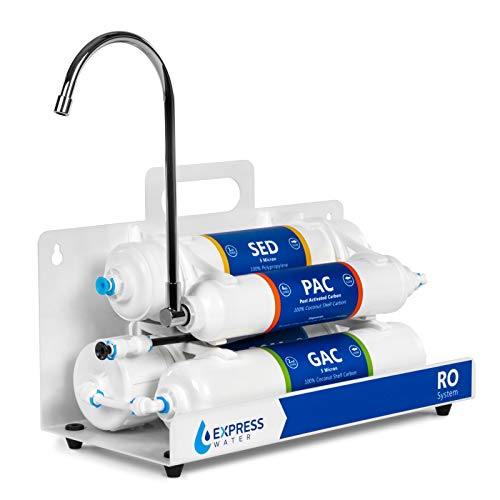
- Connects to a threaded faucet aerator
- Four-stage, water-pressure-powered filtration
- Produces about 0.5–1 gallon per hour
Best For: Renters with compatible faucets and modest daily water needs
Best for Compact Auto-Fill
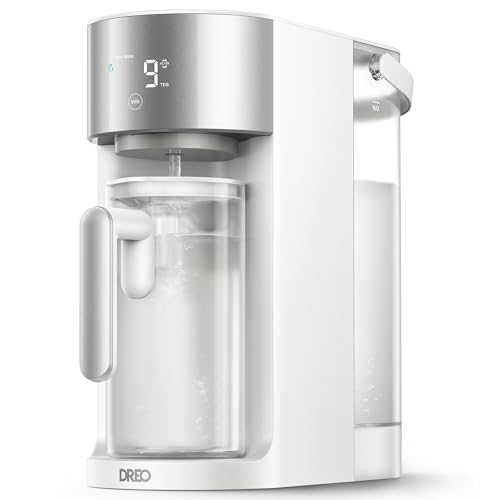
- Slim, installation-free countertop design
- Auto-fill 1.1-liter pitcher
- TDS display and filter reminders
Best For: One or two people who want easy pitcher refills
Best for Comfort
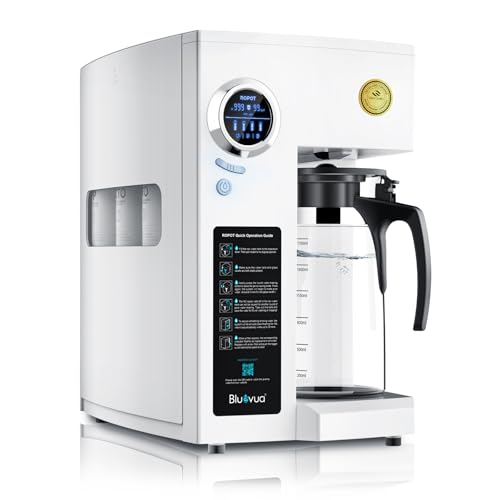
- No plumbing or faucet hookup
- Borosilicate glass carafe
- RO, UV, and remineralization stages
Best For: Renters who prefer a glass serving carafe
Best Portable Pick
Universal 5-Stage Countertop RO with DI

- Faucet connection needs no plumber
- Portable 5-pound unit
- About 3 gallons per hour
Best For: Renters avoiding under-sink installation
Best Compact Under-Sink Pick

- Tankless 400 GPD design
- Stated 1:1 pure-to-drain ratio
- Requires outlet and drilling
Best For: Households permitted to modify under-sink plumbing
Best High-Flow Pick
Waterdrop G3P600 with Smart Faucet

- Rated 600 GPD output
- Smart TDS and filter-life display
- Requires under-sink power
Best For: Households prioritizing flow and filter monitoring
Best for Water Efficiency – UV Countertop RO System
Among reverse osmosis systems for apartments, this plug-in countertop model stands out for its stated 5:1 pure-to-drain ratio. It pairs five-stage RO filtration with UV treatment and needs no plumbing or drilling.
Best For: Apartment dwellers who want a no-installation system that makes efficient use of feed water.
Pros:
- 5L feed tank and separate 2L purified-water tank.
- Stated 5:1 pure-to-drain ratio.
- LED display, filter-change indicator, and self-cleaning feature.
Cons:
- Requires countertop space and access to an outlet.
- Needs about 22 inches of vertical clearance when opened.
The water-use ratio is the main draw, but measure the space above your counter before choosing a spot. The stated filter capacity of up to 529 gallons depends on specified conditions.
Best for Fridge-Ready Water – Waterdrop C2SL
The Waterdrop C2SL is a practical pick among reverse osmosis systems for apartments if you prefer filling a pitcher rather than dispensing every glass at the counter. Its 40 oz glass pitcher refills automatically and can go in the refrigerator.
Best For: One- or two-person households that want chilled, mineral-added RO water without a faucet connection.
Pros:
- Installation-free setup with a 108 oz feed tank.
- Mineral filter adds calcium, magnesium, potassium, and sodium for taste.
- Display and voice alerts help track operating status and filter changes.
- SGS laboratory testing reports reductions of several contaminants, including PFOA, PFOS, lead, and fluoride.
Cons:
- Designed for 1–2 people, so larger households may refill it often.
- Requires an outlet and manual feed-tank refills.
Its narrow 6.1-inch width and detachable pitcher suit a smaller kitchen. The stated filter life is up to 12 months or 528 gallons, with actual life varying by use and water quality.
Best for Two-Pitcher Convenience – DREO RO Filter 113
For shoppers comparing reverse osmosis systems for apartments, the DREO RO Filter 113 offers a countertop setup with two included autofill pitchers. Its built-in TDS meter and filter-life indicator make key readings easy to check.
Best For: Households that want two pitchers on hand and visible water-quality and filter-life information.
Pros:
- Includes two autofill pitchers.
- Built-in TDS meter, filter-change indicator, and touch controls.
- Listed 3:1 pure-to-drain ratio and self-cleaning feature.
Cons:
- At 15.7 inches long and 13.4 inches high, it needs a dedicated counter spot.
- Its two pitchers also need storage space when not in use.
The extra pitcher is the clearest reason to choose this model. The supplied notes also describe SGS testing against NSF/ANSI 58 standards; that is not the same as a stated product certification.
Best for a Glass Carafe – Bluevua RO100ROPOT
The Bluevua RO100ROPOT gives buyers comparing reverse osmosis systems for apartments a plug-in option with a borosilicate glass carafe. Its five-stage filtration includes a remineralization filter, making it worth considering if you dislike the taste of plain RO water.
Best For: Renters who want a glass serving carafe and mineral-added water without plumbing changes.
Pros:
- No plumbing or installation required.
- Glass carafe and remineralization filter are included.
- Display shows filter service life and water quality.
- Enters a power-saving standby mode when idle.
Cons:
- Listed 2:1 pure-to-drain ratio is lower than the ratios stated for the other systems here.
- Its 15.4-inch width and 14.3-inch height may limit placement in a small kitchen.
Choose this model for its glass carafe and mineral-added taste rather than the highest stated water-use ratio. Its listed filter life is 12–24 months, so replacement timing will depend on use.
Best for Threaded Faucets – Express Water Countertop RO
Among reverse osmosis systems for apartments, the Express Water countertop model is a practical option if your kitchen faucet has a removable threaded aerator. It runs on water pressure and comes preassembled, so it does not need an electrical outlet.
Best For: Renters with a compatible standard faucet who want countertop RO without an under-sink installation.
Pros:
- Four-stage filtration includes sediment, carbon, an RO membrane, and post-carbon filters.
- Four-point faucet installation and quick-connect replacement cartridges simplify setup and upkeep.
- Compact 13.25-by-6.5-inch countertop footprint.
Cons:
- Not compatible with sprayer faucets or faucets without a removable threaded aerator.
- Produces about 0.5–1 gallon per hour, with a 1:3 pure-to-drain ratio.
Check your faucet before ordering, and tighten the connections and RO membrane cap during setup to help prevent leaks. Its modest output makes it better suited to filling drinking-water containers than supplying large amounts quickly.
Best for Compact Auto-Fill – DREO RO Water Filter 112
The DREO RO Water Filter 112 stands out among reverse osmosis systems for apartments when counter width is limited and you prefer a dispenser that needs no faucet hookup. Its 3-liter tank and 1.1-liter auto-fill pitcher are sized for daily use by one or two people.
Best For: One- or two-person households seeking a slim, installation-free RO dispenser with pitcher refills.
Pros:
- About 6.7 inches wide, with no faucet connection required.
- Displays raw- and filtered-water TDS and provides filter-change reminders.
- Auto-fill pitcher and automatic tube flushing reduce hands-on steps.
- Specified 3:1 pure-to-drain ratio; the twist-in filter is rated for 265 gallons.
Cons:
- The 3-liter tank and 1.1-liter pitcher may require frequent refilling for larger households.
- Specified for source water up to 500 ppm TDS.
Choose this one for its narrow footprint and everyday convenience rather than high-volume dispensing. Its stated contaminant-reduction performance was tested by SGS against NSF/ANSI 58 standards; the supplied notes do not establish product certification.
Best for Comfort – Bluevua RO100ROPOT-UV
If you are comparing reverse osmosis systems for apartments but cannot alter the plumbing, the Bluevua RO100ROPOT-UV offers plug-in countertop filtration with a borosilicate glass carafe. Its six-stage setup combines an RO membrane, UV light, and remineralization.
Best For: Renters who want a no-plumbing RO system and prefer collecting filtered water in glass.
Pros:
- Requires no faucet hookup or plumbing installation.
- Glass carafe holds the filtered water.
- Display tracks water quality and filter life.
- Specified 2:1 pure-to-drain ratio, with filters described as lasting 12–24 months.
Cons:
- Needs an electrical outlet and occupies about 10.9 by 15.4 inches of counter space.
- The 1.7-liter carafe may mean repeated cycles when serving several people.
This is a strong fit if avoiding plastic in the serving carafe matters more than minimizing counter depth. Its WQA certification is for lead-free materials under NSF/ANSI/CAN 372; the supplied notes describe separate SGS testing for contaminant reduction.
Best Portable Pick – Universal 5-Stage Countertop RO with DI
For renters comparing reverse osmosis systems for apartments, this portable countertop unit is the option that attaches to a kitchen faucet without a plumber. Its five-stage setup includes a DI postfilter, and its stated output is about 3 gallons per hour.
Best For: Renters who want faucet-connected RO filtration without an under-sink installation.
Pros:
- Attaches to a kitchen faucet without a plumber.
- Portable, 5-pound design also suits RVs and travel.
- Includes a DI mixed-bed postfilter for very low-TDS output.
Cons:
- Occupies counter space while in use.
- Its approximately 3-gallon-per-hour output is slower than the listed tankless models.
This is the most straightforward fit here when portability matters more than fast dispensing. Check your faucet connection and available counter space before choosing it.
Best Compact Under-Sink Pick – Waterdrop G2 Tankless RO
Among reverse osmosis systems for apartments, the Waterdrop G2 is worth considering when under-sink storage is limited but installation changes are allowed. Its tankless design avoids a storage tank, while the stated 400 GPD capacity and 1:1 pure-to-drain ratio suit regular household use.
Best For: Apartment households with under-sink electricity and permission to drill the required holes.
Pros:
- Tankless design saves under-sink storage space compared with a conventional tank system.
- Rated for up to 400 GPD with a stated 1:1 pure-to-drain ratio.
- Twist-and-pull filters are designed for quick replacement.
Cons:
- Requires an under-sink electrical outlet and drilling.
- NSF/ANSI 372 certification covers lead-free materials, not a stated contaminant-reduction certification.
The G2 balances flow and cabinet space, but it is not a no-modification choice for renters. Confirm outlet access and get approval for drilling before buying.
Best High-Flow Pick – Waterdrop G3P600 with Smart Faucet
If you are comparing reverse osmosis systems for apartments and can accommodate a permanent under-sink setup, the Waterdrop G3P600 offers a stated 600 GPD capacity and a smart display faucet. Its tankless layout saves storage space, though the unit still needs cabinet clearance.
Best For: Households that want fast dispensing and faucet-based TDS and filter-life readouts.
Pros:
- Rated for 600 GPD with a stated 2:1 pure-to-drain ratio.
- Smart faucet displays filtered-water TDS and filter life.
- Certified against NSF/ANSI 58 for TDS reduction and NSF 42 for chlorine, taste and odor reduction.
Cons:
- Requires under-sink electricity.
- At 18.12 by 5.67 by 17.72 inches, it needs a cabinet large enough to fit.
- The included faucet makes installation suitability worth checking in a rental.
The G3P600 is the stronger fit when flow rate and monitoring matter, provided your apartment can support the installation. Measure the cabinet and confirm what changes your lease permits.
How We Picked the Best Reverse Osmosis Systems for Apartments
We prioritized practical apartment considerations: whether a unit can operate without plumbing changes, how much counter or cabinet space it needs, how you collect filtered water, and what routine filter changes involve. The selection includes refillable countertop systems, a countertop unit that may need a faucet connection, and tankless under-sink options. Listed drain ratios, mineral-addition features, and capacity claims are useful comparison points, but check current specifications and replacement-filter availability before ordering. We have not independently verified contaminant-removal claims.
Quick Comparison: Which Format Fits?
- Refillable countertop: A starting point for renters who cannot alter plumbing. Plan for a power outlet, refillable feed tank, and regular emptying of wastewater.
- Faucet-connected countertop: Can preserve under-sink space, but confirm the faucet adapter fits and that the connection is permitted by your lease.
- Tankless under-sink: Keeps counters clear and supplies water at the sink, but requires cabinet space, a drain connection, and usually a dedicated faucet or compatible tap.
- RO with DI: Designed for very low dissolved-solids readings in specialized uses; it is not automatically the best choice for everyday drinking water.
Key Buying Factors for Reverse Osmosis Systems for Apartments
Installation and Footprint
Measure the full space a system will occupy, including clearance for opening lids, removing tanks, and changing filters. For under-sink units, locate the outlet, shutoff valve, drainpipe, and available faucet position. Ask your landlord before drilling or modifying plumbing, and consider who will restore the setup when you move.
Water Use and Upkeep
Match capacity to your household. A refillable countertop unit may suit one or two people, but repeated refills can become tedious if you also use RO water for cooking. Compare replacement-filter cost and schedule, not just the purchase price. Check whether filters are proprietary and easy to buy.
Wastewater, Testing, and Taste
All conventional RO systems discharge some water while filtering. Manufacturer pure-to-drain ratios provide a comparison, but actual performance can vary with water pressure, temperature, and feed-water quality. Look for model-specific third-party certifications and the contaminants they cover rather than assuming every RO system has identical testing. A TDS display tracks dissolved solids; it does not identify individual contaminants or prove water is safe. Mineral-addition stages may change taste, so treat them as a preference rather than a universal necessity.
Who Should Buy Which Reverse Osmosis Systems for Apartments?
Choose a refillable countertop system if you want a portable setup with no plumbing work and can spare counter space. Consider a faucet-connected model if you prefer not to refill a tank and your faucet is compatible. Choose tankless under-sink RO if your lease permits installation and you want to keep counters clear. Consider an RO/DI system only when your intended use calls for very low dissolved solids; confirm whether that output suits how you plan to use the water.