Finding a leak fast can save time, refrigerant, and repeat service calls. The right detector helps you pinpoint problems sooner, whether you work on HVAC systems, automotive A/C, or mixed refrigerant applications.
Below, we’ve rounded up 10 of the best refrigerant leak detectors for 2026, focusing on sensitivity, sensor type, durability, and everyday usability.
Best 10 Refrigerant Leak Detectors Picks for 2026
Budget-Friendly All-Halogen Pick
Elitech WJL-6000S Freon Leak Detector

- Detects many halogenated refrigerants
- 7 sensitivity levels with 0.21 oz/yr max
- Audible and visual leak alerts
Best For: Routine HVAC and automotive leak checks
Reliable Heated-Diode Classic
Inficon Model 705-202-G1 Leak Detector
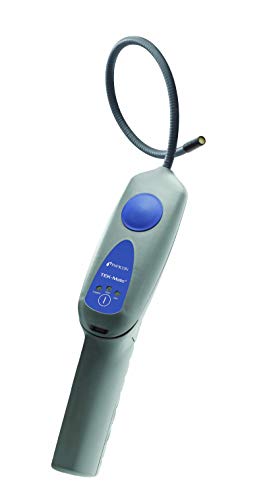
- Heated-diode sensor with 0.25 oz./yr sensitivity
- Detects CFCs, HCFCs, HFCs, and HFOs
- Automatic background adjustment
Best For: Technicians wanting a proven traditional detector
Infrared Precision Upgrade
Elitech ILD-200 Infrared Leak Detector
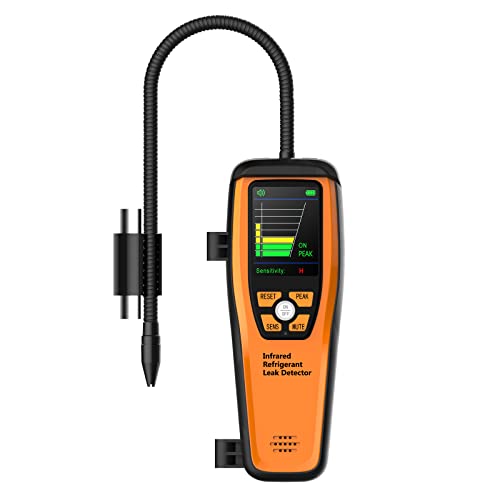
- Infrared sensor with strong anti-interference
- Up to 0.14 oz/yr sensitivity
- Large 2.8-inch display with peak indicator
Best For: Pros needing a clearer infrared leak finder
Ultra-Sensitive Pro Infrared Pick

- Finds micro leaks under 0.03 oz/yr
- IP54-rated with 10-year sensor life
- 17-inch probe and 10+ hour USB-C battery
Best For: Professional HVACR leak checks with tiny leaks
Compact Halogen Sniffer

- Fast 6-second preheat and quick response
- Flexible probe for tight, hard-to-reach areas
- Detects many common halogen refrigerants
Best For: Routine HVAC and automotive leak checks
Advanced 3-in-1 Leak Detector

- Detects A1, A2L, A3 refrigerants and tracer gas
- Sensitivity down to 0.14 oz./yr.
- Color display with peak mode and mute
Best For: Professional HVAC leak hunting across modern refrigerants
Dual-Fuel HVAC Sniffer

- Detects refrigerant and combustible gas
- USB-C rechargeable lithium battery
- Large color LCD with adjustable sensitivity
Best For: Multi-purpose leak checks in HVAC and gas applications
Triple-Alert Rechargeable
Rechargeable Freon Leak Detector with TFT Display

- Japanese sensor with 3 sensitivity levels
- Sound, light, and vibration alarms
- USB-C rechargeable with TFT leak readings
Best For: HVAC and auto AC techs who want rechargeable, easy-to-read leak detection
Large LCD Broad-Range
Rechargeable Halogen Freon Sniffer

- Rechargeable lithium battery with USB-C
- Large color LCD for clear leak readings
- Wide halogen refrigerant coverage
Best For: Technicians who want broad compatibility and a clear LCD
Heated-Diode Precision
Elitech HVAC Refrigerant Leak Detector

- Heated diode sensor for accurate halogen detection
- TFT screen with clear status and alerts
- High/Medium/Low sensitivity with quick mute
Best For: Technicians who want precision, speed, and a clear TFT interface
Budget-Friendly All-Halogen Pick – Elitech WJL-6000S Freon Leak Detector
If you need refrigerant leak detectors for general HVAC and automotive use, the Elitech WJL-6000S is a practical all-halogen option. It responds to a wide range of refrigerants, offers adjustable sensitivity, and gives both audible and visual alerts for quicker leak checks.
Best For: Users who want an affordable, flexible halogen refrigerant detector for routine AC and auto service.
Pros:
- Detects R22, R134A, R404A, R410A, R1234YF, and other halogenated gases
- 7 adjustable sensitivity levels with up to 0.21 oz/yr sensitivity
- Audible and visual indicators help confirm leaks clearly
- Flexible 7.9-inch probe reaches tighter areas more easily
Cons:
- Warm-up and response are fast, but not as advanced as infrared models
- Battery-powered design may be less convenient for long service sessions
For everyday leak-finding, this Elitech model covers a broad refrigerant range and keeps the interface straightforward. It stands out most as a practical utility tool rather than a premium sensor-based option.
Reliable Heated-Diode Classic – Inficon Model 705-202-G1 Leak Detector
Among refrigerant leak detectors, the Inficon 705-202-G1 is aimed at users who want dependable heated-diode performance and broad refrigerant coverage. It detects CFCs, HCFCs, HFCs, and HFOs, and includes automatic background adjustment to help reduce nuisance readings during leak checks.
Best For: Technicians who want a rugged, proven detector with a traditional heated-diode sensor.
Pros:
- Sensitivity of 0.25 oz./year for solid leak-finding capability
- Detects CFCs, HCFCs, HFCs, and HFOs
- Automatic background adjustment helps with zeroing
- Rugged carrying case included for transport and storage
Cons:
- Sensor life is listed at 100 hours
- Uses two D-cell alkaline batteries, which may add bulk
This is a straightforward, service-focused tool with the kind of feature set many HVAC techs expect from a trusted brand. It makes sense if you value reliability and proven sensor behavior over newer display-heavy designs.
Infrared Precision Upgrade – Elitech ILD-200 Infrared Leak Detector
If you want refrigerant leak detectors with faster response and stronger interference resistance, the Elitech ILD-200 is built around an infrared sensor. It supports a wide range of halogenated gases, adds adjustable sensitivity, and uses a large screen with peak display to help you identify leak points more confidently.
Best For: Professionals who want an infrared leak detector with broad refrigerant compatibility and a clear display.
Pros:
- Infrared sensor offers strong anti-interference and fast response
- Maximum sensitivity reaches 0.14 oz/yr
- Detects many halogenated gases, including mixed refrigerants and blends
- 2.8-inch large screen with peak display for easier leak orientation
Cons:
- Lower temperature rating is listed at 20 °C
- Heavier than some compact handheld leak detectors
This model is a strong step up if you want an infrared design instead of a heated-diode unit. The combination of sensitivity, broad gas support, and a readable screen makes it well suited to detailed troubleshooting work.
Ultra-Sensitive Pro Infrared Pick – Fieldpiece DR82 Leak Sniffer
For refrigerant leak detectors in professional HVACR work, the Fieldpiece DR82 focuses on sensitivity and durability. Its infrared sensor can find micro leaks fast, the backlit LCD helps show leak intensity, and the long probe makes it easier to reach awkward spots without constant repositioning.
Best For: HVAC technicians who need an ultra-sensitive, durable infrared sniffer for small leaks.
Pros:
- Finds leaks smaller than 0.03 oz/yr
- Works with CFC, HCFC, HFC, HFO, and blends
- IP54-rated sensor housing resists moisture and oil
- 17-inch flexible probe and 10+ hour USB-C battery life
Cons:
- More tool than casual DIY users may need
- Visual alert system may take some getting used to if you prefer simple audio-only detectors
This is the most advanced option in the group if micro-leak detection matters most. It combines high sensitivity with a rugged, service-ready build, making it a strong fit for frequent professional use.
Compact Halogen Sniffer – Elitech CLD-100
If you need refrigerant leak detectors for everyday HVAC and automotive work, the Elitech CLD-100 focuses on fast response and easy reach. It uses a traditional corona sensor with an updated analog circuit, supports a wide range of halogenated refrigerants, and is built for quick checks in tight spaces.
Best For: Technicians who want a simple, fast-responding detector for common halogen refrigerants and hard-to-reach areas.
Pros:
- 6-second preheating time with instantaneous response.
- Detects R11, R22, R134A, R404A, R410A, and other halogenated refrigerants.
- 6 adjustable sensitivity settings, down to 0.21 oz/yr.
- Flexible 8.26-inch probe helps access tight spots.
Cons:
- Runs on 4 AAA batteries, which are not included.
- Uses audible and visual alerts rather than a large display.
The CLD-100 is a practical pick if you want a straightforward sniffer with broad halogen coverage and fast startup. Its flexible probe and adjustable sensitivity make it useful for routine leak checks where reach and speed matter.
Advanced 3-in-1 Leak Detector – ALD-200 Rechargeable Detector
Among refrigerant leak detectors, the ALD-200 stands out for its 3-in-1 detection approach and very fine sensitivity. It is designed to locate leaks in A1, A2L, and A3 refrigerants, while also supporting H2/N2 tracer gas, making it a flexible choice for modern HVAC service work.
Best For: HVAC professionals who need broad refrigerant compatibility, micro-leak detection, and a rechargeable field-ready tool.
Pros:
- 3-in-1 detection for A1, A2L, A3 refrigerants plus H2/N2 tracer gas.
- Sensitivity adjustable to 0.14 oz./yr. for micro leaks.
- 2.8-inch TFT color display with audible and visual alarms.
- Rechargeable battery supports a full day of use.
Cons:
- Requires warm-up and auto-zero calibration before use.
- Many advanced functions may be more than casual users need.
This model is best when you need more than a basic sniffer. The combination of peak mode, reset function, and wide gas compatibility makes it a strong fit for technicians handling newer refrigerants and precision leak searches.
Dual-Fuel HVAC Sniffer – SENSYX SFD201 Rechargeable
If you want refrigerant leak detectors that can also check combustible gas, the SENSYX SFD201 offers a versatile 2-in-1 setup. It uses a Japan-made heat dioxide semiconductor sensor, supports high/low sensitivity, and shows readings on a large color LCD for easier day-to-day HVAC work.
Best For: Users who need one rechargeable detector for refrigerants plus combustible gas testing.
Pros:
- 2-in-1 detector for Freon and combustible gas.
- Rechargeable lithium battery with USB-C charging.
- Large color LCD display for clear leak indication.
- Detects a broad range of halogen refrigerants and gases like propane and isobutane.
Cons:
- Combustible gas detection is only listed for the SFD201 model.
- Some users may prefer a simpler tool if they only need refrigerant checks.
The SFD201 is a versatile choice when you want one tool for multiple leak types. With its rechargeable design, strong refrigerant coverage, and readable display, it suits technicians who value convenience and flexibility on the job.
Triple-Alert Rechargeable – Rechargeable Freon Leak Detector with TFT Display
If you want refrigerant leak detectors that are easier to use in mixed jobsite conditions, this rechargeable model combines a Japanese sensor, three sensitivity levels, and a clear TFT display. It is built for HVAC, auto AC, and refrigeration troubleshooting, with real-time PPM reading and a flexible probe for reaching tight areas around coils, fittings, and service ports.
Best For: Technicians who want a rechargeable, easy-to-read leak detector with multiple alert modes and flexible sensitivity control.
Pros:
- Japanese semiconductor sensor with sensitivity down to 3g/yr for small leak tracing.
- Three alarm modes: sound, light, and vibration, with independent control and quick mute.
- TFT display shows funnel view and trend graph views with real-time PPM readings.
- USB-C rechargeable battery offers up to 8 hours of continuous use.
Cons:
- Single-probe handheld design may be slower than dedicated fixed-sensor systems for some workflows.
- Best suited to halogen refrigerants and listed compatible gases rather than universal gas detection.
Overall, this is a practical pick if you need refrigerant leak detectors that balance portability, visibility, and flexible alerting. The display and rechargeable design make it especially convenient for daily service work in both quiet and noisy environments.
Large LCD Broad-Range – Rechargeable Halogen Freon Sniffer
Among refrigerant leak detectors, this rechargeable halogen sniffer stands out for its broad refrigerant coverage and simple high/low sensitivity control. It uses a Japanese-made heat dioxide semiconductor sensor and a large color LCD, making it a straightforward option for technicians who want clear feedback while checking HVAC and refrigeration systems.
Best For: Users who need broad refrigerant compatibility and a large display for clearer leak checks.
Pros:
- Rechargeable lithium battery with USB-C charging for cordless use.
- Japanese-made sensor for high sensitivity and reliable leak detection.
- Supports a wide range of halogen refrigerants, including many HFC, HCFC, HFO, and CFC types.
- Large color LCD helps make leak readings easier to see.
Cons:
- Only two sensitivity levels: High and Low.
- Primary focus is halogen refrigerants, with combustible-gas detection limited to the SFD201 variant.
This is a solid choice if your priority is coverage and readability rather than lots of advanced controls. The broad refrigerant list and battery-powered design make it a flexible everyday service tool.
Heated-Diode Precision – Elitech HVAC Refrigerant Leak Detector
If you are comparing refrigerant leak detectors for accuracy and fast response, this Elitech model uses a heated diode sensor and a TFT screen to keep readings clear during service work. It is designed for all halogenated refrigerants, with adjustable High/Medium/Low sensitivity and simple front-button controls for quick operation.
Best For: Technicians who want a precise heated-diode detector with quick controls and broad halogen refrigerant support.
Pros:
- Heated diode sensor is positioned for more accurate results on halogenated refrigerants.
- TFT screen shows sensitivity, alerts, battery status, and other key info clearly.
- Three sensitivity levels, with maximum sensitivity up to 0.1 oz/yr.
- Quick buttons let you adjust sensitivity or mute the buzzer fast.
Cons:
- Requires familiarity with sensitivity settings to get the most from the detector.
- Focused on halogen refrigerants rather than broader combustible-gas use.
For HVAC work where clear readings and quick leak response matter, this is a dependable, task-focused option. The heated diode design and TFT interface make it especially appealing for users who value precision and speed.
How We Picked These Refrigerant Leak Detectors
We focused on the features that matter most in real service conditions: detection sensitivity, sensor technology, warm-up time, battery life, probe design, display clarity, and supported refrigerants. We also considered whether a tool is better suited to tight indoor HVAC work, under-hood automotive diagnostics, or general-purpose leak searching.
Quick Comparison
Refrigerant Leak Detectors generally fall into a few categories. Heated diode and halogen sniffer models are often strong all-around choices for standard refrigerants. Infrared units tend to offer excellent stability and long sensor life, while multi-gas or combustible-gas-capable tools can add versatility for technicians who need broader coverage.
Key Buying Factors for Refrigerant Leak Detectors
Sensor Type
The sensor is the heart of the tool. Infrared sensors are known for consistency and long service life. Heated diode and halogen sensors can be very sensitive, especially for HVAC and automotive refrigerants, but may require more care in use and maintenance.
Sensitivity and Control
Look for adjustable sensitivity levels if you work in spaces with background contamination or need to isolate very small leaks. Higher sensitivity helps find trace leaks, but the best tools also let you dial it back to avoid false alarms.
Refrigerant Compatibility
Make sure the detector supports the gases you actually service, such as R22, R410A, R134a, R1234yf, CFCs, HCFCs, and HFCs. Not every detector covers every application, and compatibility should match your workload.
Probe, Display, and Usability
A flexible or long probe can help reach coils, fittings, and tight engine bays. A clear display, audible alarm, and visible status indicators make it easier to work confidently in loud or dim environments. Rechargeable models can also reduce operating costs over time.
Who Should Buy Which Refrigerant Leak Detectors?
If you want a balanced everyday tool, choose a detector with strong sensitivity, adjustable settings, and broad refrigerant support. HVAC technicians often benefit from infrared or high-end halogen units for reliability and repeat use. Automotive users should prioritize support for R134a and R1234yf, plus a compact body for under-hood access. For mixed-use shops, a rechargeable model with multiple alarm modes and an easy-to-read display is usually the most practical choice.
In short, the best Refrigerant Leak Detectors are the ones that match your service environment, refrigerant types, and speed requirements—not just the highest sensitivity on paper.