A damp crawl space can contribute to musty odors, condensation, mold growth, and long-term structural concerns. The right ventilation fan helps move stale, humid air out while improving airflow in a typically neglected part of the home.
These 10 quiet crawl space ventilation fans range from compact 110 CFM models to high-output 720 CFM units, with options featuring humidistats, thermostats, freeze protection, stainless-steel housings, and automatic controls. Use the guide below to match fan capacity and features to your crawl space.
Best 10 Quiet Crawl Space Ventilation Fans Picks for 2026
Best Smart Controls

- 240 CFM exhaust airflow
- Listed 32 dBA operation
- App-based climate automation
Best For: Automated crawl space and basement ventilation
Best Corrosion Resistance

- 304 stainless-steel housing
- 220 CFM dual-fan exhaust
- Freeze-protection thermostat
Best For: Damp crawl spaces and foundation vents
Best High-Airflow Option
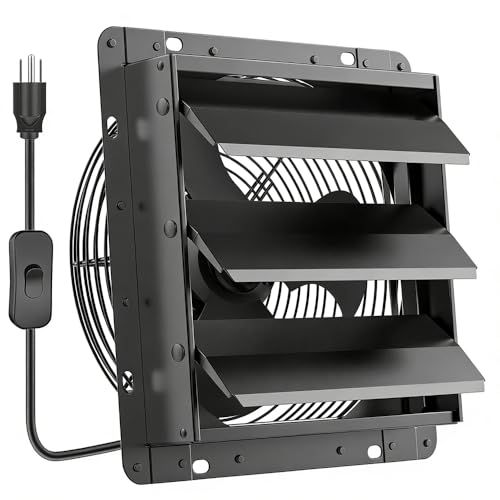
- 647 CFM airflow capacity
- Automatic rain- and dust-blocking louver
- Indoor-mount installation
Best For: Large garages, attics, sheds, and workshops
Best Quiet Crawl Space Specialist

- Listed at just 25 dB
- 220 CFM exhaust airflow
- Thermostat and dehumidistat included
Best For: Quiet, moisture-focused crawl space ventilation
High-Flow Humidity Control

- 540 CFM air-out capacity
- Built-in dehumidistat and freeze protection
- IP-55 housing with isolation mesh
Best For: High-volume automatic moisture ventilation
Quiet Dual-Fan Control
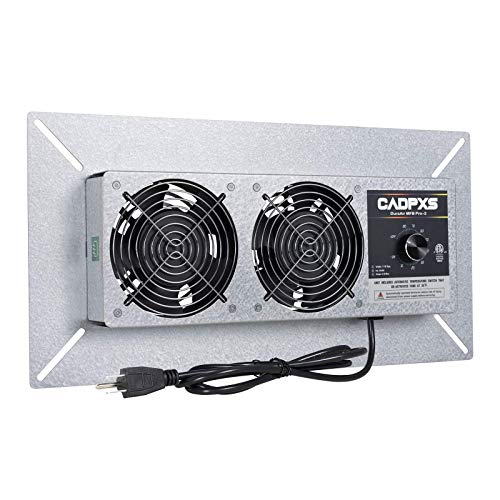
- 48 dB listed noise level
- 220 CFM dual-fan exhaust
- 20%-80% humidistat range
Best For: Quieter automatic ventilation in damp spaces
Simple Low-Wattage Ventilation

- 110 CFM exhaust airflow
- 20-watt maintenance-free fan
- Fits standard brick foundation openings
Best For: Basic low-energy crawl space ventilation
High-Flow Pick
Abestorm 720CFM Ventilation Fan

- 720 CFM airflow for large spaces
- Humidity and freeze-protection controls
- IP55 housing with isolation mesh
Best For: Large, damp crawl spaces needing strong active ventilation
Compact Control Pick
240 CFM Dual-Fan Crawlspace Vent

- Slim design fits standard foundation vents
- Humidity and temperature automation
- Includes a 3-year guarantee
Best For: Smaller crawl spaces and standard vent openings
Durable Midrange Pick

- 260 CFM airflow for moderate ventilation
- IP55 stainless steel construction
- Humidity and freeze-protection controls
Best For: Damp crawl spaces needing durable midrange airflow
Best Smart Controls – AC Infinity AIRTITAN T8
For shoppers comparing quiet crawl space ventilation fans, the AC Infinity AIRTITAN T8 combines 240 CFM exhaust airflow with a listed 32 dBA noise level. Its smart controller supports temperature, humidity, VPD, timer, cycle, schedule, and minimum-speed settings.
Best For: Crawl spaces or basements where automated moisture and odor ventilation is a priority.
Pros:
- 240 CFM exhaust airflow for stale air and odor removal.
- Listed 32 dBA noise level.
- Wi-Fi and Bluetooth app control with climate data and alerts.
- Stainless-steel, IP55-rated design with 10 speed levels.
Cons:
- Requires a corded electrical connection and permanent mounting.
- Smart features may be unnecessary for a basic ventilation setup.
The AIRTITAN T8 is a strong fit when quiet operation and detailed automation matter more than the simplest plug-in installation.
Best Corrosion Resistance – Durablow 220 CFM Air-Out Fan
The Durablow is a practical option among quiet crawl space ventilation fans for damp installations, using a 304 stainless-steel panel and housing designed for humid environments. Its air-out configuration provides 220 CFM ventilation and includes freeze protection.
Best For: Humid crawl spaces, foundations, attics, or garages needing a durable exhaust fan.
Pros:
- 304 stainless-steel construction offers high corrosion resistance.
- 220 CFM air-out ventilation with a dual-fan design.
- Freeze-protection thermostat stops operation below approximately 35°F.
- Includes a 7-foot grounded power cord and UL-certified fan.
Cons:
- Its listed 55 dB noise level is higher than some quieter models.
- Single-speed operation provides less airflow adjustment.
- Vent opening dimensions should be measured before purchase.
Choose the Durablow when material durability and freeze protection are more important than minimizing sound or adding advanced controls.
Best High-Airflow Option – HG Power 10-Inch Shutter Fan
The HG Power 10-Inch Shutter Exhaust Fan delivers substantially higher airflow than many crawl space-focused models, with a rated 647 CFM capacity and a listed 52 dB noise level. Its automatic louver closes when the fan is off to help block rain and dust.
Best For: Larger garages, sheds, attics, workshops, or other spaces where high airflow is the main goal.
Pros:
- 647 CFM airflow for rapid heat and odor removal.
- Automatic louver helps seal the opening when switched off.
- Indoor-mount installation can be completed from inside the space.
- Includes a mesh screen and 8-foot on/off switch cable.
Cons:
- Its listed 52 dB noise level is not the quietest in this roundup.
- The 10-inch wall-mount format may be oversized for small crawl spaces.
- Basic switch control lacks humidity or temperature automation.
This fan is best viewed as a high-capacity general exhaust solution rather than a specialized, ultra-quiet crawl space ventilator.
Best Quiet Crawl Space Specialist – Tjernlund V2D Underaire
The Tjernlund V2D Underaire is purpose-built for crawl spaces and uses existing passive vents, making it a notable choice among quiet crawl space ventilation fans. It provides 220 CFM exhaust airflow and lists a low 25 dB noise level, along with a thermostat and dehumidistat.
Best For: Crawl spaces needing dedicated moisture reduction through existing foundation ventilation openings.
Pros:
- Very low listed noise level of 25 dB.
- 220 CFM exhaust airflow for crawl space ventilation.
- Includes both a thermostat and dehumidistat.
- Face plate is sized for standard brick and block foundation openings.
Cons:
- Single-speed operation limits manual airflow adjustment.
- Installation is intended to be permanent through a suitable vent opening.
- It may require more fitting consideration than a simple portable fan.
With its low listed noise level and moisture-oriented controls, the V2D is a focused choice for homeowners prioritizing quiet, automatic crawl space ventilation.
High-Flow Humidity Control – ALORAIR VentirPro 540
For quiet crawl space ventilation fans with strong airflow, the ALORAIR VentirPro 540 delivers 540 CFM while automatically responding to humidity. Its built-in dehumidistat, freeze-protection thermostat, IP-55-rated housing, and isolation mesh make it suited to damp crawl spaces and similar areas.
Best For: Homeowners who need high-volume exhaust ventilation with automatic humidity control.
Pros:
- High 540 CFM air-out capacity for crawl spaces, basements, attics, and garages.
- Built-in dehumidistat operates across a 10%-80% RH range.
- Freeze-protection thermostat prevents operation below 35°F.
- IP-55-rated axial fan and isolation mesh add protection in humid, dusty areas.
Cons:
- Rated noise is under 55 dB, so it may not be the quietest option in the group.
- One speed and a wall-mounted design offer limited adjustment flexibility.
- Its higher airflow may be more than needed for smaller openings.
The VentirPro 540 is a practical choice when moisture control and airflow matter more than ultra-quiet operation. Its automatic controls make it convenient for set-and-forget ventilation, provided the installation opening can accommodate its dimensions.
Quiet Dual-Fan Control – CADPXS Pro Crawlspace Fan
The CADPXS Pro is a strong fit for quiet crawl space ventilation fans, with a listed 48 dB noise level and dual-fan design. It combines 220 CFM of exhaust airflow with a built-in humidistat and freeze-protection thermostat for damp crawl spaces, basements, attics, and garages.
Best For: Buyers seeking quieter automatic ventilation with straightforward knob controls.
Pros:
- Listed 48 dB noise level supports quieter operation.
- 220 CFM airflow and dual fans help exchange indoor and outdoor air.
- Humidistat provides a 20%-80% RH control range.
- Freeze-protection thermostat prevents operation below 35°F.
Cons:
- Lower airflow than the 540 CFM ALORAIR model.
- Its wall-mounted 18-by-9-by-2-inch form factor requires a suitable opening.
- Control is limited to one power level.
With its quieter rating, automatic humidity and temperature protection, and simple knob panel, the CADPXS offers a balanced approach to crawl space ventilation. It is especially appealing when noise is a priority but moderate exhaust capacity is sufficient.
Simple Low-Wattage Ventilation – Tjernlund V1 UnderAire
Tjernlund V1 UnderAire Crawlspace Ventilator Fan Moisture Mold Reducing,110 CFM
Check Price On AmazonThe Tjernlund V1 UnderAire is a straightforward option among quiet crawl space ventilation fans, using a 20-watt, maintenance-free exhaust fan to move 110 CFM through existing passive vents. Its compact faceplate is sized for standard brick foundation ventilation openings.
Best For: Homeowners who want simple, low-energy exhaust ventilation through an existing foundation opening.
Pros:
- Low 20-watt power draw.
- Compact 110 CFM design uses existing passive vents.
- Faceplate is sized for standard-size brick foundation openings.
- Maintenance-free exhaust fan construction.
Cons:
- Does not include a dehumidistat or thermostat.
- 110 CFM airflow is substantially lower than the other listed fans.
- No warranty is specified in the supplied details.
The V1 UnderAire is best viewed as a basic, energy-conscious ventilation solution rather than an automated moisture-control system. Choose it when a modest airflow rate and compatibility with an existing passive opening are more important than advanced controls.
High-Flow Pick – Abestorm 720CFM Ventilation Fan
For large or especially damp areas, this Abestorm is a high-output option among quiet crawl space ventilation fans. Its 720 CFM airflow, automatic humidity control, freeze protection, and weather-resistant housing are designed for active ventilation in crawl spaces, basements, garages, and attics.
Best For: Large crawl spaces and other damp areas that need high airflow and automatic moisture management.
Pros:
- Moves up to 720 CFM of air for strong exhaust performance.
- Built-in dehumidistat and thermostat automate operation.
- IP55-rated aluminum-zinc housing and isolation mesh help resist moisture, dust, and reptile entry.
- Includes a 6-foot grounded cord and simple knob controls.
Cons:
- Listed noise level is 55 dB, so it is not the quietest option in this group.
- Single-speed operation offers less adjustment than multi-speed models.
- Thermostat prevents operation below 35°F.
The 720 CFM capacity makes this the performance-focused choice, particularly where passive vents are not providing enough air exchange. Its automatic controls reduce the need for constant monitoring, though buyers prioritizing minimum noise may prefer a lower-output model.
Compact Control Pick – 240 CFM Dual-Fan Crawlspace Vent
This compact 240 CFM model is a practical choice for shoppers comparing quiet crawl space ventilation fans for standard foundation vents. Its dual-fan design, humidity and temperature controls, low-temperature protection, and slim profile support automatic exhaust ventilation in crawl spaces and similar utility areas.
Best For: Standard foundation vents and smaller spaces where a slim, automatically controlled fan is preferred.
Pros:
- Dual-fan design delivers 240 CFM of exhaust airflow.
- Activates when either the preset humidity or temperature threshold is reached.
- Low-temperature protection helps avoid cold-air backflow in winter.
- Slim 1.6-inch depth fits standard brick or concrete foundation vents.
Cons:
- Lower airflow than the 720 CFM model.
- Only one speed and one power level are listed.
- Installation requires following the supplied manual or installation video.
With its narrow housing and automatic dual-threshold control, this fan suits targeted ventilation rather than maximum air movement. The included 3-year guarantee is an added consideration for buyers seeking longer-term coverage.
Durable Midrange Pick – Abestorm 260CFM Stainless Fan
For damp locations that need corrosion-resistant construction without the output of a large commercial fan, this Abestorm provides a balanced option among quiet crawl space ventilation fans. It combines 260 CFM airflow with automatic humidity and freeze-protection controls, a stainless steel shell, and built-in isolation mesh.
Best For: Damp crawl spaces, basements, and garages where durable construction and moderate airflow matter.
Pros:
- 260 CFM exhaust airflow supports active moisture and odor ventilation.
- Stainless steel, IP55-rated construction is designed for damp environments.
- Built-in dehumidistat and thermostat automate humidity control and cold-weather protection.
- Isolation mesh helps prevent reptile entry.
Cons:
- Airflow is substantially lower than the 720 CFM model.
- Thermostat prevents operation below 35°F.
- The product details list conflicting controller information, so buyers should confirm the control method before installation.
This model sits between compact foundation-vent fans and high-output ventilators. Its stainless steel housing and IP55 protection make it especially appealing for moisture-prone installations, while the 260 CFM capacity is better suited to moderate-size ventilation needs.
How We Picked the Best Quiet Crawl Space Ventilation Fans
We focused on the specifications that matter most in crawl-space applications: airflow capacity, automatic humidity control, thermostat or freeze protection, housing durability, noise-conscious design, installation flexibility, and intended coverage. The selection includes dedicated under-house ventilators as well as adaptable shutter exhaust fans, so homeowners can compare solutions for small, moderate, and larger crawl spaces.
Because crawl spaces vary widely in size, moisture level, access, and ventilation layout, a higher CFM rating is not automatically better. Proper placement, makeup air, drainage, and sealing are equally important. These fans should supplement—not replace—waterproofing, vapor-barrier repairs, or professional moisture remediation when those issues are present.
Quick Comparison
| What to Compare | Best Fit |
|---|---|
| 110–240 CFM | Small crawl spaces or targeted ventilation |
| 260–540 CFM | Medium spaces needing stronger moisture control |
| 647–720 CFM | Large, especially humid areas with adequate intake airflow |
| Humidistat | Automatic operation based on relative humidity |
| Thermostat or freeze protection | Cold climates and seasonal operation |
| Stainless steel or IP-rated housing | Wet, dusty, or corrosion-prone installations |
Key Buying Factors for Quiet Crawl Space Ventilation Fans
Airflow and Crawl-Space Size
CFM indicates how much air a fan can move, but real-world performance depends on duct resistance, vent openings, obstructions, and crawl-space layout. Choose a model that can exchange air effectively without creating excessive negative pressure. Large fans work best when the space has suitable intake vents or a controlled source of replacement air.
Noise and Operating Schedule
Look for fans marketed for quiet operation, especially when the crawl space sits beneath bedrooms or living areas. Automatic controls can reduce unnecessary runtime and noise by activating the fan only when humidity or temperature reaches a set threshold.
Humidity, Temperature, and Freeze Controls
A built-in humidistat is useful for moisture-prone spaces because it automates operation instead of relying on a timer. Thermostats and freeze-protection features are valuable in colder regions, where running a fan during freezing conditions may be undesirable.
Construction and Installation
Measure the opening before buying and confirm voltage, mounting dimensions, switch access, and wiring requirements. Stainless-steel or IP-rated housings offer extra protection in damp environments. Also check whether the fan is designed for direct wall or vent installation and whether a backdraft damper or shutter is included.
Who Should Buy Which Quiet Crawl Space Ventilation Fans?
Choose a compact 110–240 CFM unit for a smaller crawl space, a localized moisture problem, or a lower-energy installation. Medium-output 260–540 CFM models suit many average residential crawl spaces, particularly when automatic humidity control is a priority. High-output 647–720 CFM fans are better for larger or persistently humid spaces, provided the ventilation path can support that airflow.
If durability is your main concern, prioritize stainless-steel or IP55-rated models. If convenience matters most, choose a fan with a humidistat and thermostat. For the quietest practical setup, select an appropriately sized fan with automatic controls rather than simply choosing the highest CFM rating, and address leaks or standing water before depending on ventilation alone.