Drafty windows can raise heating and cooling costs, admit dust, and make rooms less comfortable. The right weather seal creates a tighter barrier without demanding frequent cleaning, adjustment, or replacement.
This roundup compares 10 low-maintenance window weather seals, including adhesive foam, silicone, rubber, brush, and kerf-mounted options. Use the buying guide below to match the seal type, size, and installation method to your windows.
Best 10 Low-Maintenance Window Weather Seals Picks for 2026
Best for Large Gaps
Flexible EPDM Door and Window Seal

- Covers 5/16- to 15/32-inch gaps
- Peel-and-stick installation
- 18-foot, cut-to-size roll
Best For: Larger door and window gaps
Best for Broad Coverage

- 33 feet total in a two-pack
- 35mm-wide transparent silicone
- Designed for drafts, dust, and noise
Best For: Wide gaps and visible sealing areas
Best Easy Replacement

- Slides into a compatible kerf groove
- Cut-to-length 10-foot roll
- Flexible, wear-resistant TPE
Best For: Replacing worn window and door kerf seals
Best All-Season Coverage

- 33 feet for multiple openings
- Weather-resistant nylon bristles
- Tool-free cut-to-fit installation
Best For: Large or multi-area sealing projects
Best for Small Gaps
Premium EPDM Rubber Window Seal

- Flexible from -40°F to 140°F
- Self-adhesive 17-foot roll
- Cuts easily with scissors
Best For: Narrow window and door gaps
Best for Medium Gaps
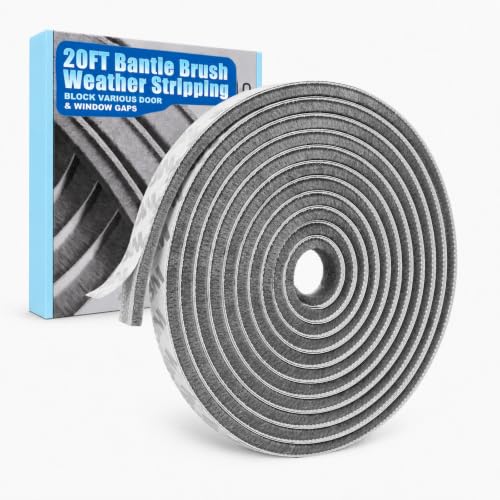
- Fits roughly 0.3-0.5-inch gaps
- Dense bristles block dust and drafts
- Flexible TPU peel-and-stick base
Best For: Sliding windows and uneven medium gaps
Dense Brush Draft Blocker
16.5-Ft Self-Adhesive Pile Seal

- Dense brush helps block drafts, dust, moisture, and noise
- Tool-free cut-and-peel installation
- For gaps about 0.18–0.3 inches
Best For: Sliding windows and doors with narrow, measured gaps
Flexible Rubber Protection
CloudBuyer D-Shape Weather Strip
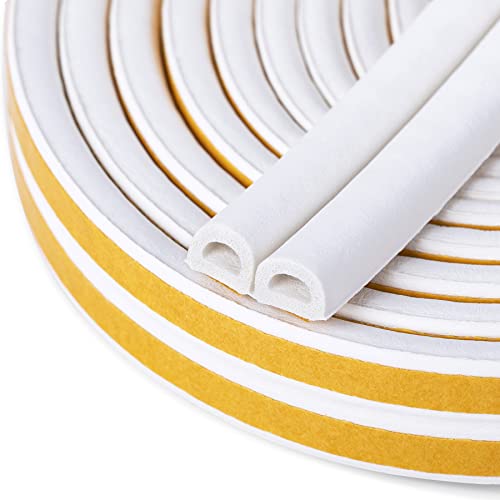
- Waterproof, windproof EPDM rubber strip
- Helps reduce dust, cold, sound, and wear
- Designed for 4–5 mm gaps
Best For: Indoor sliding windows and doors needing a rubber seal
Wide Foam Gap Filler
YoleShy 1-Inch Window Seal Tape

- Thick foam fills larger window and door gaps
- Two 6.5-foot rolls provide 13 feet total
- Compressible NBR+PVC construction
Best For: Window air conditioners and larger gaps needing thick foam
Best for Large Gaps – Flexible EPDM Door and Window Seal
For low-maintenance window weather seals that handle wider openings, this 18-foot EPDM rubber strip is a practical option. Its self-adhesive backing requires no tools, while the flexible material is designed for interior or exterior use and seals gaps from 5/16 to 15/32 inch.
Best For: Doors and windows with larger gaps, especially where a simple peel-and-stick installation is preferred.
Pros:
- Seals relatively large gaps from 5/16 to 15/32 inch.
- Flexible EPDM material is designed to resist freezing, cracking, and repeated compression.
- 18-foot roll can be cut to size and installed without tools.
- Multi-hole design may help reduce sound transfer and closing pressure.
Cons:
- The adhesive-backed design may be less suitable for surfaces that are dirty, damp, or poorly prepared.
- Its 0.54-inch width and thicker profile may be too large for narrow gaps.
This is a strong low-maintenance choice when gap coverage and easy installation matter more than a discreet profile. Measure the opening carefully before ordering to ensure the larger seal fits.
Best Custom-Fit Option – 1/4-Inch Bulb Kerf Seal
This kerf-mounted seal suits shoppers seeking low-maintenance window weather seals with a fitted installation rather than adhesive. Made from TPE, it uses a standard 3/16-inch kerf depth and 1/8-inch kerf width, with six length options and four color choices for a closer match.
Best For: Replacement projects involving compatible window or door kerf slots where color and length selection are important.
Pros:
- Kerf-mount design avoids relying on adhesive backing.
- Made in the USA from TPE material.
- Available in six lengths and four colors.
- Common 1/4-inch bulb diameter fits many applications.
Cons:
- Requires a compatible 3/16-inch-deep, 1/8-inch-wide kerf.
- Installation may require removing the existing seal and fitting the flange into the slot.
Choose this model when your window already has the specified kerf channel. Verifying the slot dimensions before purchase is essential, but the fitted design can provide a neat, durable replacement.
Best for Broad Coverage – Clear Silicone Adhesive Seal
For low-maintenance window weather seals that cover broad surfaces, this clear silicone strip provides 33 feet of total material in a two-pack. The 35mm-wide adhesive seal is designed to block drafts, dust, pollen, and noise around windows, doors, frames, and other household openings.
Best For: Wide gaps and visible areas where a transparent seal and generous coverage are useful.
Pros:
- Clear silicone profile is less visually prominent than an opaque strip.
- Two-pack provides approximately 33 feet of total coverage.
- Waterproof adhesive backing is intended for humid and cold conditions.
- Flexible silicone is designed to resist cracking, freezing, and deformation.
Cons:
- The 35mm width may be excessive for narrow window gaps.
- Surface cleaning and a 24-hour curing period are recommended after installation.
- Adhesive installation depends on careful surface preparation.
This is a versatile pick for larger or irregular gaps, particularly when you want clear material and extensive coverage. Follow the cleaning, pressing, and curing steps for the best initial bond.
Best Easy Replacement – 1/4-Inch Bulb Kerf Gasket
This 10-foot TPE gasket is a low-maintenance window weather seal for replacing worn kerf weatherstripping. Its plug-in flange inserts into a compatible groove, while the 1/4-inch bulb helps seal around wood-frame windows, casement windows, and doors without adhesive.
Best For: Refreshing aged or damaged kerf seals in windows and doors with the required slot dimensions.
Pros:
- Plug-in installation avoids adhesive and simplifies replacement.
- Flexible TPE is designed for wear, temperature, aging, and fatigue resistance.
- Can be cut to the desired length from the 10-foot roll.
- Available in four colors and five length options.
Cons:
- Only fits openings with a 3/16-inch kerf depth and 1/8-inch kerf width.
- Requires measuring the existing groove before ordering.
- The white 10-foot version may not match every frame color.
If your existing weatherstrip uses a compatible kerf channel, this gasket offers a clean, reusable-style installation and straightforward sizing. Confirm the groove measurements first to avoid an incompatible fit.
Best All-Season Coverage – 33-Foot Adhesive Brush Seal
For low-maintenance window weather seals that cover more than a few openings, this 33-foot brush strip offers flexible, cut-to-fit coverage. Its reinforced PVC backing and nylon bristles are designed to help block drafts, dust, insects, water, and noise with a simple adhesive installation.
Best For: Sliding windows, doors, balconies, garages, RVs, and pet areas needing longer-length brush sealing.
Pros:
- 33 feet of material supports multiple installations.
- Nylon bristles and PVC backing are weather-resistant and easy to wipe clean.
- Adhesive backing installs without additional tools or hardware.
- Can be cut to fit different gap sizes and may help reduce air leakage.
Cons:
- Brush-style sealing may be less suitable for very narrow, precisely sized gaps than rubber tape.
- Surface must be suitable for adhesive application.
This is a practical pick when you want broad coverage and minimal upkeep, especially around sliding assemblies and larger household or RV projects.
Best for Small Gaps – Premium EPDM Rubber Window Seal
This EPDM rubber strip is a straightforward option for low-maintenance window weather seals where a compact profile is needed. The self-adhesive tape measures 3/8 inch wide by 7/32 inch high, remains flexible across a broad temperature range, and can be cut with scissors.
Best For: Small window or door gaps where a flexible, low-profile rubber seal is preferred.
Pros:
- EPDM rubber remains flexible from -40°F to 140°F.
- Self-adhesive backing requires no hardware.
- 17-foot roll can be cut to the needed length.
- Helps seal drafts, moisture, dust, and insects.
Cons:
- Designed for small gaps rather than medium or large uneven spaces.
- Application requires a clean, dry surface above 40°F.
Choose this model when accurate sizing and temperature flexibility matter more than brush coverage. Its simple rubber profile is well suited to routine window and door maintenance.
Best for Medium Gaps – 20-Foot Flexible Brush Strip
For low-maintenance window weather seals around sliding frames, this 20-foot brush strip combines dense nylon bristles with a flexible TPU base. It is designed for gaps from about 0.3 to 0.5 inches and installs by peeling and sticking the adhesive backing to a clean, dry surface.
Best For: Sliding windows, patio doors, cabinets, closets, and door frames with medium or uneven gaps.
Pros:
- Dense bristles help block drafts, dust, light, and noise.
- Designed for approximately 0.3- to 0.5-inch gaps.
- Flexible TPU base bends across different frames and surfaces.
- Can be cut to length and installed without tools.
Cons:
- Provides 20 feet of coverage, less than the 33-foot option in this roundup.
- Adhesion depends on properly cleaning and drying the installation surface.
This is a versatile choice for medium gaps and sliding applications, particularly when you want a brush seal that can also reduce dust, light, and noise around household surfaces.
Dense Brush Draft Blocker – 16.5-Ft Self-Adhesive Pile Seal
For low-maintenance window weather seals, this self-adhesive pile strip offers a tool-free way to close small gaps around windows and sliding doors. Its dense brush is designed for gaps from about 0.18 to 0.3 inches and helps block drafts, moisture, dust, and some noise.
Best For: Sliding windows, glass doors, exterior doors, cabinets, and wardrobes with measured gaps in the recommended range.
Pros:
- Dense, flexible brush helps reduce drafts, moisture, debris, and sound transfer.
- Powerful adhesive backing is designed for seasonal use in heat and cold.
- Easy to measure, cut with scissors, peel, and press into place.
- Provides 16.5 feet of gray sealing material.
Cons:
- Only suits gaps of approximately 0.18 to 0.3 inches.
- Requires a clean frame for proper adhesive application.
- The gray color may not suit every window or door finish.
Choose this seal when you want a brush-style barrier that can also help with dust and noise. Measuring the gap first is important because the 0.35-inch brush and adhesive base are intended for relatively narrow openings.
Flexible Rubber Protection – CloudBuyer D-Shape Weather Strip
This CloudBuyer strip is a practical option for low-maintenance window weather seals when you need a self-adhesive rubber barrier for a narrow gap. The D-shaped EPDM strip is intended for 4–5 mm openings and can be used on sliding windows, doors, and closets.
Best For: Indoor sliding windows, sliding doors, security doors, and closet doors with gaps measuring approximately 4–5 mm.
Pros:
- EPDM rubber construction is waterproof, windproof, and designed for aging resistance.
- Helps reduce wind, dust, cold, sound, and wear from opening and closing.
- Can be separated into two 8.25-foot strips for flexible use.
- Self-adhesive installation requires no specialized tools.
Cons:
- Adhesive application is temperature-sensitive; the recommended range is 55–104°F.
- Cold installation may require warming the tape and surface with a hair dryer.
- Its recommended gap range is narrower than some foam seals.
This is a good fit for buyers who prefer a compact rubber profile and want added collision protection as doors or windows close. Apply it to a clean, dry surface within the stated temperature range for the most reliable adhesion.
Wide Foam Gap Filler – YoleShy 1-Inch Window Seal Tape
For larger openings, this YoleShy foam tape provides a thick option among low-maintenance window weather seals. The NBR+PVC foam is 1 inch wide and 1 inch thick, comes in two 6.5-foot rolls, and can be cut to fit window or door gaps.
Best For: Window air conditioner installations and larger window or door gaps that need a thick, compressible foam barrier.
Pros:
- Thick 1-inch foam helps fill larger gaps around windows and doors.
- NBR+PVC material is described as soft, weather-resistant, and toxic-free.
- High resistance allows the foam to return to shape after compression.
- Two rolls provide 13 feet of total sealing material.
Cons:
- The 1-inch thickness may be oversized for narrow window gaps.
- The supplied notes do not specify a suitable gap range.
- Only 6.5 feet is provided per roll, so longer openings may require joining pieces.
Consider this tape when a slim brush or D-shaped strip will not fill the opening adequately, particularly around a window air conditioner. Its thick foam profile is the main advantage, but measuring the available space before installation is essential.
How We Picked These Low-Maintenance Window Weather Seals
We focused on practical factors that affect long-term performance: material durability, adhesive or kerf-mount installation, coverage length, gap range, flexibility, and suitability for different window styles. The selection includes solutions for sliding windows, small perimeter gaps, larger uneven spaces, and temporary seasonal insulation.
Because installation conditions vary, check the product dimensions and mounting method against your existing window before ordering. A correctly sized seal generally lasts longer and works better than a thicker product forced into an unsuitable gap.
Quick Comparison
| Seal type | Best for | Main advantage | Watch for |
|---|---|---|---|
| Self-adhesive foam or rubber | Simple repairs and fixed frames | Fast, tool-free installation | Surface must be clean and smooth |
| Silicone strip | Visible gaps and flexible coverage | Clear, discreet appearance | May not suit heavily textured surfaces |
| Kerf-mounted bulb seal | Compatible grooved window frames | Secure, finished installation | Requires an existing kerf channel |
| Brush pile | Sliding windows and doors | Allows movement while limiting drafts | Less effective for large open gaps |
| Foam tape | Air conditioners and seasonal sealing | Compressible and easy to trim | Can wear faster with frequent movement |
Key Buying Factors for Low-Maintenance Window Weather Seals
Measure the Gap First
Measure the widest gap when the window is closed, then choose a seal designed to compress or fill that space. Oversized material can prevent the window from closing, while undersized material may leave air paths.
Match the Installation Method
Adhesive-backed strips are convenient for clean, flat frames. Kerf seals are usually more secure when the frame has a compatible slot. Brush seals are better where the window slides, while bulb and foam profiles suit compression gaps around stationary edges.
Consider Exposure and Cleaning
For exterior-facing or frequently handled areas, prioritize rubber or silicone with a secure bond. Smooth surfaces are typically easier to wipe clean than dense brush materials, although brush pile can be useful where sliding movement is essential.
Check Length and Replacement Needs
Measure the total perimeter before buying and allow a little extra for trimming. Longer rolls can reduce seams, while multi-piece packs may be more convenient for separate windows or seasonal installation.
Who Should Buy Which Low-Maintenance Window Weather Seals?
Choose a self-adhesive rubber or foam strip if you want the simplest low-cost repair for a fixed window frame. A clear silicone seal is a good choice when appearance matters and you want the strip to blend into the glass or frame.
Pick a kerf-mounted bulb seal if your window already has the required groove and you prefer a more integrated installation. For sliding windows or doors, a brush weatherstrip can maintain movement while reducing drafts, dust, and noise. If you are sealing a window air conditioner or another temporary opening, wide foam tape is generally the most practical option.
Before installing any of these Low-Maintenance Window Weather Seals, clean and dry the mounting surface, test-fit the material, and avoid stretching adhesive strips during application. These steps help prevent lifting, gaps, and premature wear.