A compact reverse osmosis system can give you filtered drinking water without the bulky storage tank associated with traditional RO setups. The right format depends on your kitchen: countertop units are easier to place and move, while tankless under-sink systems keep the counter clear.
These 10 options cover both styles. Use the guide below to narrow your choice by installation needs, household demand, pitcher preferences, and ongoing costs.
Best 10 Compact Reverse Osmosis Systems Picks for 2026
Best High-Capacity Under-Sink Pick

- Tankless, 600 GPD rated capacity
- Smart faucet shows TDS and filter life
- Needs under-sink electricity
Best For: High-demand households with under-sink space and an outlet
Best No-Install Glass Carafe

- No plumbing or drilling
- Removable glass carafe
- Multiple filter schedules
Best For: Renters who prefer a countertop unit and glass carafe
Best Mineral-Added Countertop Pick

- Adds minerals after RO filtration
- Autofills a 40-ounce glass pitcher
- Rated for one or two people
Best For: One or two people who prefer mineral-added water
Best Straightforward Autofill Pick

- No-plumbing countertop setup
- Autofill 40-ounce glass pitcher
- Display and voice alerts
Best For: One or two people wanting room-temperature RO water without installation
Best for Sharing

- 5-liter capacity with two autofill pitchers
- No under-sink installation
- TDS display and filter-change indicator
Best For: Households wanting countertop RO and two pitchers
Best Under-Sink Space Saver
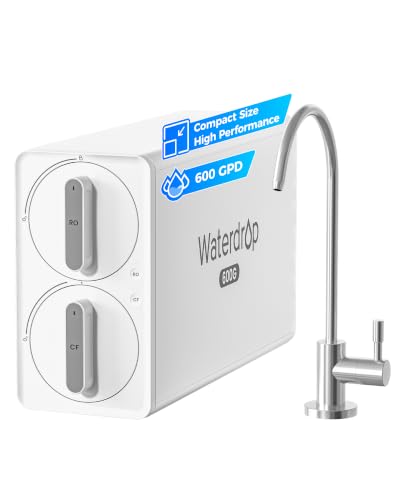
- Tankless under-sink design
- Up to 600 GPD; stated 2:1 pure-to-drain ratio
- Mineral infusion and filter reminders
Best For: Space-conscious kitchens wanting installed RO
Best for One or Two
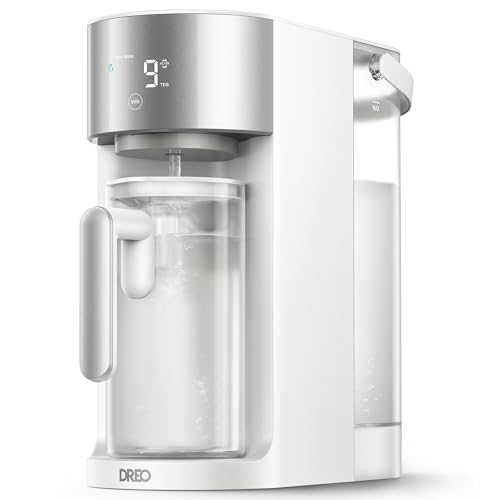
- 3-liter tank and one autofill pitcher
- Install-free countertop setup
- TDS monitoring and filter reminders
Best For: One or two people avoiding plumbing work
Best No-Plumbing Option

- Countertop setup with no plumbing
- 5L tank and two 1.1L pitchers
- TDS display and filter reminders
Best For: Renters and households wanting installation-free RO
Best High-Output Pick

- 600 GPD rated output
- Tankless under-sink design
- 2:1 pure-to-drain ratio
Best For: Larger households seeking fast under-sink dispensing
Best Space-Saving Under-Sink Pick

- Tankless, 5.9-inch-wide body
- 400 GPD rated output
- 1:1 pure-to-drain ratio
Best For: Households prioritizing under-sink space over maximum output
Best High-Capacity Under-Sink Pick – Waterdrop G3P600
Among compact reverse osmosis systems, the Waterdrop G3P600 stands out for its tankless under-sink design and 600-gallon-per-day rated capacity. It is 5.67 inches wide, but check its 18.12-inch depth and 17.72-inch height against your cabinet before buying.
Best For: Households that want high-capacity, tankless filtration under the sink and have room for a power connection.
Pros:
- Certified to NSF/ANSI 58 for TDS reduction, NSF 42 for chlorine, taste and odor reduction, and NSF/ANSI 372 for lead-free materials.
- Smart faucet displays filtered-water TDS and remaining filter life.
- Rated 2:1 pure-to-drain ratio; filters can be changed without tools.
Cons:
- Requires under-sink electricity.
- Its depth and height may rule out smaller cabinets despite the narrow footprint.
Choose this model when daily output and an uncluttered under-sink setup matter more than installation flexibility. Measure the cabinet and confirm an outlet is available first.
Best No-Install Glass Carafe – AquaTru Glass Carafe
The AquaTru Glass Carafe is a countertop choice for shoppers comparing compact reverse osmosis systems without wanting to alter their plumbing. Fill its tank, plug it into an outlet, and collect filtered water in the removable glass carafe.
Best For: Renters or households seeking countertop RO water in a glass serving carafe without drilling or plumbing.
Pros:
- Requires no plumbing, drilling, or tools for installation.
- Four-stage RO filtration is tested and certified to NSF standards by IAPMO for contaminant reduction.
- Includes a removable glass carafe with lid; the RO filter is rated for one year or 600 gallons.
Cons:
- Needs counter space, an outlet, and manual tank refills.
- Pre/carbon and VOC carbon filters have shorter 300-gallon ratings than the RO filter.
This is a practical option if an under-sink system is off the table. Its 14-by-7.5-inch footprint is worth measuring, and filter replacements involve more than one schedule.
Best Mineral-Added Countertop Pick – Waterdrop C2SL
The Waterdrop C2SL suits buyers looking at compact reverse osmosis systems who also want minerals added back to their drinking water. Its countertop unit measures 15.8 by 6.1 by 11.4 inches and automatically refills a detachable 40-ounce glass pitcher.
Best For: One or two people who want no-plumbing RO filtration with mineral-added water and a refrigerator-friendly pitcher.
Pros:
- Mineral filter adds calcium, magnesium, potassium, and sodium for a balanced taste.
- Needs no plumbing or drilling; the 108-ounce feed tank supplies an autofill glass pitcher.
- Display and voice alerts help track operation and filter changes; filter life is rated up to 12 months or 528 gallons.
Cons:
- Requires an outlet and manual refilling of the feed tank.
- Designed for one or two people, so larger households may refill it frequently.
Pick the C2SL if the mineral stage is a priority. Its SGS contaminant-reduction figures come from laboratory testing, and actual filter life depends on water quality and use.
Best Straightforward Autofill Pick – Waterdrop C2S
The Waterdrop C2S offers a no-installation option among compact reverse osmosis systems, pairing countertop filtration with an autofill 40-ounce glass pitcher. At 15.8 by 6.1 by 11.4 inches, it is narrow enough to consider for a crowded counter, provided the full footprint fits.
Best For: One or two people who want room-temperature RO water and a removable glass pitcher without plumbing work.
Pros:
- Six-stage RO system; SGS laboratory testing reports reductions in substances including PFOA, PFOS, TDS, chlorine, and lead.
- Smart display and voice alerts flag refills and filter changes.
- Detachable 40-ounce glass pitcher; filtration capacity is rated up to 528 gallons.
Cons:
- Requires an electrical outlet and manual feed-tank refills.
- Dispenses room-temperature water rather than offering a temperature selection.
The C2S makes sense when convenience and a fridge-ready pitcher are the main goals. Its NSF/ANSI 372 certification covers lead-free materials; it should not be mistaken for certification of every listed contaminant-reduction claim.
Best for Sharing – DREO RO 113 Countertop System
Among compact reverse osmosis systems, the DREO RO 113 suits households that want filtered water without under-sink installation. Its 5-liter capacity and two included autofill pitchers make it easier to keep water available in more than one spot.
Best For: Households seeking an install-free countertop unit with two pitchers.
Pros:
- Two autofill pitchers are included.
- Built-in TDS meter and filter-change indicator simplify monitoring.
- Self-cleaning function and a stated 3:1 pure-to-drain ratio.
Cons:
- At 15.7 inches long and 13.4 inches high, it still needs dedicated counter space.
- Countertop operation means it does not provide water directly from a sink faucet.
The two pitchers are the main reason to choose this model over a smaller countertop unit. DREO says SGS testing found its filtration met NSF/ANSI 58 standards; that wording is not the same as claiming the complete system is certified.
Best Under-Sink Space Saver – Waterdrop G6A6 Tankless RO
If counter space matters more than avoiding installation, the Waterdrop G6A6 is one of the compact reverse osmosis systems to consider. Its tankless under-sink body measures 15.94 by 5.31 by 9.61 inches, and Waterdrop says it saves up to 81.8% of the space used by traditional RO systems.
Best For: Kitchens that need a compact under-sink system with a faucet and mineral-enriched water.
Pros:
- Rated for up to 600 gallons per day with a stated 2:1 pure-to-drain ratio.
- Mineral infusion adds calcium, magnesium, sodium, and potassium back to the water.
- Twist-and-pull filters and replacement reminders simplify upkeep.
Cons:
- Requires under-sink installation rather than countertop plug-in use.
- The mineral filter has a stated six-month lifespan, so replacements are an ongoing consideration.
Choose this model for a permanent, space-conscious sink setup rather than portable pitchers. Its NSF/ANSI/CAN 372 certification concerns lead-free materials; contaminant-reduction claims are based on the stated SGS testing.
Best for One or Two – DREO RO 112 Countertop System
For one or two people comparing compact reverse osmosis systems, the DREO RO 112 offers an install-free countertop option. Its 3-liter tank, included 1.1-liter autofill pitcher, and approximately 14.5-by-6.7-inch footprint fit smaller daily water needs.
Best For: One- or two-person households wanting countertop RO without plumbing work.
Pros:
- Autofill pitcher and automatic internal flushing reduce hands-on steps.
- Displays raw and purified water TDS and provides filter-change reminders.
- Stated 3:1 pure-to-drain ratio; filter is rated for 265 gallons.
Cons:
- The 3-liter tank and single 1.1-liter pitcher may require frequent refills for heavier use.
- Needs counter space and does not dispense through a sink faucet.
This is the more modest-capacity choice when a second pitcher is unnecessary. DREO cites SGS testing to NSF/ANSI 58 standards, but shoppers should not confuse that statement with a product certification.
Best No-Plumbing Option – DREO RO Water Filter 113
Among compact reverse osmosis systems, this DREO countertop model suits buyers who want filtered water without modifying a sink. Plug it in, fill the 5L tank, and use the two included 1.1L autofill pitchers for serving.
Best For: Renters or households of three to four people who want a portable, installation-free RO setup.
Pros:
- Slim countertop design requires no plumbing.
- Displays raw and filtered water TDS and provides filter-change reminders.
- Includes two pitchers and has a stated 3:1 pure-to-drain ratio.
Cons:
- Uses counter space and requires manual tank refills.
- Filter is rated for 265 gallons or a six-month life cycle.
The pitchers make this a convenient alternative to filling glasses directly from a sink faucet. Note that the stated dimensions differ slightly between the supplied bullet points and specifications, so check the space available before ordering.
Best High-Output Pick – Waterdrop G2P600
If output matters most when comparing compact reverse osmosis systems, the tankless Waterdrop G2P600 is rated for 600 gallons per day. Its under-sink body measures 17.3 by 5.9 by 14 inches, and the included faucet keeps dispensing at the sink.
Best For: Larger households or shared spaces that want fast, tankless under-sink filtration.
Pros:
- Rated for 600 GPD, with a stated 200ml cup fill time of eight seconds.
- Stated 2:1 pure-to-drain ratio.
- Includes two filters; twist-and-pull replacements and filter-life indicators simplify maintenance.
Cons:
- Requires under-sink installation and corded power.
- Still produces drain water.
This is the stronger choice of the two Waterdrop models here for buyers prioritizing flow and a higher pure-to-drain ratio. Its NSF/ANSI 372 certification concerns lead-free materials; it should not be mistaken for certification of contaminant-reduction performance.
Best Space-Saving Under-Sink Pick – Waterdrop G2
The Waterdrop G2 brings a tankless layout to compact reverse osmosis systems for buyers who prefer a dedicated sink faucet over a countertop dispenser. It measures 17.3 by 5.9 by 14 inches and is rated for up to 400 gallons per day.
Best For: Households seeking tankless under-sink RO with a narrower footprint and moderate rated output.
Pros:
- Tankless design avoids a separate under-sink storage tank.
- Stated 1:1 pure-to-drain ratio and approximately 12-second cup fill time.
- Two preinstalled filters have a twist-and-pull replacement design.
Cons:
- Requires an under-sink electrical outlet and drilling holes for installation.
- Lower rated output and pure-to-drain ratio than the G2P600.
The G2 is worth considering when 400 GPD is sufficient and saving cabinet space is the priority. Its NSF/ANSI 372 certification applies to lead-free materials, not a blanket certification of its filtration claims.
How We Picked the Best Compact Reverse Osmosis Systems
We focused on Compact Reverse Osmosis Systems in two practical categories: countertop units and tankless under-sink models. The selection includes different rated production capacities, reservoir and pitcher formats, and options with mineral-added water. For a useful comparison, we prioritized specifications and ownership questions shoppers can check: space requirements, installation, refill routine, replacement filters, and wastewater. A rated gallons-per-day figure describes production under specified conditions; it does not guarantee that much water will be dispensed instantly in your kitchen.
Quick Comparison: Countertop Vs. Under-Sink
Countertop systems generally require no plumbing changes, making them appealing for renters or anyone who wants a simpler setup. They do take up counter space, need a power outlet, and typically require you to refill a feed-water tank and empty concentrated wastewater. Check both the machine’s footprint and the clearance needed to lift out its tanks.
Tankless under-sink systems free up the countertop and feed a dedicated faucet. They require space in the cabinet, a compatible water connection and drain, and a power outlet. Installation is more involved, but there is no countertop reservoir to refill. The Waterdrop G-series models in this roundup fall into this category; compare their published dimensions and rated flow rather than assuming every 600 GPD model will feel identical at the faucet.
Key Buying Factors for Compact Reverse Osmosis Systems
Space and Installation
Measure before buying. For a countertop model, account for tank removal, pitcher placement, and access to an outlet. For under-sink RO, check cabinet depth, plumbing clearance, outlet location, and whether your sink can accommodate the supplied faucet. If you cannot modify plumbing, start with countertop options.
Daily Capacity and Serving Style
Consider how many people will drink the water and how you will serve it. A glass carafe or autofill pitcher can be convenient for table use and refrigeration; a larger feed tank may reduce refill frequency. Under-sink systems suit households that want water on demand at a faucet. Compare usable pitcher or tank volume separately from advertised filtration capacity.
Wastewater, Filters, and Water Taste
RO filtration produces a concentrated wastewater stream. Compare each model’s stated pure-to-drain ratio under the same convention, and remember that real-world results can vary with incoming water and operating conditions. Check replacement-filter prices, stated service intervals, and availability before choosing a system. Some models add minerals after RO filtration for a different taste; this is a preference, not a substitute for checking the system’s contaminant-reduction certifications. Verify claims against the exact model and certification listing, especially if you are buying to address a specific contaminant.
Who Should Buy Which Compact Reverse Osmosis Systems?
Renters and installation-averse buyers: Choose a countertop unit after confirming that its footprint, refill routine, and pitcher size fit your habits. Counter-space-conscious households: Look at tankless under-sink options if plumbing access and cabinet space allow. Frequent water drinkers: Prioritize convenient dispensing and realistic refill frequency over the largest headline GPD number. Buyers who prefer mineral-added water: Compare the mineral-added options with standard RO models for taste, filter costs, and verified filtration claims.