If your bathroom needs better moisture control without the noise and bulk of a ceiling unit, an inline fan can be a smart upgrade. These fans move air through ducting, helping keep steam, odors, and humidity under control.
This roundup focuses on budget-friendly options that balance airflow, noise, and installation flexibility for real-world bathrooms.
Best 10 Budget Inline Bathroom Exhaust Fans Picks for 2026
Budget Pick
QWORK 4 Inch Inline Duct Fan, 280 CFM Quiet Exhaust

- 280 CFM airflow for fast ventilation
- Under 30 dB operation
- Works as intake or exhaust
Best For: Strong airflow on a budget for bathrooms and similar spaces
Quiet Runner
Inline Bathroom Exhaust Fan 170CFM

- 170 CFM for residential exhaust
- Centrifugal blower design
- Includes brackets, adapter, and cord
Best For: Quiet bathroom ventilation with simple installation
Efficiency Pick
4 Inch Inline Duct Fan with EC Motor
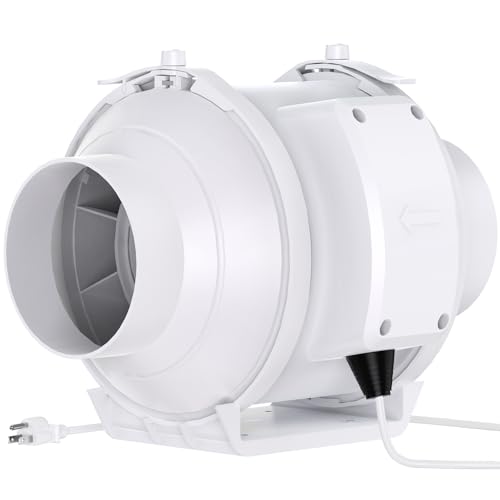
- 185 CFM with EC motor efficiency
- Pre-wired for easier installation
- Quiet, continuous-use design
Best For: Energy-conscious bathroom ventilation with DIY-friendly setup
Compact Value
iPower 4 Inch Inline Duct Fan 100 CFM

- 100 CFM for light-duty ventilation
- Compact design for tight spaces
- Includes 5.5-foot grounded cord
Best For: Small bathrooms and basic exhaust setups
High-Output Pick
6 Inch 390 CFM Inline Duct Fan for Larger Spaces

- 390 CFM airflow for strong ventilation
- 50 dB noise and vibration-damping features
- ABS housing built for humid environments
Best For: Larger bathrooms and buyers wanting maximum airflow on a budget
Best for Everyday Use
4 Inch 100 CFM Low-Noise Booster Fan
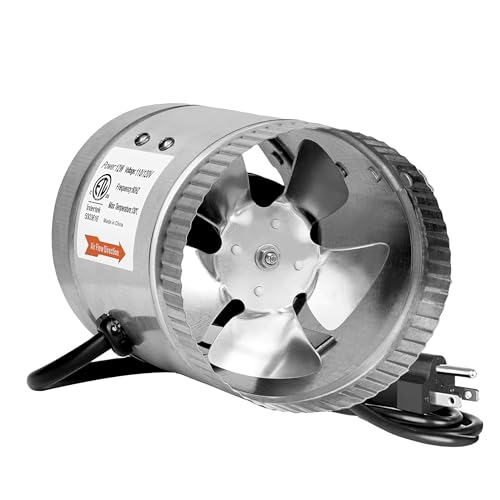
- 30 dB operation for quieter use
- Compact 4-inch design fits tight spaces
- 12W power draw with easy installation
Best For: Small bathrooms and simple low-noise ventilation
Balanced Airflow Pick
4 Inch 280 CFM Mixed-Flow Duct Fan

- 280 CFM airflow in a 4-inch size
- Mixed-flow design for efficient air movement
- Copper wire motor and sealed housing
Best For: Buyers wanting stronger airflow in a compact 4-inch fan
Best with Extra Features

- 280 CFM airflow for strong exhaust
- Less than 50 dB for quieter operation
- Easy-install lightweight plastic design
Best For: Small bathrooms and basic inline ventilation
Quiet Control Pick
Voltset 4 Inch Duct Fan with Remote Control

- 280 CFM airflow with remote control
- Listed 30 dB for quieter operation
- Copper motor for durability and heat dissipation
Best For: Quiet bathrooms and users who want remote control
High-Flow Pick
4 Inch 296 CFM Inline Ventilation Exhaust Fan

- 296 CFM is the highest airflow here
- 40 dB listed noise level
- Works as intake or exhaust fan
Best For: Rooms needing the strongest airflow from a budget inline fan
Budget Pick – QWORK 4 Inch Inline Duct Fan, 280 CFM Quiet Exhaust
If you’re shopping for budget inline bathroom exhaust fans, this QWORK 4-inch inline duct fan stands out for its strong 280 CFM airflow and simple direct-use setup. It is built to move air quickly in bathrooms and other small-to-medium ventilation runs, while keeping noise under 30 dB.
Best For: Buyers who want a high-airflow, low-noise inline fan for bathrooms, kitchens, or other compact ventilation jobs.
Pros:
- 280 CFM output helps clear humidity and stale air quickly.
- Quiet operation under 30 dB is well suited to living spaces.
- Works for both intake and exhaust use, adding flexibility.
- ABS plastic body and metal ring support straightforward installation.
Cons:
- Single-speed design offers no airflow adjustment.
- Best suited to 4-inch duct setups only.
Overall, this is a practical value option if airflow matters more than extra controls. It gives you strong ventilation performance in a compact, easy-to-connect form.
Quiet Runner – Inline Bathroom Exhaust Fan 170CFM
This inline bathroom exhaust fan is aimed at homeowners who want a quiet, hard-working ventilation upgrade without placing the fan directly in the room. Its centrifugal blower design and attic-or-roof-space installation help it move stale air efficiently while staying out of the living area.
Best For: Bathrooms and residential ventilation runs where quiet operation and low-maintenance performance matter.
Pros:
- 170 CFM performance is suitable for continuous residential exhaust.
- Centrifugal blower design is described as low-noise and low-maintenance.
- Includes mounting bracket, expansion bracket, and tapered duct adapter.
- Comes with a power cord, which may simplify installation.
Cons:
- 4-inch size limits it to smaller duct systems.
- Airflow is lower than the most powerful options in this roundup.
If you want a straightforward inline fan that prioritizes quiet placement and dependable exhaust, this model is a solid fit. It offers a balanced mix of performance and convenience for residential use.
Efficiency Pick – 4 Inch Inline Duct Fan with EC Motor
For shoppers comparing budget inline bathroom exhaust fans, this EC-motor model focuses on lower power use and easy DIY installation. It delivers 185 CFM airflow and is designed to clear steam, humidity, and lingering odors without drawing as much electricity as a traditional fan.
Best For: Homeowners who want an energy-conscious inline fan for bathrooms and other moisture-prone spaces.
Pros:
- EC motor is described as using 30% less electricity than traditional fans.
- 185 CFM airflow is strong enough for bathrooms and general air circulation.
- Pre-wired cord and removable duct ends make installation easier.
- Quiet operation and sturdy materials support continuous use.
Cons:
- Not the highest airflow option if you need maximum exhaust power.
- Best suited to 4-inch duct systems only.
This is a smart pick if efficiency is a top priority and you still want reliable ventilation. It combines practical airflow with a homeowner-friendly setup.
Compact Value – iPower 4 Inch Inline Duct Fan 100 CFM
If you’re looking at budget inline bathroom exhaust fans and want a compact, affordable booster-style option, this iPower 4-inch model is built for basic ventilation jobs. It moves 100 CFM at a low noise level and fits into tight spaces where a smaller fan makes more sense than a high-output unit.
Best For: Small bathrooms, utility areas, and basic ventilation setups that only need modest airflow.
Pros:
- 100 CFM output is suitable for lighter-duty exhaust needs.
- Less than 30 dB noise level is designed to stay unobtrusive.
- Compact, lightweight build works well in tight installation spaces.
- Includes a 5.5-foot grounded power cord for convenience.
Cons:
- Lower airflow than the other options in this roundup.
- Some listing details show a 40 dB noise level, so specs should be reviewed carefully.
Overall, this fan is best if you want a simple, space-saving exhaust booster rather than maximum performance. It makes sense for smaller jobs where modest airflow is enough.
High-Output Pick – 6 Inch 390 CFM Inline Duct Fan for Larger Spaces
If you’re comparing budget inline bathroom exhaust fans for a larger room or longer duct run, this 6-inch MissHoney model stands out for its 390 CFM airflow and 2250 RPM motor. It’s built for strong suction and uses a mixed-flow impeller, which helps move air efficiently while keeping resistance lower.
Best For: Larger bathrooms, utility spaces, or budget-minded buyers who want more airflow headroom.
Pros:
- 390 CFM airflow is strong for a 6-inch inline fan.
- 50 dB noise rating is relatively quiet for the output.
- Rubber shock absorbers help reduce vibration transfer.
- ABS plastic housing is made to resist humidity and chemicals.
Cons:
- 65-watt draw is higher than smaller, lower-output fans.
- 6-inch size may be more fan than a compact bathroom needs.
- Noise rises as wattage and airflow increase.
This is a practical choice if airflow matters more than compact size. It offers a lot of movement for the money, but the higher power and larger footprint make it better suited to bigger ventilation jobs than tight bathroom installs.
Best for Everyday Use – 4 Inch 100 CFM Low-Noise Booster Fan
For budget inline bathroom exhaust fans in small spaces, this Simple Deluxe 4-inch booster fan keeps things simple: 100 CFM, 12W power use, and a 30 dB noise rating. Its compact body and included 5.5-foot grounded cord make it easy to fit into tighter HVAC or bathroom setups.
Best For: Small bathrooms, low-clearance installs, and buyers who want a basic quiet booster fan.
Pros:
- Very quiet at 30 dB.
- Low 12W wattage keeps power use modest.
- Compact and lightweight for easier installation.
- Balanced centrifugal impeller and lubricated bearing support durability.
Cons:
- 100 CFM is modest for larger bathrooms.
- 4-inch size limits airflow compared with bigger inline fans.
- Best suited to booster or supplemental ventilation, not heavy-duty use.
This fan makes sense when you need a low-cost, low-noise helper rather than a high-capacity exhaust solution. It’s the most space-friendly option here, but its airflow is aimed at smaller jobs.
Balanced Airflow Pick – 4 Inch 280 CFM Mixed-Flow Duct Fan
Among budget inline bathroom exhaust fans, this 4-inch mixed-flow duct fan offers a strong middle ground with 280 CFM airflow and a 25W motor. The mixed-flow design is meant to improve air movement while helping reduce noise, and the sealed plastic housing is designed to handle moisture and dust.
Best For: Buyers who want more airflow than a basic 4-inch fan without stepping up to a larger 6-inch unit.
Pros:
- 280 CFM is strong for a 4-inch fan.
- Mixed-flow design aims to reduce noise while improving airflow.
- All-copper wire motor is described as more durable.
- Mounting brackets support horizontal or vertical installation.
Cons:
- Single-speed manual control keeps it basic.
- Plastic housing is less premium than metal alternatives.
- At 4 inches, it still may not suit very large bathrooms.
This model is a solid compromise if you want better airflow than entry-level 4-inch fans but don’t need the size or power of a 6-inch unit. It’s the most balanced pick for straightforward bathroom ventilation.
Best with Extra Features – Nalle 4 Inch Inline Duct Fan
If you’re comparing budget inline bathroom exhaust fans, this Nalle 4-inch inline duct fan is built around simple, high-airflow ventilation. It moves air at up to 280 CFM with a 2200 RPM motor, and the listed noise level is under 50 dB, which makes it a practical pick for small bathrooms where you want stronger exhaust without a bulky setup.
Best For: Small bathrooms, basic home ventilation, and buyers who want a straightforward inline fan with strong airflow.
Pros:
- 280 CFM airflow for effective bathroom exhaust and air circulation
- Listed at less than 50 dB for quieter everyday use
- Lightweight plastic build and flexible ducting for easier installation
- Also suited to grow rooms, kitchens, and HVAC-style ventilation
Cons:
- Single-speed design, so there is no built-in adjustment
- Uses button control rather than a dedicated speed controller
- Plastic construction may feel less premium than metal alternatives
Overall, this is a budget-friendly inline option that focuses on moving a lot of air with minimal fuss. If you want a simple bathroom exhaust solution and can live without advanced controls, it offers solid value for the price tier.
Quiet Control Pick – Voltset 4 Inch Duct Fan with Remote Control
The Voltset 4-inch duct fan fits the budget inline bathroom exhaust fans category if you want added convenience with airflow control. It delivers up to 280 CFM at 2200 RPM and includes a remote control for HIGH/LOW speed adjustment and on/off switching, while the listed 30 dB operation is appealing for quieter spaces.
Best For: Buyers who want a budget inline fan with remote control and quieter operation for bathrooms or multi-use spaces.
Pros:
- 280 CFM airflow with a 2200 RPM motor
- Remote control makes speed and power changes easier
- Listed 30 dB operation for quieter use
- Copper motor construction is designed for durability and heat dissipation
Cons:
- Only offers HIGH/LOW control rather than fine speed settings
- Listed for many use cases, so it is not bathroom-specific
- Remote-based control may be unnecessary for simple installs
This model stands out when convenience matters as much as airflow. If you want a compact inline exhaust fan with remote operation and a quieter spec sheet, it is one of the more user-friendly budget options here.
High-Flow Pick – 4 Inch 296 CFM Inline Ventilation Exhaust Fan
For buyers comparing budget inline bathroom exhaust fans, this 4-inch inline unit prioritizes airflow over extras. It is rated at 296 CFM with a 2250 RPM motor and a listed 40 dB noise level, so it is aimed at spaces that need stronger ventilation while still staying relatively quiet in day-to-day use.
Best For: Users who want the highest airflow in this group for bathrooms, ducts, and general indoor ventilation.
Pros:
- 296 CFM airflow, the highest rating in this roundup
- 40 dB listed noise level for a quieter operating profile
- Can be used as either an intake fan or exhaust fan
- Detachable design and metal ring make installation and removal easier
Cons:
- No controller included in the listed size option
- Plastic build may not appeal to buyers wanting a heavier-duty feel
- Higher wattage than the other options at 55 watts
This is the strongest airflow choice here for users who care most about ventilation performance. If your priority is moving more air through a bathroom or duct run, this fan is the most aggressive pick of the three.
How We Picked These Budget Inline Bathroom Exhaust Fans
We prioritized models that offer the best mix of airflow, noise control, motor quality, and overall value. Since Budget Inline Bathroom Exhaust Fans can vary a lot in performance, we looked for options that make sense for small to medium spaces, along with models that can also serve bonus ventilation needs in adjacent rooms or utility areas.
We also considered practical features like compact 4-inch sizing, quiet operation, higher-efficiency motors, and simple duct compatibility. The goal is to help you find a fan that fits your bathroom, not just the lowest price.
Quick Comparison
Most of the picks here fall into two camps: lower-CFM 4-inch fans for smaller bathrooms and low-noise everyday use, and higher-CFM options for larger spaces, longer duct runs, or bathrooms that trap humidity quickly. If you want a straightforward replacement or upgrade, moderate airflow is often the safest bet. If your bathroom is larger or your duct path is less direct, stronger airflow may be worth the tradeoff in cost and noise.
Key Buying Factors for Budget Inline Bathroom Exhaust Fans
Airflow Rating
CFM matters most. A small powder room may do fine with a modest airflow rating, while a full bathroom or one with heavy steam usually benefits from a stronger fan. Too little airflow leaves moisture behind; too much can be unnecessary noise and cost.
Noise Level
Inline fans are often quieter than traditional ceiling-mounted exhaust fans because the motor sits away from the room. Still, motor design, housing quality, and duct length all affect how loud the system feels in daily use.
Duct Size and Layout
Most Budget Inline Bathroom Exhaust Fans in this group use 4-inch ducting, which is common and easy to work with. Make sure the fan matches your existing duct size and that your run is not so long or restrictive that performance drops sharply.
Motor Type and Durability
Look for efficient motors, especially if the fan will run often. Better motor construction can improve lifespan and reduce maintenance, which matters more than a small upfront savings.
Controls and Installation
Remote controls, simple wiring, and flexible mounting can make installation easier. If you are replacing an older fan, check clearance, airflow direction, and access for service before buying.
Who Should Buy Which Budget Inline Bathroom Exhaust Fans?
If you have a small bathroom and want a low-cost, quiet upgrade, choose a basic 4-inch inline model with moderate airflow. If your bathroom is larger, steams up quickly, or has a longer duct path, step up to a higher-CFM fan. Buyers who want more convenience may prefer a model with remote control, while those focused on value should stick with a simple fan that matches their ventilation needs closely.
In short, the best choice is the one that fits your space, ducting, and moisture load without overspending on airflow you do not need.