Persistent humidity can lead to condensation, mildew, peeling paint, and lingering odors. The right exhaust fan or fresh-air system helps remove moisture before it damages your bathroom and affects indoor comfort.
These 10 picks cover quiet ceiling fans, humidity-sensing models, high-capacity wall exhaust units, and whole-house ventilation for homes that need more than basic spot extraction.
Best 10 Bathroom Ventilation Systems for Humid Climates Picks for 2026
Best Quiet Humidity-Sensing Pick

- 120 CFM airflow for bathrooms up to 120 sq. ft.
- Automatic humidity sensing
- 0.3-sone ultra-quiet operation
Best For: Medium-to-large bathrooms needing quiet, automatic humidity control
Best Adjustable Airflow
Panasonic WhisperValue FV-0510VSC1

- Selectable 50, 80, or 100 CFM
- Automatic condensation sensing
- Ceiling- or wall-mount design
Best For: Bathrooms needing customizable airflow and humidity-triggered ventilation
Best Whole-Home Humidity Solution

- 120 CFM balanced whole-house air exchange
- Energy recovery helps manage moisture
- Suitable for homes up to 6,000 sq. ft.
Best For: Whole-home ventilation and humidity management
Best Smart High-Capacity Fan
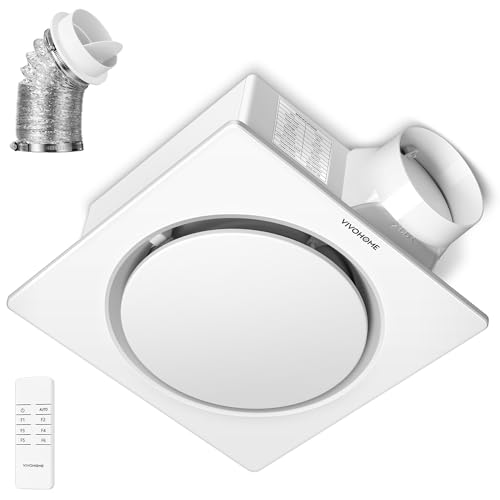
- Automatic 50/110/160 CFM speed changes
- Up to 160 CFM airflow
- Constant-airflow technology for duct resistance
Best For: Larger bathrooms and utility spaces needing adaptive high airflow
Best Through-Wall Option
176 CFM Moisture-Removing Exhaust Fan
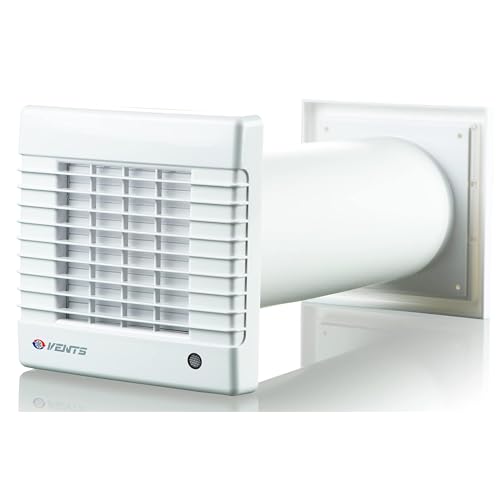
- Through-wall design for rooms without existing ventilation
- 176 CFM airflow targets humidity, odors, and fumes
- Thermally actuated louvers limit drafts when off
Best For: Bathrooms and utility spaces needing direct through-wall installation
Best Value Humidity Sensor

- Automatic activation above 60% humidity
- Quiet 1.5-sone operation for bathrooms up to 110 sq. ft.
- Room-side installation option can avoid attic access
Best For: Smaller bathrooms needing simple automatic humidity control
Automatic Moisture Control Pick
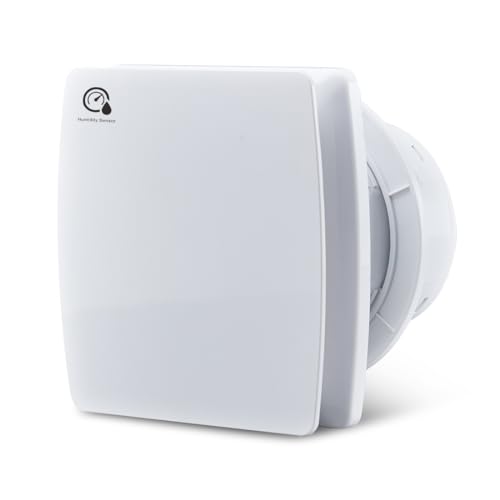
- Humidity threshold adjusts from 60%-90%
- 30-second-to-30-minute delay timer
- 110 CFM airflow with IPX4 protection
Best For: Damp spaces needing automatic humidity-triggered ventilation
Certified Adjustable Pick

- Selectable 50/80/110 CFM airflow
- Up to 60-minute moisture-removal delay
- HVI, Energy Star, UL, and FCC certified
Best For: Certified, adjustable ceiling ventilation with automatic humidity control
Best Quiet Humidity-Sensing Pick – KAZE SEP120H
For bathroom ventilation systems for humid climates, the KAZE SEP120H is a practical choice when automatic humidity control and quiet operation matter. Its sensor can switch the fan on and off as needed, while the 120 CFM rating suits bathrooms up to 120 square feet.
Best For: Medium-to-large bathrooms needing quiet, automatic humidity control.
Pros:
- Humidity sensing enables hands-free automatic operation.
- Very quiet 0.3-sone operation at 120 CFM.
- Energy Star certified and includes a backdraft prevention damper.
- Sliding hanger bars support flexible positioning between framing.
Cons:
- Requires an 11 3/8-by-10 1/2-inch ceiling opening.
- Attic access is required for installation.
- The included reducer adapts the 6-inch duct to 4 inches, which may require planning.
The KAZE stands out for combining strong airflow with automatic moisture response and exceptionally low rated noise. Confirm the ceiling opening and duct layout before choosing it.
Best Adjustable Airflow – Panasonic WhisperValue FV-0510VSC1
The Panasonic WhisperValue is a flexible option among bathroom ventilation systems for humid climates, pairing a condensation sensor with selectable 50, 80, or 100 CFM airflow. That range makes it easier to match ventilation to bathroom size and everyday use.
Best For: Homeowners who want adjustable airflow and humidity-triggered operation in a compact fan.
Pros:
- Condensation sensor can turn the fan on when humidity is detected.
- Pick-A-Flow settings provide 50, 80, or 100 CFM.
- Energy Star certified with an efficient brushless DC motor.
- UL listed for ceiling or wall mounting.
Cons:
- Its maximum airflow is 100 CFM, lower than some larger bathroom fans.
- Rated noise is 0.9 sones.
- Requires a 4-inch oval duct connection.
This Panasonic model is a sensible fit when installation flexibility and customizable airflow are more important than maximum capacity. Its condensation sensor adds useful automatic moisture control.
Best Whole-Home Humidity Solution – Aprilaire V22BEC ERV
Unlike a single-room exhaust fan, the Aprilaire V22BEC is a whole-house option for bathroom ventilation systems for humid climates. Its 120 CFM energy recovery design exchanges stale indoor air for outdoor air while helping manage moisture and reduce the load on heating and cooling equipment.
Best For: Homes needing balanced, whole-house ventilation to help control humidity and indoor air quality.
Pros:
- Designed for homes up to 6,000 square feet.
- Energy recovery core helps temper incoming air and recover moisture.
- Balanced supply and exhaust airflow supports consistent ventilation.
- Can mount on a wall, ceiling, or floor with the supplied bracket.
Cons:
- It is a 50-pound whole-house system rather than a simple bathroom fan.
- Rated noise is 53 dB.
- Its larger split-system format requires dedicated installation space.
The V22BEC is best considered when humid-bathroom concerns are part of a broader indoor-air-quality plan. It offers balanced ventilation throughout the home, but it is more involved than a room-only exhaust fan.
Best Smart High-Capacity Fan – VIVOHOME EC Motor Exhaust Fan
The VIVOHOME EC motor fan offers adaptable performance for bathroom ventilation systems for humid climates, automatically shifting among 50, 110, and 160 CFM as humidity changes. Its constant-airflow technology is designed to maintain airflow as duct resistance, bends, or dust buildup increase.
Best For: Larger bathrooms and utility spaces needing automatic speed adjustment and high airflow.
Pros:
- Humidity sensing automatically selects among three airflow levels.
- Provides up to 160 CFM for faster steam and odor removal.
- Brushless EC motor delivers 110 CFM at a stated 12.5 watts.
- Includes a remote, backdraft damper, aluminum duct, and cut-out template.
Cons:
- Remote requires two AAA batteries, which are not included.
- Fits a specific 10.2-by-10.2-inch ceiling opening.
- The specifications list both 0.1-sone silent-mode operation and 1.5 sones as the noise level.
With automatic multi-speed control and a 160 CFM maximum, this VIVOHOME model is well suited to spaces that produce substantial moisture. Check the opening dimensions and review the operating-mode noise expectations before installation.
Best Through-Wall Option – 176 CFM Moisture-Removing Exhaust Fan
For bathroom ventilation systems for humid climates, the VENTS-US GK 150 MA is a practical choice when there is no existing ductwork or attic access. Its through-the-wall design, included PVC duct, and 176 CFM airflow help remove humidity, odors, fumes, and stale air.
Best For: Bathrooms, basements, garages, and other spaces needing direct through-wall ventilation.
Pros:
- Through-wall installation provides a solution for rooms without existing ventilation.
- 176 CFM airflow helps reduce moisture, condensation, odors, and indoor contaminants.
- Thermally actuated louvers help block drafts and outside air leakage when the fan is off.
- Can be plugged in or hardwired and uses up to 35.2 watts for economical operation.
Cons:
- At 2.7 sones, it is louder than the quieter ceiling-mounted options in this roundup.
- It is a one-speed fan with push-button or plug-based control rather than automatic humidity sensing.
- Through-wall installation may be less suitable where a ceiling duct system is preferred.
This fan stands out for retrofit flexibility and backdraft protection. Choose it when creating a new wall opening is easier than accessing ceiling ductwork.
Best Value Humidity Sensor – Quiet 110 CFM Bathroom Fan
The Tech Drive fan is a compact ceiling-mounted pick for bathroom ventilation systems for humid climates. Its built-in humidity sensor can start the 110 CFM fan when room humidity rises above 60%, while the 1.5-sone motor keeps everyday operation relatively quiet.
Best For: Bathrooms up to 110 square feet where automatic humidity control and a straightforward ceiling installation are priorities.
Pros:
- Humidity-sensing mode automatically turns the fan on above 60% humidity.
- 110 CFM airflow is designed for bathrooms up to 110 square feet.
- Quiet 1.5-sone operation is suitable for regular bathroom use.
- Can be installed in new construction or from the room side without attic access.
Cons:
- Its 4-inch duct and 110 CFM capacity are less suited to larger bathrooms.
- Only one speed is provided, with no multi-speed airflow adjustment.
- Automatic operation uses a fixed humidity threshold above 60%.
With humidity sensing, Energy Star qualification, and flexible installation options, this is a sensible choice for smaller bathrooms. Confirm the ceiling opening dimensions before replacing an existing fan.
Best High-Capacity Upgrade – 240 CFM Smart Humidity Fan
For larger or especially moisture-prone rooms, the VIVOHOM 240 CFM fan offers powerful, adjustable ventilation for bathroom ventilation systems for humid climates. Its humidity sensing automatically selects among three airflow levels, while six manual speeds and remote timer controls add flexibility.
Best For: Bathrooms, laundry rooms, and toilets measuring roughly 120 to 280 square feet that need high airflow and automatic humidity response.
Pros:
- 240 CFM airflow helps clear steam and odors in larger rooms.
- Humidity sensing switches between automatic off, 160 CFM, and 240 CFM modes based on humidity.
- Six manual speeds and a wireless remote provide detailed control from up to 45 feet away.
- Brushless DC motor, rust-resistant metal housing, and included backdraft damper support wet-environment use.
Cons:
- The required 11.37-by-12.12-inch ceiling opening is larger than many replacement fans.
- Its larger housing and 6-inch duct compatibility may require more installation planning.
- The supplied details list 1.6 sones, so it is not as quiet on paper as the advertised 0.1-sone motor description.
This is the most capable option for larger spaces and users who want granular remote control. Check the ceiling opening, duct route, and electrical requirements before installation.
Quiet High-Capacity Pick – 110 CFM Bathroom Exhaust Fan
For bathroom ventilation systems for humid climates, this ceiling-mounted HNRLOY fan offers 110 CFM of airflow for rooms listed at 129 to 172 square feet. Its 1.0-sones operation and 13-watt motor provide a practical balance of moisture removal, quiet use, and energy savings.
Best For: Medium-to-large bathrooms needing straightforward, quiet ceiling ventilation.
Pros:
- 110 CFM airflow is rated for 129- to 172-square-foot spaces.
- Quiet 1.0-sones operation is suitable for daily use.
- 13-watt design uses less power than the traditional 50-watt comparison cited by the manufacturer.
- Includes a 4-inch duct connection and detachable panel for installation and cleaning.
Cons:
- Has only one speed and no listed humidity sensor or automatic control.
- Requires a 10-by-10-inch mounting opening and compatible 4-inch ducting.
This is a sensible basic extractor when you want strong, quiet airflow without automated humidity control. Confirm the mounting dimensions and duct route before purchase.
Automatic Moisture Control Pick – Humidity-Sensing Exhaust Fan
Among bathroom ventilation systems for humid climates, this 110 CFM fan stands out for automatic humidity control. Its sensor can be set from 60% to 90% humidity, while the adjustable 30-second-to-30-minute delay helps continue ventilation after the room begins drying.
Best For: Bathrooms, basements, and other damp areas where automatic moisture-triggered ventilation is useful.
Pros:
- Humidity sensor automatically starts the fan when the selected threshold is reached.
- Adjustable shutoff delay runs from 30 seconds to 30 minutes.
- 110 CFM airflow and IPX4 protection are suited to regular ventilation in damp areas.
- Quiet operation is rated below 34 dB, with ceiling, wall, or glass installation options.
Cons:
- Uses 18 watts, more than the 13-watt HNRLOY model in this roundup.
- Humidity settings begin at 60%, so lower-threshold control is not listed.
- Installation may require careful selection between the two included baffle types.
The automatic sensor and delay make this a convenient choice for controlling recurring shower moisture. Its flexible mounting options also broaden its use beyond a standard ceiling installation.
Certified Adjustable Pick – AUPU Humidity-Sensing Fan
For bathroom ventilation systems for humid climates, the AUPU combines humidity sensing with selectable 50, 80, or 110 CFM airflow. Its adjustable time delay, retractable mounting bracket, and HVI, Energy Star, UL, and FCC certifications make it a feature-rich option for planned ceiling installations.
Best For: Homeowners wanting certified, adjustable ventilation with automatic humidity response.
Pros:
- Three selectable airflow levels—50, 80, and 110 CFM—support different room and ventilation needs.
- Humidity sensor starts the fan automatically when moisture rises above the selected setting.
- Time delay can be set to 5, 10, 20, 40, or 60 minutes for continued moisture removal.
- Retractable bracket fits ceiling joist spacing from 14 to 22 inches.
Cons:
- Requires a compatible 4-inch duct, which is not included.
- Installation requires two wall switches: one for main power and one for the vent.
- Ceiling opening, joist, and duct compatibility should be confirmed before purchase.
This is the most adjustable and certification-focused option of the three. It is especially appealing when you want automatic control but also need to tune airflow and post-shower runtime.
How We Picked the Best Bathroom Ventilation Systems for Humid Climates
We focused on the specifications that matter most in damp bathrooms: airflow capacity, humidity-sensing or timer controls, operating noise, energy use, duct compatibility, installation flexibility, and suitability for the room or home size. The selection includes models from 50 to 240 CFM, plus an energy recovery ventilator for whole-house fresh-air exchange.
Because advertised performance does not guarantee an identical real-world installation, treat CFM and noise ratings as comparison points rather than promises. Duct length, bends, exterior vents, and poor sealing can significantly reduce effectiveness.
Quick Comparison
- Quiet everyday ventilation: Look for low-sone ceiling fans such as the KAZE, Panasonic, or HNRLOY options.
- Automatic moisture control: Humidity-sensing models from KAZE, Panasonic, VIVOHOME, Tech Drive, the 5.9-inch fan, and AUPU can start when moisture rises.
- Large or especially damp spaces: Higher-output VIVOHOME and VENTS-US models provide more airflow, provided the ductwork can support it.
- Whole-home fresh air: The Aprilaire ERV is designed for broader ventilation needs rather than a single bathroom.
Key Buying Factors for Bathroom Ventilation Systems for Humid Climates
Airflow and Room Size
Higher CFM is useful for larger bathrooms, enclosed rooms, frequent showers, or homes with severe moisture problems. A typical bathroom may need roughly 1 CFM per square foot, while a larger or unusually humid space may benefit from additional capacity. Avoid choosing a powerful fan if the existing duct is too narrow or restrictive.
Humidity Controls and Timers
A humidity sensor can automatically respond to steam, reducing the chance that the fan is forgotten. A timer or time-delay function helps continue exhausting air after a shower. Adjustable sensitivity is valuable because bathrooms differ in climate and normal humidity levels.
Noise, Energy, and Ducting
Lower sone ratings are preferable in bedrooms, guest bathrooms, and frequently used spaces. Energy Star certification can help reduce operating costs, but installation quality matters just as much. Match the fan to the existing duct diameter, keep the run as short and straight as practical, and vent outdoors—not into an attic or wall cavity.
Installation Location and Maintenance
Confirm whether the unit supports ceiling, wall, or through-wall installation. Check electrical requirements and available clearance before buying. Clean the grille and sensor periodically, and inspect the exterior damper so lint, insects, or debris do not restrict airflow.
Who Should Buy Which Bathroom Ventilation Systems for Humid Climates?
Choose a quiet humidity-sensing ceiling fan for most standard bathrooms and households that want automatic, low-effort moisture removal. Choose a higher-CFM model for large bathrooms, basement baths, or persistent condensation, but only when ductwork and exterior venting are properly sized. Choose a through-wall fan when a short direct exhaust route makes ceiling duct installation impractical. Choose the Aprilaire ERV when the goal is balanced, whole-home ventilation rather than bathroom-only exhaust. For the best results, prioritize correct sizing and professional installation over headline airflow alone.