Large attics can trap heat and moisture, increasing strain on your cooling system and contributing to uncomfortable upper floors. The right attic fan can improve air movement, but performance depends on more than the highest advertised CFM.
We compared 10 attic ventilation fans for large homes across airflow, installation style, controls, coverage claims, power source, and operating flexibility. Use the guide below to narrow the list by attic layout, climate, and ventilation needs.
Best 10 Attic Ventilation Fans for Large Homes Picks for 2026
Maximum-Capacity Wall Exhaust

- 6,128 CFM listed airflow
- Coverage stated up to 9,000 sq. ft.
- Automatic weather-resistant shutters
Best For: Very large attic, garage, or shed spaces
Roof-Mounted Attic Specialist

- 1,500 CFM listed airflow
- Rated for attics up to 2,800 sq. ft.
- Built-in thermostat controller
Best For: Roof-mounted attic ventilation on non-tile roofs
Plug-In High-Airflow Pick

- 3,500 CFM listed airflow
- Includes a 5.4-foot power cord
- Automatic aluminum gravity shutters
Best For: Large utility spaces near a 120-volt outlet
Thermostat-Controlled Gable Ventilator

- 2,339 CFM listed airflow
- Rated for up to 3,400 sq. ft.
- Adjustable built-in thermostat
Best For: Large attics with compatible gable openings
Top Solar Pick

- Up to 2,000 CFM airflow
- Automatic controller-free solar operation
- Metal, weather-resistant construction
Best For: Large attics needing low-maintenance solar ventilation
Best Smart Gable Option
QuietCool AFG SMT PRO-2.0 Smart Attic Fan
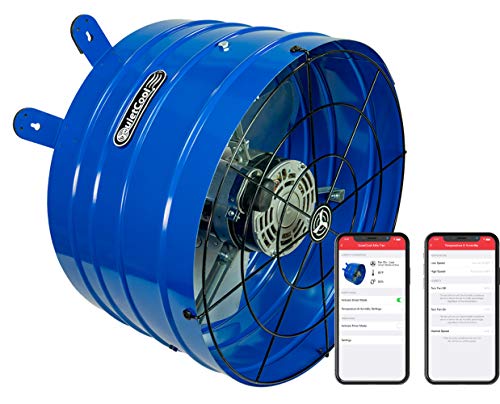
- Up to 1,945 CFM on high
- App, thermostat, and humidistat control
- Two-speed plug-and-play AC design
Best For: Gable attics needing connected ventilation controls
Best Variable-Speed Value
VEVOR 12-Inch Smart Shutter Exhaust Fan

- 1,500 CFM exhaust capacity
- 10 speeds with temperature and humidity triggers
- Steel housing with automatic rain-blocking shutters
Best For: Wall-mounted attic ventilation with programmable control
Large-Attic Pick

- 1,300 CFM airflow for up to 1,850 sq. ft.
- Adjustable thermostat for automatic operation
- 20-foot cord supports plug-and-play installation
Best For: Large gable attics needing automatic, corded ventilation
Maximum-Coverage Pick

- 4,244 CFM airflow with 6,200 sq. ft. listed coverage
- Automatic, weather-resistant aluminum shutters
- Variable speed available with separate controller
Best For: Very large spaces needing high-volume wall exhaust
Quiet-Control Pick

- Up to 1,945 CFM with two-speed capability
- Adjustable 50°F–120°F thermostat
- 20-foot cord, vent covers, and fire-safety shutoff included
Best For: Gable attics needing flexible, automatic ventilation
Maximum-Capacity Wall Exhaust – 36-Inch iLiving Shutter Fan
For large homes needing high-volume attic ventilation, the iLiving 36-inch shutter fan offers an especially strong wall-mounted option. Its listed 6,128 CFM airflow is designed to remove excess heat and moisture from large spaces, while automatic aluminum shutters help protect the opening when the fan is off.
Best For: Large attic, garage, or shed spaces with a suitable wall opening and hardwired electrical installation.
Pros:
- Very high listed airflow of 6,128 CFM with coverage stated up to 9,000 square feet.
- Automatic, weather-resistant aluminum shutters help handle moisture and heat.
- Thermally protected, permanently lubricated motor is designed for low-maintenance use.
- Runs on standard 120-volt electrical power.
Cons:
- Large 36-inch design requires substantial wall space and a properly prepared opening.
- Hardwired installation may require professional electrical work.
- Single-speed operation offers less airflow control.
This is the most powerful option in the group by listed airflow, making it a compelling choice for exceptionally large spaces. Confirm the wall structure, opening dimensions, electrical requirements, and local ventilation plan before installation.
Roof-Mounted Attic Specialist – Master Flow 1500 CFM Fan
The Master Flow ERV6BL is a roof-mounted choice for homeowners comparing attic ventilation fans for large homes. It provides up to 1,500 CFM and is rated for attic spaces up to 2,800 square feet, with a built-in thermostat controller for temperature-responsive operation.
Best For: Attics up to 2,800 square feet where a roof-mounted electric ventilator fits the roofing system.
Pros:
- Designed specifically for attic ventilation rather than general-purpose exhaust.
- Built-in thermostat controller helps automate operation.
- Galvanized steel construction and built-in screen support durability and protection.
- Roof-mount design keeps the fan integrated with the attic roof ventilation layout.
Cons:
- Not compatible with tile roofing systems.
- Its 1,500 CFM rating is lower than the larger wall-mounted options in this roundup.
- Roof-mount installation may require roofing expertise and weatherproofing work.
For a medium-to-large attic, this model offers a focused roof ventilation solution with automatic temperature control. Check roof compatibility and plan for proper installation around the roof opening before choosing it.
Plug-In High-Airflow Pick – KEN BROWN 20-Inch Shutter Fan
The KEN BROWN 20-inch fan is a practical wall-mounted option for attic ventilation fans for large homes when straightforward setup matters. It lists 3,500 CFM airflow and includes a 5.4-foot power cord, so compatible spaces can use a plug-in installation instead of hardwiring.
Best For: Attics, garages, workshops, or similar spaces with a suitable wall opening and nearby 120-volt outlet.
Pros:
- 3,500 CFM listed airflow provides substantial ventilation capacity.
- Automatic aluminum gravity shutters open and close with fan operation.
- Pre-installed power cord supports plug-and-use setup without hardwiring.
- Aluminum shutters and blades are designed to resist moisture and high temperatures.
Cons:
- Single-speed operation limits adjustment.
- Listed noise level is 60 dB, which may be noticeable in nearby areas.
- Wall mounting still requires a correctly sized opening and secure support.
This model balances strong airflow with easier electrical setup than the hardwired fans. It is worth considering for large utility spaces, but verify outlet placement, wall dimensions, and the installation surface before buying.
Thermostat-Controlled Gable Ventilator – iLiving 2339 CFM Gable Fan
The iLiving ILG8G14-12T is a gable-mounted attic ventilator designed for spaces up to 3,400 square feet. Its adjustable built-in thermostat, 2,339 CFM airflow rating, and galvanized steel housing make it a targeted choice for homeowners who want automatic attic ventilation without installing a roof-mounted fan.
Best For: Attics up to 3,400 square feet with a compatible gable opening and hardwired 120-volt connection.
Pros:
- Adjustable built-in thermostat supports automatic temperature-based operation.
- Listed 2,339 CFM airflow is rated to cool up to 3,400 square feet of attic space.
- Galvanized steel housing and included mounting hardware support installation.
- Gable mounting avoids the roof-mount requirement of roof ventilator models.
Cons:
- Hardwired installation may require an electrician.
- Single-speed operation provides limited airflow adjustment.
- Listed noise level is 63 dB.
This is a well-matched option for a sizable attic with an existing or planned gable vent location. Compare the fan dimensions and mounting requirements with the gable opening, and confirm that the electrical connection is suitable before installation.
Top Solar Pick – 40W 2000 CFM Solar Attic Fan
For homeowners comparing attic ventilation fans for large homes, this solar roof-mounted model stands out with up to 2,000 CFM of airflow and automatic sunrise-to-sunset operation. Its 40W panel, metal housing, and plug-and-play setup make it a practical option where straightforward, low-maintenance ventilation is the priority.
Best For: Large-home attics, garages, sheds, and greenhouses where solar-powered, automatic ventilation is preferred.
Pros:
- Delivers a listed 1,800–2,000 CFM of airflow.
- Operates automatically without a controller, thermostat, or complex wiring.
- Uses a hail-resistant metal housing, copper motor, and IP65 weather-resistant design.
- Includes a pre-connected solar panel and 12 months of product support.
Cons:
- Airflow depends on available sunlight.
- Roof mounting may require more installation planning than a wall-mounted fan.
- The 25.4-pound unit is relatively substantial for a DIY installation.
This is a strong fit when you want high airflow without adding electrical wiring. Just account for solar availability and the requirements of roof installation before choosing it for a large attic.
Best Smart Gable Option – QuietCool AFG SMT PRO-2.0 Smart Attic Fan
This QuietCool model is a compelling choice among attic ventilation fans for large homes when smart control matters. Designed for gable vents, it provides up to 1,945 CFM on high, offers two speeds, and combines app control with thermostat and humidistat functionality in a plug-and-play AC setup.
Best For: Large-home gable attics where app monitoring, temperature control, and humidity-based operation are useful.
Pros:
- Provides up to 1,945 CFM on high at 120 watts.
- Smart app control works alongside a thermostat and humidistat.
- Two-speed PSC motor allows more flexible operation.
- Plug-and-play installation includes a 20-foot power cord and vent covers.
Cons:
- Requires AC power rather than solar energy.
- Designed for gable-vent installation, which may not suit every attic layout.
- Its smart features may be unnecessary if basic automatic ventilation is all you need.
Choose this model for a connected, adjustable ventilation system rather than a simple exhaust fan. Its gable-vent format and AC power requirement should be confirmed against your attic’s existing layout.
Best Variable-Speed Value – VEVOR 12-Inch Smart Shutter Exhaust Fan
For buyers evaluating attic ventilation fans for large homes, the VEVOR 12-inch model offers programmable control without a roof-mounted solar setup. Its 1,500 CFM output, 10 speed settings, and temperature-and-humidity triggers make it useful for spaces that need ventilation to respond to changing conditions.
Best For: Large attics, workshops, garages, and other spaces needing adjustable, sensor-based wall ventilation.
Pros:
- Provides up to 1,500 CFM of exhaust airflow.
- Temperature and humidity programming can automatically adjust operation.
- Offers 10 speed settings, timer functions, and alarm modes.
- Steel construction and automatic shutters help resist weather and keep out small debris when off.
Cons:
- At 67 dB, it may be louder than quieter attic-fan alternatives.
- Its wall-mounted design may require a suitable opening and installation location.
- The listed 240-volt specification should be checked against the available electrical supply.
This fan makes sense when variable control and automatic environmental response are more important than maximum airflow. Verify the electrical requirements and expected noise level before installing it in or near living areas.
Large-Attic Pick – 1300 CFM Gable Exhaust Fan
For homeowners comparing attic ventilation fans for large homes, this 15-inch gable-mounted model offers 1,300 CFM of airflow for spaces up to 1,850 square feet. Its adjustable thermostat, 20-foot power cord, and plug-and-play design make it a practical option when you want automatic ventilation without hardwiring.
Best For: Large attics, garages, sheds, greenhouses, and workshops needing thermostat-controlled exhaust.
Pros:
- 1,300 CFM airflow rated for areas up to 1,850 square feet.
- Adjustable -58°F to 230°F thermostat enables automatic operation.
- Includes a 20-foot power cord and mounting accessories for plug-in installation.
- All-metal construction, protective grille, and 45 dB listed noise level.
Cons:
- Offers one speed and uses a brushed motor.
- Designed for gable mounting rather than general wall mounting.
This fan is a strong fit when coverage, automatic temperature control, and simple installation matter more than multi-speed adjustment. Its 1,300 CFM rating is substantial for a residential gable fan, while the included cord helps simplify setup.
Maximum-Coverage Pick – 24-Inch 4244 CFM Shutter Fan
Among attic ventilation fans for large homes, this 24-inch iLiving wall-mounted exhaust fan stands out for its 4,244 CFM airflow and listed 6,200-square-foot coverage area. Automatic aluminum shutters and a thermally protected, permanently lubricated motor make it suited to substantial ventilation jobs in attics and other utility spaces.
Best For: Very large attics, garages, sheds, and other spaces requiring high-volume wall-mounted exhaust.
Pros:
- High 4,244 CFM airflow with a listed 6,200-square-foot coverage area.
- Automatic, weather-resistant aluminum shutters help handle moisture and heat.
- Fully enclosed motor is thermally protected and permanently lubricated.
- Variable-speed capability is available with the separately sold iLIVING ILG8SFSC controller.
Cons:
- Power cord is not included.
- Speed controller is sold separately.
- Its 24-inch wall-mounted design may require more involved installation than a plug-in gable fan.
This is the most powerful option in the group by airflow and is appropriate when broad coverage is the priority. Plan for wall mounting and account for the separately sold controller and power connection before purchasing.
Quiet-Control Pick – QuietCool 1945 CFM Gable Fan
For attic ventilation fans for large homes that balance airflow with flexible operation, the QuietCool AFG PRO-2.0 delivers up to 1,945 CFM through a gable vent. It includes an adjustable thermostat, two-speed-capable motor, fire-safety shutoff, vent covers, and a 20-foot power cord for a straightforward installation.
Best For: Gable-vented attics where adjustable temperature control, two-speed capability, and backdraft protection are useful.
Pros:
- Provides up to 1,945 CFM on its higher setting.
- Two-speed-capable PSC motor can run at 1,945 CFM or 1,495 CFM.
- Adjustable 50°F to 120°F thermostat supports automatic operation.
- Includes a 20-foot power cord, vent covers, anti-vibration pads, and built-in fire-safety shutoff.
Cons:
- Coverage area is not specified in the supplied product details.
- It is intended for gable-vent installation, not wall mounting.
This model is a compelling choice for shoppers who want more airflow than a basic residential gable fan while retaining plug-and-play setup. Its two-speed capability and included vent covers add flexibility, especially where seasonal operation and backdraft control matter.
How We Picked These Attic Ventilation Fans for Large Homes
We focused on fans with airflow ratings suitable for larger attic spaces, including high-output wall and gable models, roof-mounted units, and solar-powered designs. We also considered practical installation details such as automatic shutters, included thermostats, long power cords, variable-speed control, and compatibility with existing gable or roof openings.
Advertised coverage and CFM are useful starting points, not guarantees. Actual performance depends on attic volume, insulation, intake ventilation, duct or opening restrictions, and whether the fan is installed correctly. A balanced system needs adequate intake vents so replacement air can enter the attic.
Quick Comparison
| Fan type | Best for | Main advantage | Potential limitation |
|---|---|---|---|
| Gable-mount | Homes with usable gable vents | Accessible installation and strong airflow | Requires a suitable gable opening |
| Roof-mount | Attics without convenient gable access | Direct exhaust through the roof | May require roofing work |
| Wall or shutter fan | Large attic, garage, or utility spaces | High airflow and automatic closure | Needs a properly sized wall opening |
| Solar | Off-grid or energy-conscious installations | Uses sunlight instead of household power | Output varies with sun and placement |
| Smart or sensor-controlled | Hands-off temperature and humidity management | Automated operation and monitoring | Usually costs more and needs reliable power or connectivity |
Key Buying Factors for Attic Ventilation Fans for Large Homes
Airflow and Attic Size
Compare CFM ratings with the manufacturer’s stated coverage, but avoid choosing solely by the largest number. Oversizing can create unnecessary noise and may not solve poor intake ventilation. For especially large or divided attic spaces, multiple strategically placed fans may work better than one oversized unit.
Mounting Location and Installation
Gable fans are often the simplest retrofit when a vent opening already exists. Roof fans can serve attics without suitable gables but may require professional flashing and weatherproofing. Wall-mounted shutter fans are versatile, though the opening, framing, and electrical supply must support the unit.
Controls, Noise, and Weather Protection
Thermostats start a fan when heat rises; humidistats can help in damp climates. Variable-speed models provide finer control, while smart models add app-based monitoring. Check the noise rating, shutter design, cord length, motor protection, and whether the fan is intended for direct outdoor exposure.
Power and Operating Cost
Electric fans offer consistent output but add installation and operating requirements. Solar models reduce grid use and wiring, yet performance can drop during cloudy weather or at night. Confirm that the selected fan’s voltage, amperage, and controls match your electrical setup.
Who Should Buy Which Attic Ventilation Fans for Large Homes?
- Choose a gable-mount fan if your home already has a large, usable gable vent and you want a relatively straightforward installation.
- Choose a roof-mount fan when a gable installation is impractical and you are prepared for roof penetration and weatherproofing.
- Choose a high-CFM shutter fan for large, open attic, garage, or workshop spaces where strong exhaust and automatic closure matter.
- Choose a solar fan if reducing electrical wiring and grid consumption is more important than consistent nighttime airflow.
- Choose a smart or sensor-equipped model if you want automatic temperature or humidity control and easier ongoing monitoring.
Before purchasing, inspect intake vents, confirm the opening dimensions, verify electrical requirements, and check local building rules. Professional installation is worthwhile for roof-mounted units, new circuits, or attics with complex ventilation needs.