Reverse osmosis can reduce a broad range of dissolved contaminants, but it also removes minerals that contribute to water’s taste. Alkaline RO systems add a remineralization stage after filtration, making them worth considering if you prefer a less flat-tasting glass.
The right choice depends on more than stage count. These 10 systems span tankless and storage-tank designs, different production rates, and options for low-pressure homes. Start with your water quality, available cabinet space, and daily demand.
Best 10 Alkaline Reverse Osmosis Systems Picks for 2026
Best for Filter Monitoring

- 600 GPD tankless system
- 2:1 pure-to-drain ratio
- Output TDS and filter-life display
Best For: Households wanting visible filter-life reminders
Best for Fast Flow

- 700 GPD rated capacity
- Eight-stage filtration with added minerals
- Includes a smart faucet
Best For: Busy households prioritizing dispensing speed
Best for Two Water Options
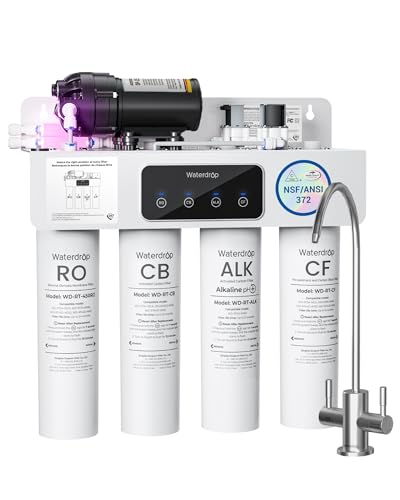
- Standard RO and alkaline streams
- 450 GPD rated capacity
- Filter-change alerts
Best For: Households wanting a choice of purified-water streams
Best for Straightforward Alkaline RO

- 500 GPD rated capacity
- Eight-stage filtration with added minerals
- Includes a mechanical faucet
Best For: Households that do not need a smart faucet
Easy-Install Pick

- 75 GPD, six-stage under-sink RO
- Whole-system NSF/ANSI 58 certification
- Top-mounted faucet; visible prefilter
Best For: Certified alkaline RO with easier faucet mounting
High-TDS Pick
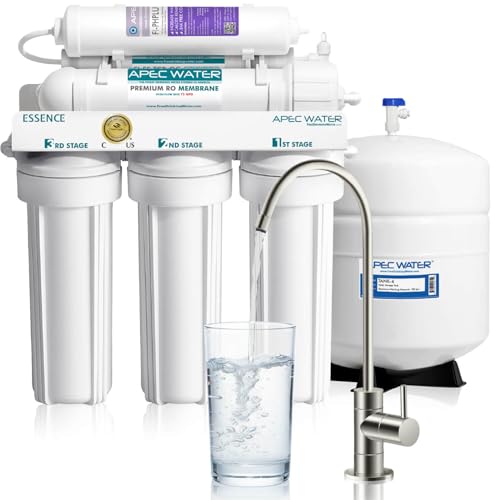
- 75 GPD, six-stage filtration
- Rated for feed water up to 2,000 ppm TDS
- Calcium cartridge adds minerals
Best For: Higher-TDS feed water within the stated 2,000 ppm limit
UV-Equipped Pick

- Seven-stage RO with mineral filter
- Flow-activated, mercury-free LED UV stage
- Whole-system NSF/ANSI 58 and 372 certification
Best For: Remineralized RO with an added LED UV stage
Straightforward Pick
Express Water ROALK5D 10-Stage System

- 50-gallon-per-day rating
- Mineral-adding alkaline stage
- Tank needs cabinet space
Best For: DIY-minded households wanting tank-based alkaline RO
Low-Pressure Pick
iSpring RCC7P-AK With Booster Pump

- Pump supports low-pressure homes
- Sixth stage restores minerals
- Requires under-sink power
Best For: Low-pressure homes with an available outlet
Certified System Pick
iSpring RCC7AK-BLK With Black Faucet

- Full-system NSF/ANSI 58 certified
- Black faucet included
- Check cabinet clearance
Best For: Buyers prioritizing certified performance and a black faucet
Best for Filter Monitoring – Frizzlife PD600-TAM3
The Frizzlife PD600-TAM3 is a tankless option among alkaline reverse osmosis systems, pairing a 600 GPD RO membrane with a filter that adds minerals and adjusts the water to a stated pH above 7.5. Its display shows output TDS and remaining filter life.
Best For: Households that want alkaline RO water and an at-a-glance filter-life display.
Pros:
- 600 GPD rated capacity and a 2:1 pure-to-drain ratio.
- Tankless unit measures 5.3 inches wide, preserving under-sink storage space.
- Display shows output TDS and color-coded filter-change reminders.
Cons:
- Requires an electrical outlet.
- The stated pH is a product specification, not a guarantee for every source-water condition.
The display is the practical differentiator if you prefer visible maintenance cues. Check that the cabinet has room for the 15.5-inch-tall unit and an outlet before choosing it.
Best for Fast Flow – Waterdrop G5P700A
The Waterdrop G5P700A stands out among alkaline reverse osmosis systems for its 700 GPD rated capacity. Its eight-stage, tankless setup includes a 0.0001 μm RO membrane and an alkaline mineralization stage that adds calcium, magnesium, sodium, and potassium.
Best For: Busy households prioritizing fast dispensing and a smart faucet.
Pros:
- Rated to fill a 6-ounce cup in about 6 seconds.
- 2:1 pure-to-drain ratio and a slim, tankless housing.
- Includes a smart faucet; the product listing states NSF/ANSI 58 and 372 certification.
Cons:
- Requires electrical power and a countertop hole for the faucet.
- Connecting a fridge or ice maker calls for the separate Waterdrop XT connection option.
Choose this model if dispensing speed matters more than a basic faucet setup. Confirm outlet placement, countertop drilling requirements, and the 16.69-inch cabinet depth first.
Best for Two Water Options – Waterdrop WD-T4-A
The Waterdrop WD-T4-A offers a useful choice among alkaline reverse osmosis systems: one stream of RO-purified water and a separate mineral-enhanced alkaline stream. Its tankless, 10-stage design is rated at 450 GPD with a 2:1 pure-to-drain ratio.
Best For: Households that want to switch between standard RO and mineral-enhanced water.
Pros:
- Two selectable purified-water streams.
- Filter-change lights and buzzer alerts; stated replacement intervals range from 6 to 24 months by filter.
- Tankless design saves space compared with a storage-tank setup.
Cons:
- Requires a plug-in connection and a countertop hole for the faucet.
- Its 450 GPD rating is lower than the other three models in this roundup.
The separate water options are the reason to pick this model. Its 17.95-inch height also makes cabinet clearance worth checking before installation.
Best for Straightforward Alkaline RO – Waterdrop G5P500A
The Waterdrop G5P500A is a tankless pick among alkaline reverse osmosis systems with an eight-stage filtration process, a 0.0001 μm RO membrane, and a mineralization stage. It has a 500 GPD rated capacity and comes with a mechanical faucet rather than a smart one.
Best For: Households that want mineral-enhanced RO water without a smart faucet.
Pros:
- Rated to fill a 6-ounce cup in about 8 seconds.
- 2:1 pure-to-drain ratio and space-saving tankless design.
- Listing states NSF/ANSI 58 and 372 certification.
Cons:
- Requires an electrical outlet and a countertop hole for the faucet.
- Fridge or ice-maker connections require the Waterdrop XT connection option.
This is a sensible fit when the 500 GPD rating meets your needs and a mechanical faucet is enough. Check the 16.69-by-5.69-by-13.9-inch unit dimensions against your under-sink space.
Easy-Install Pick – iSpring RCC7AK-BN
Among alkaline reverse osmosis systems, the iSpring RCC7AK-BN stands out for its top-mounted brushed-nickel faucet, which fastens from above the countertop. This six-stage, 75 GPD under-sink system adds a mineral stage after RO filtration and is certified to NSF/ANSI 58 as a complete system.
Best For: Buyers who want a certified alkaline RO system with a less awkward faucet installation.
Pros:
- Top-mounted faucet fastener avoids tightening a nut beneath the sink.
- Mineral stage adds minerals and balances pH after filtration.
- Transparent first-stage housing makes buildup easy to see.
Cons:
- Under-sink system and storage tank require cabinet space.
- Filters need periodic replacement; the stated filter life cycle is six months.
Choose this model if installation convenience matters as much as remineralization. Its visible prefilter also gives you a simple way to keep an eye on sediment buildup.
The APEC ROES-PH75 is a six-stage, 75 GPD option for shoppers comparing alkaline reverse osmosis systems for tap or well water. Its calcium filter adds minerals after RO filtration, and its stated maximum feed-water TDS is 2,000 ppm.
Best For: Households seeking a calcium-remineralizing RO system rated for feed water up to 2,000 ppm TDS.
Pros:
- Stated 2,000 ppm maximum feed-water TDS accommodates a wider stated range than the other models here.
- Calcium cartridge is designed to enhance alkalinity and taste.
- Includes a tank, faucet, tubing, adapters and installation wrenches.
Cons:
- Requires 40–85 psi feed-water pressure.
- Under-sink installation needs room for the system and tank.
This is the practical pick when feed-water TDS is a key specification. Check your water pressure before buying, and remember that its 75 GPD figure is a rated capacity, not an instant faucet flow rate.
For buyers comparing alkaline reverse osmosis systems with an additional treatment stage, the iSpring RCC7AK-UV pairs RO and mineral filtration with a flow-activated LED UV stage. The seven-stage under-sink system is listed as certified to NSF/ANSI 58 and 372 for the complete system.
Best For: Buyers who want remineralized RO water plus a flow-activated LED UV stage.
Pros:
- LED UV stage activates when water flows and uses a mercury-free design.
- Mineral stage adds minerals after RO filtration.
- Top-mounted faucet fastener simplifies countertop mounting, while the clear first-stage housing shows buildup.
Cons:
- Corded-electric UV stage requires a power source.
- Requires under-sink space for the filtration setup.
Pick this version if the UV stage is worth the added electrical requirement. If you do not need UV, the non-UV RCC7AK-BN offers the same noted top-mounted faucet convenience without a power connection.
Straightforward Pick – Express Water ROALK5D 10-Stage System
The Express Water ROALK5D is a practical choice among alkaline reverse osmosis systems if you want under-sink filtration with mineral addition and a storage tank. Its 50-gallon-per-day rating suits shoppers comparing everyday household capacity.
Best For: Households wanting a tank-based alkaline RO system designed for DIY installation.
Pros:
- Alkaline filter adds calcium, potassium, magnesium, and other minerals.
- Rated for 50 gallons per day, with automatic tank refilling.
- Includes a brass faucet and leak detection.
Cons:
- The system and separate 15 x 12 x 12-inch tank both need under-sink space.
- Its specified operating pressure range is 40–80 psi.
Check your cabinet dimensions and water pressure before buying; those practical fit requirements matter as much as the added mineral stage.
Low-Pressure Pick – iSpring RCC7P-AK With Booster Pump
Among alkaline reverse osmosis systems, the iSpring RCC7P-AK stands out for its electric booster pump, which is intended to keep filtration efficient when household water pressure is low. A sixth stage adds minerals back after RO filtration.
Best For: Homes with low water pressure that can accommodate a powered under-sink system.
Pros:
- Booster pump supports RO performance at low water pressure and is designed to reduce wastewater.
- Alkaline remineralization stage restores minerals for a more natural taste.
- Transparent first-stage housing makes filter condition easier to inspect.
Cons:
- The pump requires electrical power under the sink.
- Its 15 x 8 x 18-inch system needs adequate cabinet clearance.
The pump is the reason to choose this model over an unpowered alternative; confirm that your cabinet has both room and access to an outlet.
Certified System Pick – iSpring RCC7AK-BLK With Black Faucet
The iSpring RCC7AK-BLK pairs a black faucet with six-stage filtration, making it one of the alkaline reverse osmosis systems to consider if both tested performance and kitchen appearance matter. According to the supplied specifications, the full system is NSF/ANSI 58 certified for reductions including TDS, lead, and fluoride.
Best For: Buyers seeking full-system NSF/ANSI 58 certification and a black RO faucet.
Pros:
- Full-system NSF/ANSI 58 certification covers stated contaminant reductions.
- Alkaline stage restores minerals after RO filtration.
- Transparent first-stage housing helps with visual filter checks.
- Includes a black faucet and quick-fitting connectors.
Cons:
- The listed 15.5 x 16 x 18-inch dimensions warrant a careful cabinet measurement.
- Warranty coverage requires registration.
This model’s clearest differentiators are its stated full-system certification and black faucet; measure the installation area before committing.
How We Picked the Best Alkaline Reverse Osmosis Systems
We focused on practical differences shoppers can check before buying: rated daily production, tankless versus storage-tank design, pressure requirements, installation space, filter replacement needs, and the scope of any stated certifications. We also included options with features such as a booster pump, UV stage, or different faucet finish. Specifications are a starting point, not a guarantee of performance in every home; flow and efficiency depend on incoming pressure, temperature, and water quality.
Quick Comparison
For households prioritizing a compact under-sink layout and faster dispensing, compare the tankless Frizzlife 600 GPD and Waterdrop G5P700A, G5P500A, and WD-T4-A models. Their rated capacities differ, so check the current specifications alongside filter cost and required electrical access. If you prefer a conventional system with a storage tank, the 75 GPD iSpring RCC7AK-BN and APEC ROES-PH75 are useful starting points; the Express Water ROALK5D is rated at 50 GPD. The iSpring RCC7P-AK adds a pump for installations where pressure is a concern, while the RCC7AK-UV adds a UV stage. The RCC7AK-BLK is worth a look if a black faucet suits your kitchen.
Key Buying Factors for Alkaline Reverse Osmosis Systems
Water Quality and Certifications
Start with your water utility report or a well-water test, then identify the contaminants you want to address. Check each model’s exact certification listing and scope: a certification for material safety, such as NSF/ANSI 372, is not the same as certified contaminant reduction. Do not assume that a higher stage count means better verified performance. Remineralization changes taste and may raise pH, but the resulting pH varies with the source water and cartridge.
Flow, Space, and Pressure
Gallons-per-day ratings describe production under specified conditions; they are not a promise of faucet flow. Tankless units generally save cabinet space otherwise occupied by a tank, but may need an outlet and have minimum pressure requirements. Tank systems store filtered water for dispensing but take up more room. Measure the cabinet, check drain and faucet-hole requirements, and confirm your home’s water pressure before ordering. For low pressure, verify whether a pump-equipped model is appropriate and what power it needs.
Ongoing Costs
Compare replacement-filter prices and intervals, membrane life, wastewater ratio under stated test conditions, and any electricity use. Confirm that replacement cartridges are readily available. A lower purchase price may cost more over time if filters are expensive or need frequent changes.
Who Should Buy Which Alkaline Reverse Osmosis Systems?
Choose a higher-capacity tankless model if cabinet space is tight and your household draws drinking water frequently, provided your pressure and electrical setup meet its requirements. Choose a storage-tank system if you want a conventional installation and have room for the tank. Consider the RCC7P-AK for a pressure-limited setup after checking its specifications, or the RCC7AK-UV if a UV stage fits a specific water-treatment need. If your water is microbiologically unsafe, do not rely on a product name or UV stage alone: test the water and follow appropriate treatment guidance.