
Your bathroom probably feels like a cold, tiled box where you spend ten minutes scrubbing toothpaste off the mirror every morning. It is the one room in the house that gets zero love until the grout starts turning a weird shade of orange. I get it. My own guest bath once looked so clinical and depressing that my brother asked if I was running a walk-in clinic out of my hallway. I decided right then that I needed to soften things up without spending a fortune on a full remodel.
Farmhouse style is the perfect fix for that sterile “doctor’s office” vibe, but if you go too heavy on the “rustic” stuff, you end up living in a barn. That’s where eucalyptus comes in. It’s the secret weapon for anyone who wants their bathroom to smell like a spa and look like a high-end boutique hotel. I’ve made plenty of mistakes—like the time I tried to preserve my own branches using a glycerin recipe I found on a shady forum and ended up with a sticky, green mess that attracted every fruit fly in the county. Stick with me, and I’ll help you skip the “science project” phase and get straight to the “Pinterest-worthy” results.
Hanging Eucalyptus in Shower for Style and Scent
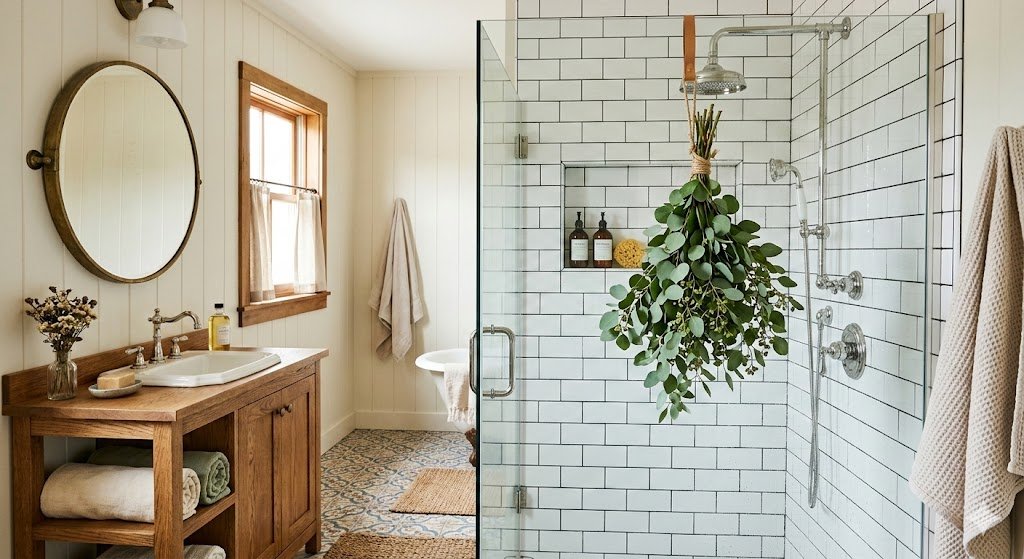
One of the easiest ways to start your farmhouse transformation is by hanging a bundle of fresh eucalyptus directly over your shower head. It sounds fancy, but it is basically just tying weeds to a pipe. The steam from your morning shower hits those leaves and releases the oils, making the whole room smell like an expensive eucalyptus candle. It adds that “living” element that farmhouse decor needs to keep from feeling too stiff or dusty.
I’ve found that using plastic zip ties to attach the bundle is a total waste of time and looks incredibly tacky. Use a thick piece of natural jute twine instead. It fits the farmhouse aesthetic perfectly and holds up surprisingly well in a humid environment. Just make sure you don’t hang the branches directly in the water stream. If they get soaked every day, they’ll turn into a soggy, brown disaster in about 48 hours. You want them tucked just behind the shower arm where the steam can reach them but the water can’t.
Before you hang them, take a rolling pin or a wine bottle to the leaves while they are still on the counter. Give them a good press to “bruise” the leaves slightly. This opens up the cells and lets the scent out much faster. I once forgot this step and was annoyed that my shower didn’t smell like anything for the first three days. A little bit of manual labor goes a long way here.
Fresh eucalyptus usually lasts about three to four weeks in a bathroom before it starts to look a bit crispy. When the color fades from that beautiful dusty blue-green to a dull gray, it’s time to swap it out. I’ve seen some people try to keep the same bundle for six months, but eventually, it just becomes a dust magnet. Fresh is best, especially since a big bundle only costs about five bucks at most grocery stores.
Farmhouse Bathroom Wall Art with Framed Eucalyptus
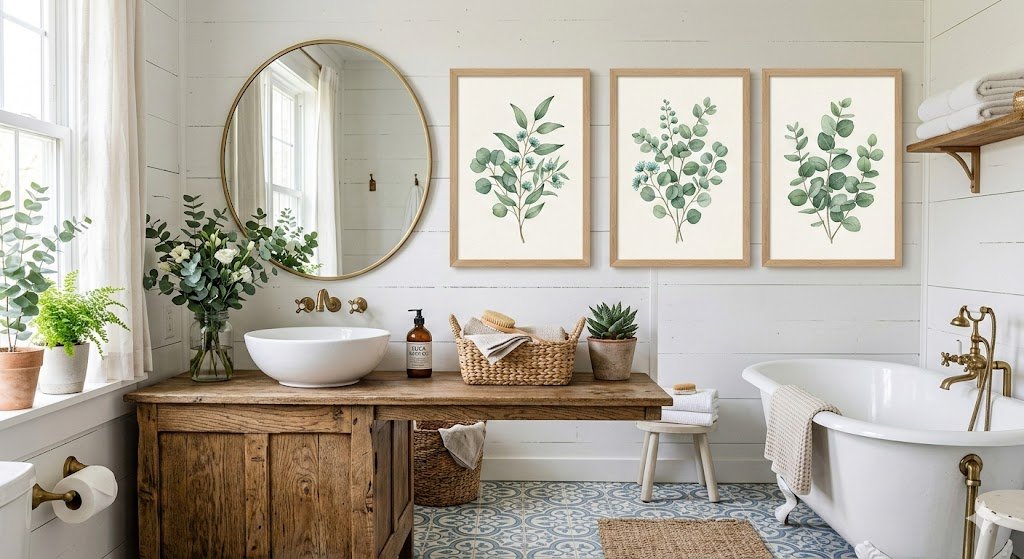
If you want something a bit more permanent than a shower bundle, framing pressed eucalyptus leaves is a classic move. It fills up that awkward empty space above the toilet or next to the vanity. The green of the leaves pops beautifully against a white shiplap wall or light gray paint. It gives you that “botanical” look without the pressure of keeping a real plant alive in a room with zero windows.
I’m very opinionated about the frames you choose for this project. Stay away from those flimsy plastic frames or anything with a high-gloss finish. You want real wood or a matte black metal frame to keep the farmhouse vibe authentic. I once bought a set of “shabby chic” distressed frames that were so poorly made they actually gave me a splinter while I was hanging them. Go for clean lines; let the organic shape of the eucalyptus be the star of the show.
To get the best look, don’t just shove a branch into a frame. Press the leaves between the pages of a heavy book (like that old encyclopedia set gathering dust) for at least a week. This flattens them out so they don’t pop the glass out of your frame. I like to mount the pressed stems on a piece of textured watercolor paper using a tiny dot of clear glue. It adds a bit of “artist’s studio” flair that looks much more expensive than it actually is.
Grouping these frames is key. A single small frame looks like an afterthought, but a set of three arranged vertically or in a grid pattern creates a “feature wall” effect. Mix different types of eucalyptus, like the round “silver dollar” variety and the longer, pointed “willow” leaves. The variation in shapes keeps the eye moving and prevents the wall from looking too repetitive. It’s an afternoon project that instantly makes the room feel finished.
Using Eucalyptus in Bathroom Floating Shelves
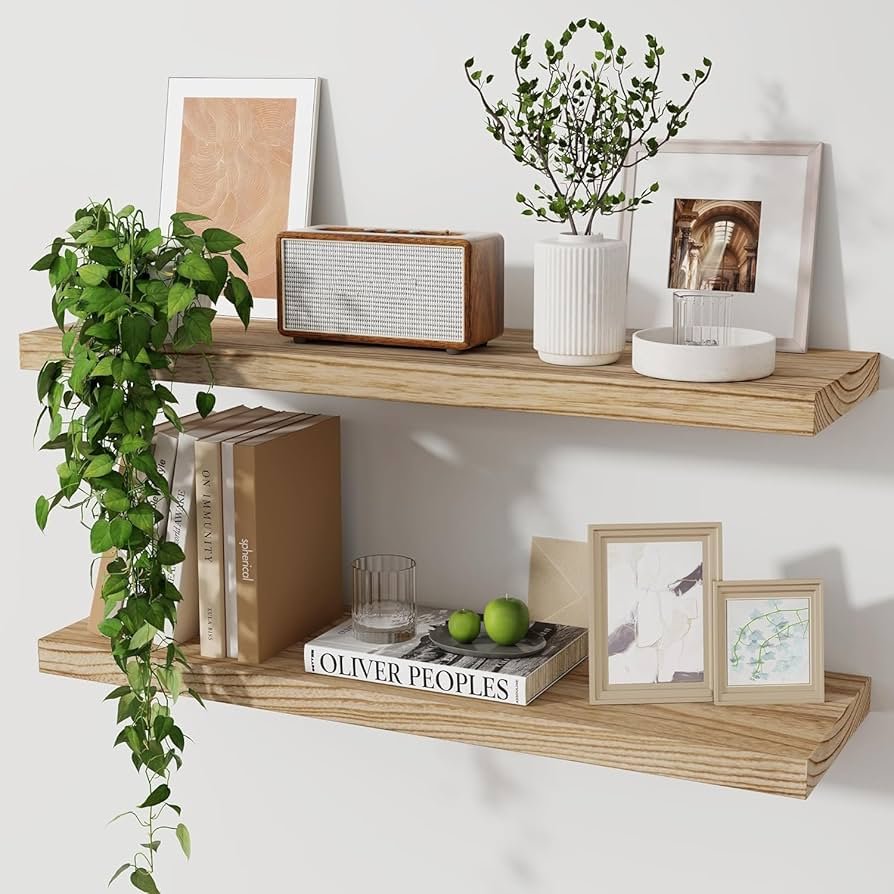
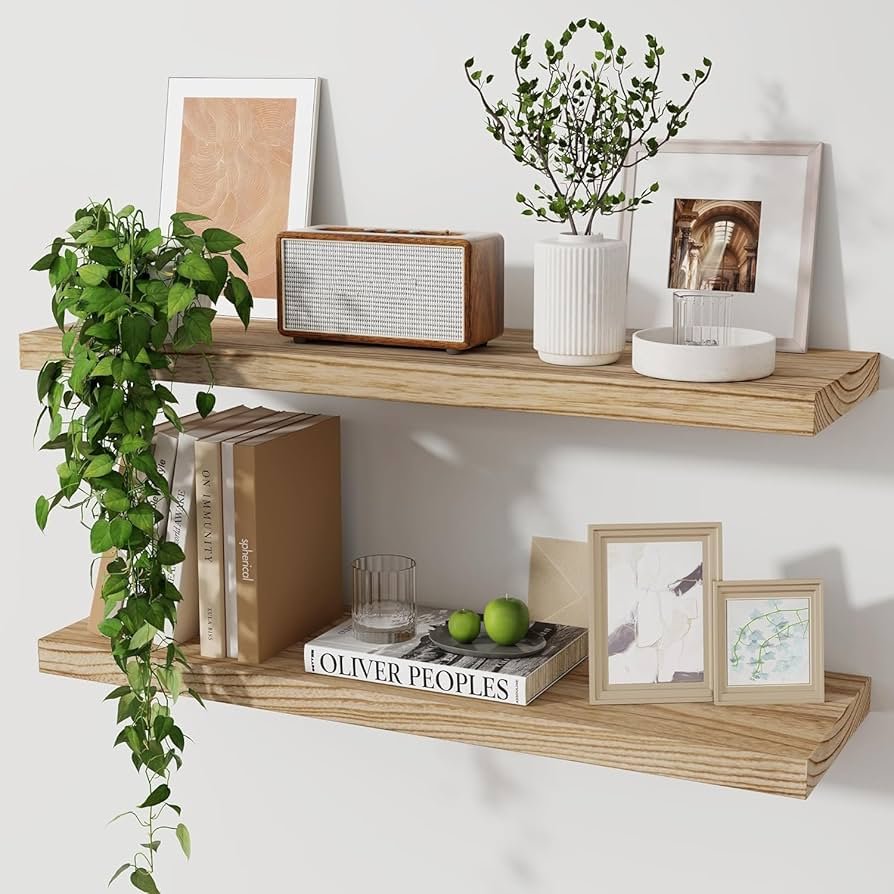
Floating shelves are a staple of farmhouse design, but they often end up as “catch-alls” for half-used bottles of hairspray and old razors. To style them properly, you need a mix of textures, and eucalyptus is the perfect “filler” for the gaps. Tucking a few sprigs into a white ceramic pitcher or a glass apothecary jar adds height and a soft, organic line to the rigid edges of the shelves.
I’ve found that “fake” eucalyptus is usually a total waste of money unless you are willing to shell out for the high-end stuff. The cheap plastic versions have a weird, neon-green glow that screams “I bought this at a gas station.” If you can’t find fresh, go for “preserved” eucalyptus. It’s real foliage that has been treated to keep its color and flexibility. It won’t have the strong scent of the fresh stuff, but it looks a thousand times better than the plastic junk.
When you’re arranging your shelves, follow the “rule of three.” Place a tall sprig of eucalyptus in a vase on one side, a stack of clean white towels in the middle, and a smaller decorative item like a wooden bead garland or a candle on the other side. The eucalyptus provides the vertical interest that pulls the whole look together. I once tried to over-crowd my shelves with about twenty different knick-knacks and it just looked like a cluttered mess. Less is more.
Don’t be afraid to let the eucalyptus “spill” over the edge of the shelf. One of the best things about the willow-leaf variety is its graceful, drooping habit. It softens the hard horizontal line of the wood and makes the decor feel more relaxed and “lived-in.” Farmhouse style shouldn’t feel precious; it should feel comfortable. If your sprigs are looking a bit stiff, gently bend the stems to give them a more natural curve.
DIY Eucalyptus Wall Hanging for Bathroom Decor
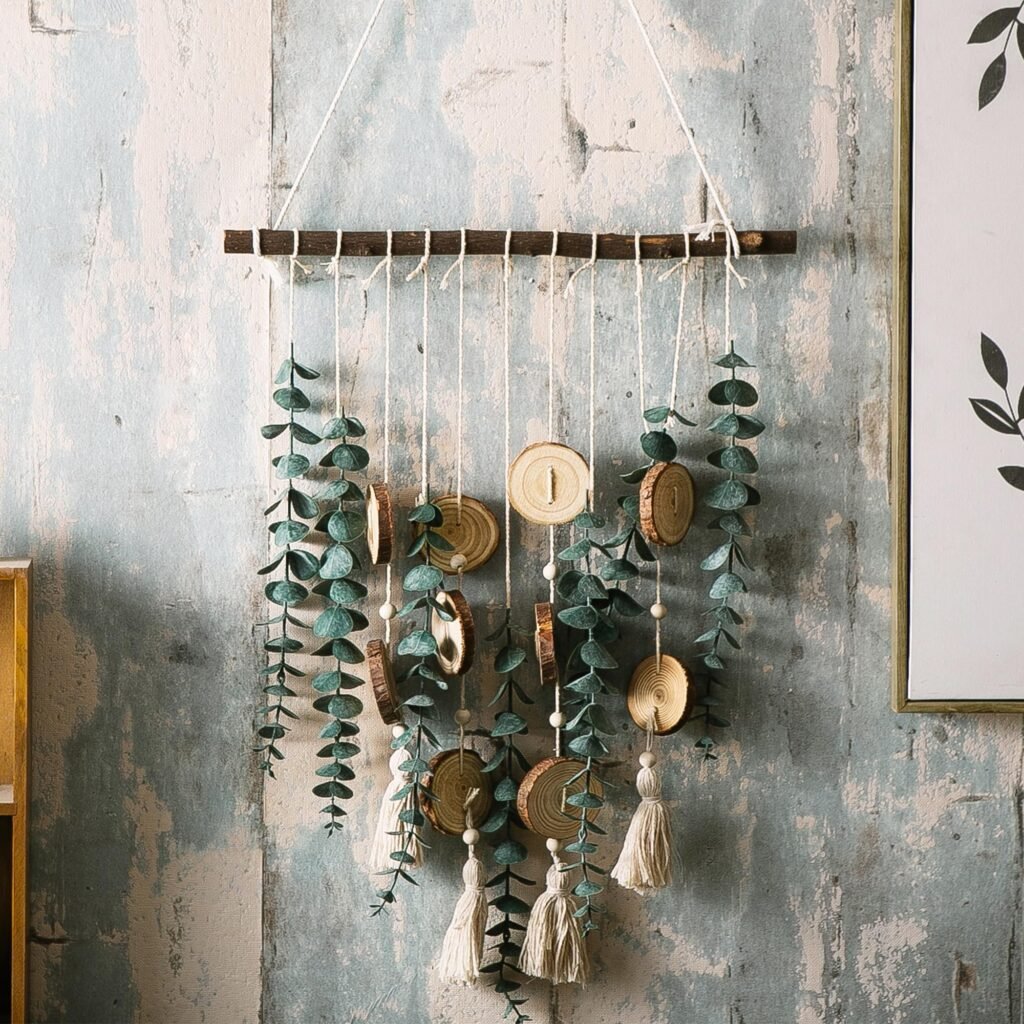
If you really want to lean into the DIY side of things, a eucalyptus wall hanging is a great way to add texture to a large, blank wall. You basically just take a sturdy branch or a piece of copper pipe and hang various lengths of eucalyptus from it using twine. It’s a very “boho-farmhouse” look that works surprisingly well in a bathroom because it doesn’t take up any counter space.
I prefer using a piece of weathered driftwood for the top bar. It adds an extra layer of “nature” to the room. I once spent an entire Saturday morning wandering around a local park looking for the “perfect” stick, only to realize I had a perfectly good one in my own backyard under the oak tree. Just make sure you give any “found” wood a good scrub and a quick bake in the oven at 200 degrees for 20 minutes to kill off any hitchhiking bugs. You do not want a spider infestation in your bathroom.
Vary the lengths of your eucalyptus stems to create a “V” shape or a tiered look. It adds visual interest and keeps the piece from looking too blocky. I like to tie the stems at different intervals so some are higher than others. You can even mix in a few dried flowers or some cotton bolls to really drive home that farmhouse aesthetic. Cotton and eucalyptus are a match made in heaven; the white fluff balances out the cool green perfectly.
Hang this on the wall opposite your mirror if you can. That way, when you’re doing your hair or makeup, you see the reflection of the greenery behind you. It doubles the impact of the decor without any extra work. Just keep it away from the toilet—you don’t want the bottom of the stems getting… splashes. Common sense is your best friend when it comes to bathroom DIY.
Eucalyptus Wreaths for Bathroom Mirrors
Most people only think of wreaths for the front door, but a small eucalyptus wreath hanging on a bathroom mirror is a total game changer. It breaks up the big, reflective surface and adds a frame within a frame. It’s a trick I learned when I lived in a tiny apartment with a massive, ugly builder-grade mirror that I wasn’t allowed to replace.
I’ve found that those “grapevine” wreath bases are a total waste of space for a mirror hanging. They are too bulky and make the wreath stick out too far from the glass. Use a thin wire hoop instead. You can buy them for a couple of bucks at any craft store. Simply wire small bunches of eucalyptus to the hoop using floral wire. It keeps the profile slim and elegant, which is exactly what you want against a mirror.
To hang it, don’t use one of those ugly over-the-door hooks. Use a clear suction cup with a hook on the glass, or better yet, hang it from a long ribbon that goes over the top of the mirror and attaches to the back. A ticking-stripe or burlap ribbon adds that extra “farmhouse” punch. I once tried to use double-sided tape to stick a wreath directly to the glass and it fell off at 3 AM, scaring the absolute life out of me. Use a proper hook.
Keep the wreath simple. You don’t need a bunch of bows or glitter. Let the leaves do the talking. A “half-wreath” where the greenery only covers the bottom half of the hoop is a very trendy, modern farmhouse look that I’m currently obsessed with. It feels a bit more “editorial” and less “craft fair.”
Real Talk: What’s Not Worth Your Effort
Let’s get honest for a second: eucalyptus isn’t a magic wand that solves every bathroom design problem. There are some things that just aren’t worth the headache. First on the list? Trying to grow a live eucalyptus plant in your bathroom. Unless you have a massive window that gets eight hours of direct sun and you are a literal professional botanist, that plant is going to die. Eucalyptus is notoriously finicky indoors and hates the “stop-and-start” humidity of a bathroom. Stick to cut stems.
Another thing to avoid is “eucalyptus-scented” plastic decor. I’ve found that those “scented” fake plants are a total waste of money. The smell is usually a chemical nightmare that fades in three days, leaving you with a tacky plastic plant that smells like a lemon-scented cleaning product. If you want the scent, buy the real oil and put a few drops on your shower curtain or behind the toilet. It’s cheaper and smells much more authentic.
Don’t overdo the “distressed” look. One of the biggest mistakes people make with farmhouse decor is thinking everything has to look like it was pulled out of a shipwreck. If you have eucalyptus, wood shelves, shiplap, a barn door, and a distressed “Laundry” sign in a five-by-five bathroom, it’s going to feel claustrophobic. Pick two or three “farmhouse” elements and let them breathe. Eucalyptus is a “soft” element, so it needs some clean, simple space to really shine.
Lastly, watch out for “bleeding” preserved eucalyptus. Some of the dyed varieties (especially the ones that are a deep burgundy or bright green) can actually leak dye if they get too damp. I once had a beautiful bunch of “preserved” stems on my white marble countertop that left a permanent green ring after a particularly steamy shower. If you are using preserved stems in a high-humidity area, make sure they are high-quality and maybe place a small coaster or tray under the vase to be safe.
Final Thoughts
At the end of the day, farmhouse bathroom decor is all about creating a space that feels calm and clean. Eucalyptus is the easiest, cheapest way to get that “high-end” look without having to pick up a hammer or a drill. Just keep it fresh, keep it simple, and don’t be afraid to experiment with different arrangements until it feels right.
What is the biggest design hurdle you’re currently facing in your bathroom? Is it the lighting, the lack of space, or just that one weird tile you hate? Let’s talk about it in the comments—I’ve probably dealt with it too!