
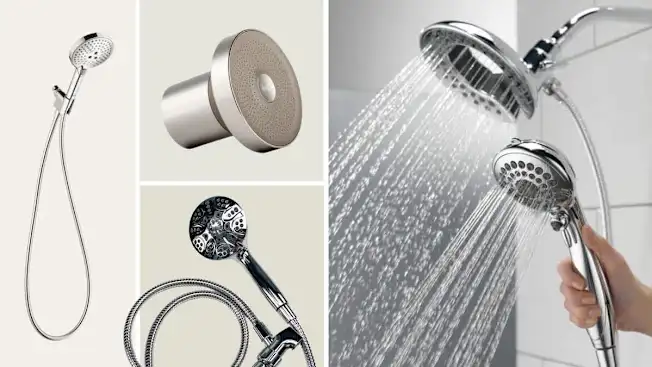
I’ve stood exactly where you are: standing in your bathtub, staring up at that annoying drip-drip-drip coming from the top of your showerhead, wondering why a piece of metal that costs $80 is failing you. It’s not just the sound that gets you; it’s the thought of your water bill climbing while you sleep.
Most people think a leaking showerhead means you need to drive to the hardware store and buy a brand-new fixture. I’m here to tell you that’s a rookie mistake. Usually, the issue isn’t the showerhead itself; it’s a tiny rubber ring or some crusty mineral buildup inside the swivel joint. I once spent $200 replacing a perfectly good rain showerhead because I didn’t know a $0.50 washer was the culprit. Let me save you that cash.
Why Is Your Delta Showerhead Leaking from the Swivel Ball?
The swivel joint—that ball-and-socket part that lets you angle the spray—is the most common failure point on Delta models. Over time, the constant friction of moving the head back and forth wears down the internal seals. If you’ve got “hard water” (water with high mineral content), those minerals act like sandpaper on the rubber.
I’ve found that high-end Delta fixtures are actually more prone to this than the cheap plastic ones. Why? Because the heavy metal heads put more strain on the joint. Last summer, I installed a beautiful Venetian Bronze showerhead in my guest bath, and within three months, it was spraying a rogue stream of water directly at the ceiling every time I turned it on. The fix is almost always internal.
Don’t let the shiny chrome fool you. Inside that joint is a simple mechanical setup involving a washer and a “cam” or a “seat.” When these get compressed or brittle, they lose their ability to create a watertight seal. If your leak is coming specifically from where the showerhead meets the shower arm, you’re in luck because that’s the easiest fix in the DIY playbook.
If you ignore this, the leak will eventually get worse. I’m not just talking about the water bill. If that spray is hitting your wall or leaking back into the wall cavity through the escutcheon plate, you’re looking at mold and drywall rot. Trust me, I’ve had to rip out an entire tiled wall because of a “tiny” leak I ignored for a year. Fix it now.
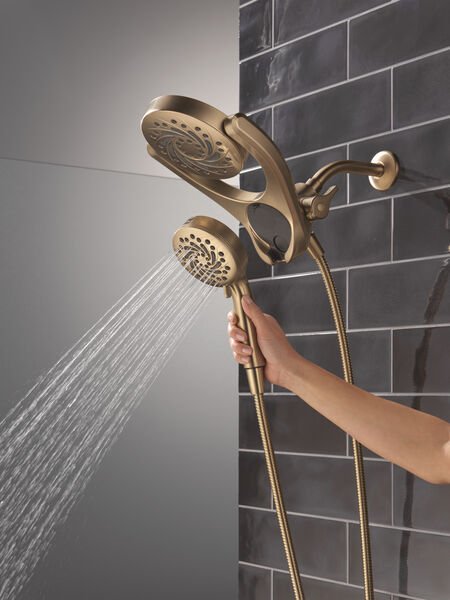
Best Tools for Fixing a Leaky Showerhead Swivel Joint
You don’t need a massive plumbing chest for this, but you do need the right stuff. I see people go at their fixtures with a pair of rusty pliers all the time. Please, don’t do that. You’ll chew up the finish on your Delta showerhead, and it’ll look like a dog used it as a chew toy.
You’ll need:
- Adjustable wrench (a 6-inch or 8-inch one is perfect).
- Needle-nose pliers for pulling out old gaskets.
- Teflon tape (also called plumber’s tape).
- A soft cloth or old rag to protect the finish.
- A bowl of white vinegar for cleaning.
I’ve found that using “Blue Monster” brand Teflon tape is worth the extra dollar over the cheap white stuff. It’s thicker and seals much better on the first try. If you’re using the thin white tape, you’ll likely end up wrapping it ten times just to get a decent seal.
The soft cloth is non-negotiable. I learned this the hard way when I scratched a brand-new Matte Black fixture in my master suite. Wrap the cloth around the “flats” of the showerhead nut before you put your wrench on it. It keeps the metal-on-metal contact from ruining the aesthetics of your bathroom.
Step-by-Step Delta Showerhead Repair Guide
First, make sure the shower handles are turned off. You don’t need to shut off the main water valve for the whole house just to fix a showerhead, but make sure the knobs are tight. If you have a single-handle faucet, ensure it’s firmly in the “off” position. I once forgot this, unscrewed the head, and the residual pressure gave me a face full of cold water. Not my proudest moment.
Wrap your rag around the connecting nut—that’s the part that screws onto the pipe coming out of the wall. Fit your adjustable wrench over the rag and turn it counter-clockwise. It might be stubborn if there’s a lot of calcium buildup. If it won’t budge, don’t yank it. You risk snapping the shower arm inside the wall, which is a nightmare I wouldn’t wish on my worst enemy. If it’s stuck, soak a rag in vinegar, wrap it around the joint for an hour, and try again.
Once the showerhead is off, look inside the threaded end. You’ll see a rubber washer. Use your needle-nose pliers to pull it out. Usually, this washer will be flattened, cracked, or slimy. That’s your culprit. While you have it apart, check the swivel ball itself. If there’s white, crusty gunk on it, that’s “scale.” This stuff prevents the joint from seating correctly.
This is the “pro secret” part: soak the entire showerhead in a bowl of 50/50 white vinegar and warm water for at least two hours. This dissolves the minerals that cause leaks. I’ve seen showerheads that looked dead come back to life after a good vinegar bath. After soaking, rinse it off, pop in a new Delta-specific rubber washer (you can find these in “Delta repair kits” at any big-box store), and you’re ready to reassemble.
How to Apply Plumber’s Tape Correctly to Prevent Leaks
This is where most DIYers fail. They wrap the tape the wrong way, and as they screw the showerhead on, the tape unravels and bunches up, creating—you guessed it—more leaks. I’ve probably re-taped the same pipe three times in a row before finally remembering the “right-hand rule.”
You want to wrap the Teflon tape clockwise around the male threads of the shower arm. Imagine you are looking at the end of the pipe; wrap the tape in the same direction you’ll be turning the showerhead to tighten it. This way, as you screw the head on, the friction actually tightens the tape onto the threads rather than pushing it off.
I recommend about three to four passes with the tape. Too little, and it won’t seal; too much, and you won’t be able to get the threads started. Don’t let the tape overhang the end of the pipe, or it might block the flow of water and give you a pathetic, weak shower stream. I once had a client complain about low pressure, and it turned out they’d used so much tape it was literally plugging the hole.
Smooth the tape down with your thumb so it’s tight against the threads. Now, hand-tighten your Delta showerhead back onto the arm. Once it’s hand-tight, give it just a quarter-turn with the wrench (using your protective rag again). Do not over-tighten! Over-tightening is a leading cause of cracked swivel joints. If it’s a plastic joint, you can actually split the housing, and then you will be buying a new one.
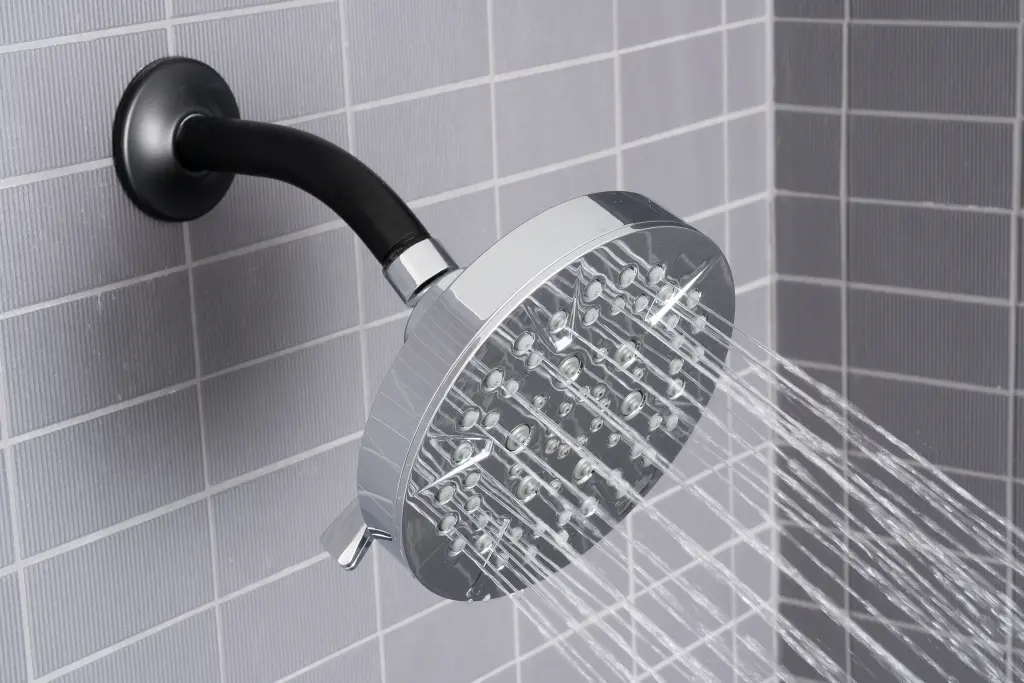
Troubleshooting Persistent Drips After Repair
So, you replaced the washer, you taped the threads, and the dang thing is still dripping from the swivel? Don’t panic. Sometimes the “seat” inside the swivel ball is the issue. Some Delta models have a small plastic ring inside that acts as a bearing. If that ring is cracked, the rubber washer won’t have a flat surface to press against.
I’ve found that a tiny dab of silicone plumber’s grease (not WD-40!) on the swivel ball can work wonders. It lubricates the joint and helps the rubber seal find its happy place. Just a pea-sized amount rubbed around the ball before you put the head back on can stop those “mystery” drips that won’t go away.
Another thing to check is the shower arm itself. If the pipe coming out of the wall has a tiny pinhole leak or the threads are corroded, no amount of tape on the showerhead will fix it. Take a flashlight and look at the threads on the wall pipe. If they look like they’ve been chewed by a shark, you might need to replace the shower arm too. They’re cheap—usually under $15.
If the leak is actually coming from the face of the showerhead (the little rubber nozzles), that’s not a swivel joint issue. That’s usually just “residual drainage” or a failing cartridge in your shower handle. If the shower is off and it drips for 5 minutes then stops, it’s just the head emptying itself. If it drips all night, the problem is actually the valve in your wall, not the showerhead. I spent a whole weekend once rebuilding a showerhead only to realize the faucet handle was the real traitor.
Real Talk: When to Give Up and Buy a New Showerhead
I’m all for fixing things, but I’m also a fan of not wasting my entire Saturday on a $30 part. If your Delta showerhead is more than 10 years old and the swivel joint is made of plastic, it might just be “done.” Plastic gets brittle after a decade of hot water cycling through it. If you see a hairline crack in the plastic housing near the ball joint, toss it. No amount of glue or tape is going to hold that under pressure.
Also, if you have one of those Delta “In2ition” models (the ones where the hand shower snaps into the main head) and the leak is coming from the internal diverter valve, they can be a massive pain to fix. The internal springs and O-rings are tiny and easy to lose. In my opinion, if the diverter is shot, you’re better off using your time to go grab a new one. Life is too short to chase tiny springs around a wet tub floor.
One more thing: ignore those “as seen on TV” fix-it sprays or waterproof tapes that claim to seal leaks from the outside. They are a total waste of money and look absolutely hideous. They might stop the drip for a day, but they won’t hold up to the pressure and heat of a daily shower. Fix it right from the inside, or don’t fix it at all.
Parting Wisdom
The secret to a leak-free bathroom isn’t being a master plumber; it’s just paying attention to the small stuff. Most Delta showerhead leaks are just the fixture’s way of telling you it needs a little cleaning and a fresh washer. Take your time, protect the finish, and don’t over-tighten the nuts.
Quick side note: While you have the showerhead off, check for a “flow restrictor” (usually a little plastic disk). If your water pressure has been low, pop that thing out and clean the grit off it. You’ll thank me later when your shower feels like a spa instead of a leaky garden hose.
How did your repair go? Did you find a cracked washer, or was it just a ton of calcium buildup? Drop a comment below and let me know if you ran into any snags—I’m happy to help you troubleshoot!