
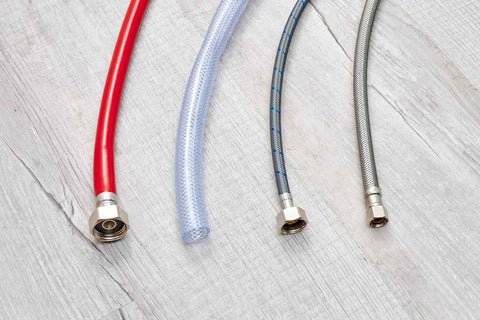
Your bathroom vanity looks like a crime scene, and you’ve got a puddle growing faster than my kid’s appetite. You peered under the sink with a flashlight and realized those crusty, braided hoses are weeping. Replacing bathroom faucet supply lines is one of those tasks that feels like it’s going to end in a flooded basement, but I promise it’s a twenty-minute job if you don’t overthink it.
I learned this the hard way back in 2014 when I tried to “save money” by reusing old washers on a Sunday night. By Monday morning, I was using a shop vac to suck three inches of water out of my hallway carpet. Don’t be me. Buy new parts, follow these steps, and keep your socks dry.
Best Tools for Changing Faucet Supply Lines
You don’t need a massive rolling tool chest for this. In fact, dragging too much gear under a cramped vanity is a recipe for a bumped forehead. I’ve found that most people fail because they try to use a giant pipe wrench where a small adjustable wrench belongs.
Grab a small adjustable wrench (an 8-inch one is the “Goldilocks” size) and a basin wrench if your sink is particularly deep. A basin wrench is that weird-looking stick with a floppy claw on the end. It’s a lifesaver for reaching those nuts tucked way up behind the sink bowl where your hands won’t fit.
I also keep a small bucket and a stack of old towels handy. No matter how well you shut off the water, there’s always a “burp” of liquid left in the lines. If you don’t have a bucket, an old Tupperware container works just fine—just don’t put it back in the kitchen afterward.
Lastly, get a headlamp. Holding a flashlight in your teeth while trying to turn a wrench is a great way to chip a tooth and a terrible way to see what you’re doing. Trust me, the $10 investment in a headlamp makes you look like a dork but work like a pro.
How to Turn Off Water Under the Sink Without Breaking Valves
Before you touch a wrench, you have to kill the water. Most sinks have two shut-off valves (angled or straight) poking out from the wall. Turn them clockwise. If they haven’t been touched since the Nixon administration, they might be stuck. Do not—I repeat, do not—force them with all your might.
I once snapped a frozen valve stem off in a rental house, and I spent the next hour sprinting to the main water shut-off in the yard while my bathroom turned into a water park. If the valve feels like it’s welded shut, spray it with some penetrating oil and wait ten minutes. If it still won’t budge, you might need to shut off the water to the whole house before you proceed.
Once the valves are closed, open the faucet handles. This relieves the pressure and confirms the water is actually off. If the faucet keeps dripping even with the valves tight, your shut-off valves are “passing” (failing), and you’ll need to replace those too. That’s a different project for a different day, but for now, it means you’re headed to the main house shut-off.
Side note: Always check the “Hot” side twice. It’s one thing to get a cold bath; it’s quite another to get blasted with 120-degree water while you’re pinned under a cabinet.
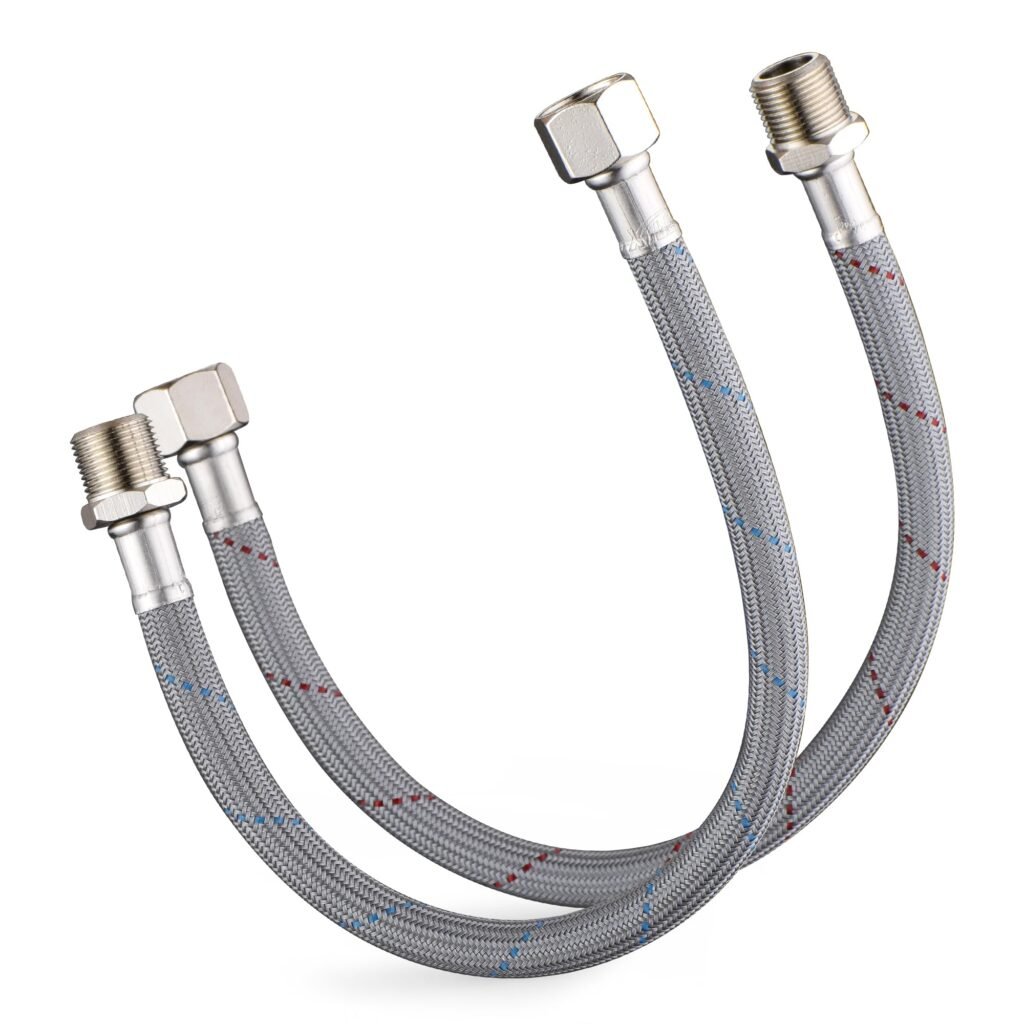
Removing Old Braided Stainless Steel Supply Lines
Now for the messy part. Place your bucket under the connections. Start by loosening the compression nut at the shut-off valve first. Use one wrench to hold the valve steady and another to turn the nut counter-clockwise. This prevents you from twisting the actual copper pipe coming out of your wall, which is a nightmare scenario.
Once the bottom is loose, move to the top connection at the faucet shank. This is where that basin wrench comes in handy. If the nuts are plastic, be gentle; they crack easily. If they’re metal and corroded, you might need a little elbow grease. I’ve seen lines so fused together they looked like they were part of the Great Barrier Reef.
As you pull the old lines out, keep them over the bucket. They’ll be full of stagnant, smelly water. Toss them straight in the trash. Some people think they can “clean” old supply lines, but that’s a total waste of time. The rubber inside degrades over time, and for $15, a new set is the only way to sleep soundly at night.
Quick tip: Take the old lines with you to the hardware store. There are different sizes (usually 3/8-inch at the valve and 1/2-inch at the faucet), and staring at a wall of hoses at the store will make your brain melt. Matching the length and the nuts in person is the only way to ensure you don’t make three trips.
Installing New Flexible Faucet Connectors Correctly
Take your new lines and hand-thread the top nut onto the faucet shank first. Hand-threading is crucial. If you feel resistance in the first two turns, stop. You’re cross-threading it. If you strip those threads, you’re buying a whole new faucet, and your “cheap” DIY project just got a $200 price hike.
Once the top is hand-tight, thread the bottom onto the shut-off valve. Again, start by hand. Once both ends are snug, grab your wrench and give them about a quarter-to-half turn. You are not trying to win a weightlifting competition here. Over-tightening is actually the number one cause of leaks because it crushes the rubber washer inside the hose until it deforms.
I used to think “tighter is better” until I split a brass nut right down the middle in my guest bath. Now, I tighten it until it’s firm, then I dry everything off with a towel so I can see any new moisture. You can always tighten it a tiny bit more later if there’s a drip, but you can’t “un-crack” a fitting.
One more thing: Avoid using Teflon tape on these specific lines. Most modern braided supply lines have a thick rubber gasket inside that does all the sealing. Adding tape can actually prevent the gasket from seating properly, leading to—you guessed it—more leaks.
Real Talk: What Can Actually Go Wrong
Let’s be honest: something always goes sideways. The most common “fail” is discovering that your shut-off valves are leaking from the “packing nut” (the little nut behind the handle) as soon as you turn the water back on. If this happens, don’t panic. Just give that packing nut a tiny snug with your wrench. It usually stops the leak instantly.
Another reality check: if your pipes are old-school galvanized steel (they look like heavy grey porch railings), be extremely careful. Those things can crumble like a dry biscuit if you put too much torque on them. If you see orange rust flaking off the pipes themselves, it might be time to call a pro before you snap a line inside the wall.
And finally, don’t buy the cheapest, “no-name” plastic supply lines. I’ve found that the $5 plastic ones are a total waste of money. They get brittle and burst when you least expect it. Spend the extra few bucks on the braided stainless steel versions. They have a mesh exterior that prevents the hose from expanding and bursting.
Parting Wisdom
Replacing supply lines is a “gateway drug” to home remodeling. Once you realize you can handle high-pressure plumbing without calling a guy who charges $150 just to show up, you’ll start looking at every outdated fixture in your house with a predatory glint in your eye. Just remember: work slow, keep a bucket handy, and don’t overtighten.
What’s the scariest thing you’ve ever found lurking under your bathroom sink? Drop a comment below and let’s swap horror stories!