
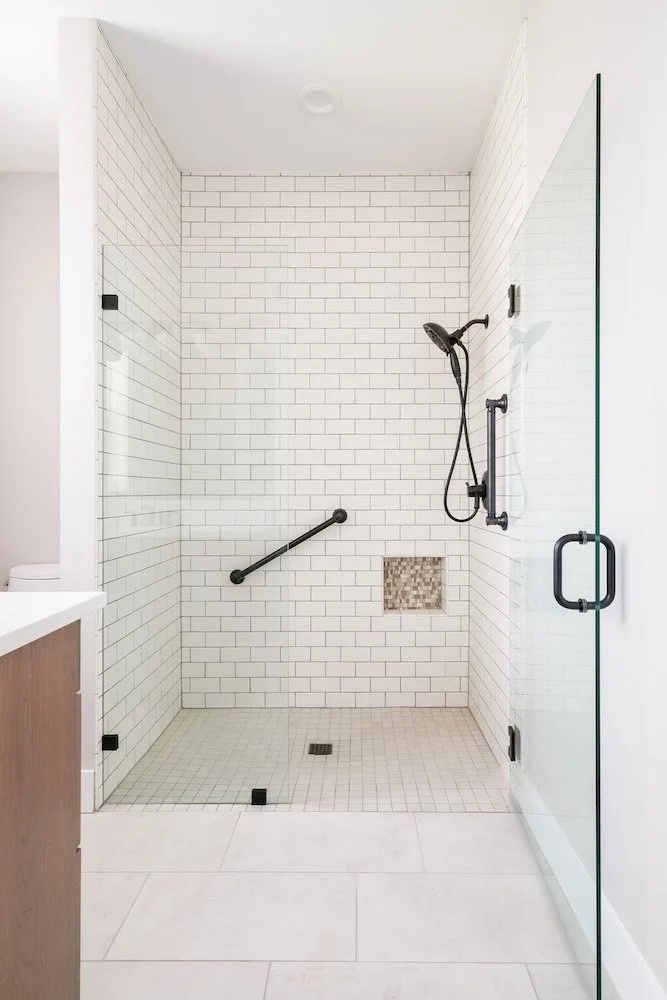
Your tiny bathroom probably feels like a fiberglass coffin with a plastic curtain, doesn’t it? You’re tired of stubbing your toe on that 4-inch acrylic threshold every morning, and you’re wondering if ripping the whole thing out for a sleek, walk-in look is a genius move or a financial suicide mission.
I’ve been swinging hammers for twelve years, and I’ve seen enough “Pinterest-perfect” bathrooms turn into expensive swimming pools to know that the curbless shower trend is a double-edged sword. Trust me, I once spent an entire weekend chasing a leak in my guest bath because I thought I could eyeball the floor pitch. (Spoiler: Water doesn’t care about your feelings; it only cares about gravity).
If you’re wondering if a curbless shower is actually worth the dust and the dollars, pull up a chair. We’re going to talk about the real-world logistics of making a small bathroom feel like a spa without flooding your hallway.
Small Bathroom Curbless Shower Layout Ideas
When you’re working with a floor plan the size of a postage stamp, every square inch is a battleground. Most people think they need a massive master suite to pull off a curbless entry, but I’m telling you, it’s actually the small bathrooms that benefit the most. By removing that physical barrier on the floor, your eye travels all the way to the wall, making the room feel twice as big as it actually is.
My favorite trick for tight spaces is the “Wet Room” approach. Instead of trying to cram a glass box into the corner, you waterproof the entire floor. In my old 1940s bungalow, the bathroom was so small I could brush my teeth while sitting on the toilet. I converted the whole thing to a curbless setup with a single glass panel. Suddenly, it didn’t feel like a closet anymore; it felt like a high-end European hotel.
However, you have to be smart about where your toilet and vanity live. If you don’t have at least 36 inches of clearance for the “splash zone,” you’re going to be drying off your toilet paper roll with a hairdryer every time you take a shower. I’ve found that using a wall-hung vanity in a curbless layout is the only way to go. It keeps the floor clear and makes cleaning a breeze.
If you’re worried about the spray, consider a flipper panel. It’s a small piece of glass on a hinge that extends your main partition. It’s a lifesaver for those 60-inch standard tub replacements where you just don’t have the runway for a full open entry. It keeps the water where it belongs but swings out of the way when you need to scrub the tiles.
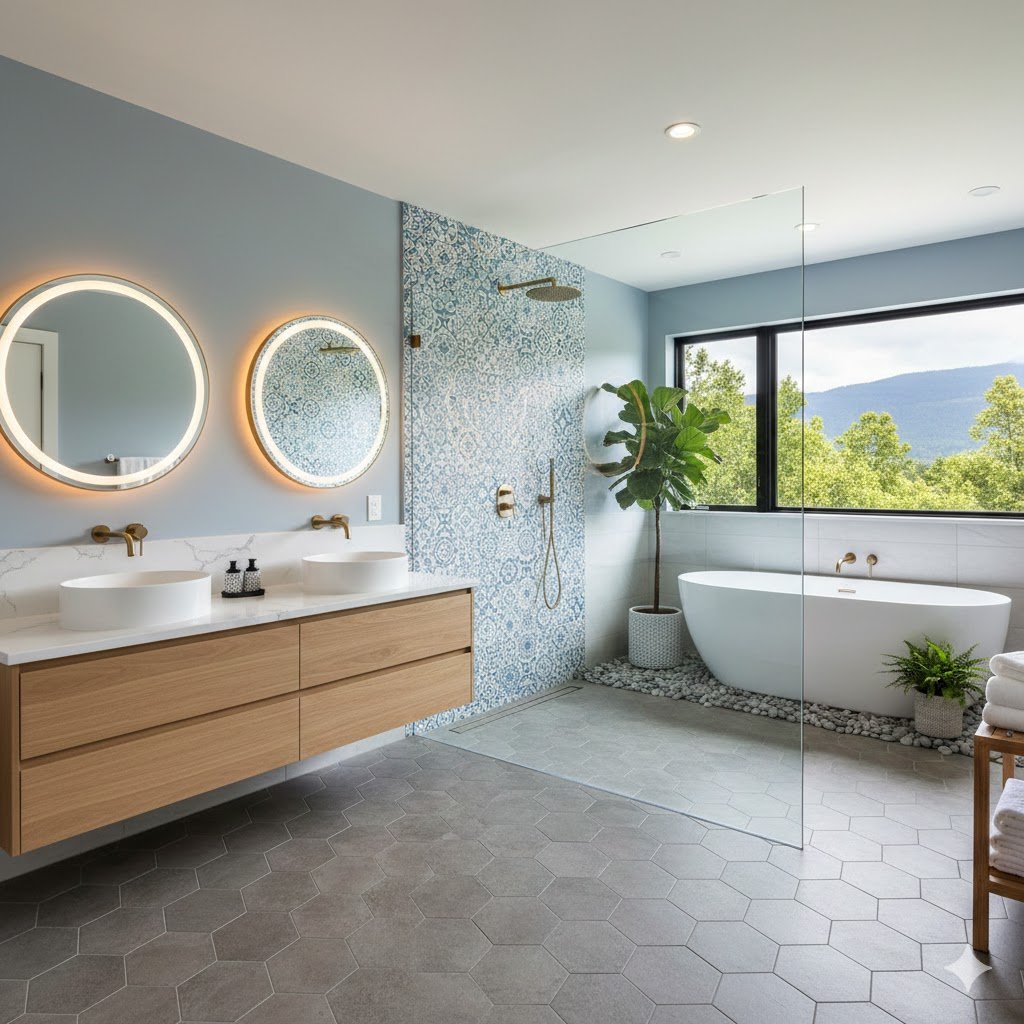
Curbless Shower Construction Costs and Budget
Let’s talk about the elephant in the room: your wallet. If a contractor tells you a curbless shower costs the same as a standard one, they are either lying or they’ve never actually built one. You’re going to pay a premium for the “invisible” work. In my experience, a proper curbless conversion for a small bathroom starts at $8,000 and can easily north of $15,000 if you start picking out fancy marble.
The biggest cost isn’t the tile; it’s the structural gymnastics required to lower the floor. To get that seamless transition, you usually have to “notch” or “sister” the floor joists to create a slope. This isn’t a job for a weekend warrior with a YouTube degree. I once tried to shave down a subfloor myself back in ’14 and ended up with a bouncy floor that cracked my grout lines within a month. It was a $3,000 mistake I’m still annoyed about.
You also have to account for the waterproofing system. You aren’t just slapping some plastic behind the tiles. You need a full-surface membrane like Schluter-Kerdi or Wedi. These systems are worth every penny, but they aren’t cheap. Budget at least $1,000 just for the drainage kit and the waterproofing materials. If you skimp here, you might as well just pour your money directly down the drain—literally.
Then there’s the labor. You need a tile setter who understands “pitch.” If the slope is too shallow, water pools. If it’s too steep, you feel like you’re showering on a mountain side. Expect to pay about 30% more in labor compared to a standard shower pan installation. It’s a precision job, and precision costs money.
Best Tile for Curbless Shower Floors
This is where people usually mess up. They see those big, beautiful 24×24 marble slabs in magazines and think, “I want that.” I’m here to tell you that’s a recipe for a broken hip. Big tiles are slippery, and more importantly, they don’t like to bend. To get a proper four-way slope toward a center drain, you need smaller tiles that can follow the contour of the floor.
I’m a huge fan of 2-inch mosaic tiles for curbless entries. The amount of grout lines gives your feet the “grip” they need when things get soapy. I once installed a sleek, large-format porcelain in a client’s rental unit because they insisted on it. Three weeks later, I was back there replacing it with penny rounds because the tenant nearly did a backflip trying to reach the shampoo.
If you absolutely must have that seamless, large-tile look, you have to use a linear drain. This allows you to slope the entire floor in one single direction (like a ramp) rather than a bowl shape. Linear drains are gorgeous, but they’ll add another $500 to $800 to your plumbing bill. Personally, I think it’s a total waste of money unless you’re going for a hyper-modern aesthetic.
Don’t forget the Coefficient of Friction (COF) rating. Look for a tile with a COF of 0.60 or higher. Anything less is basically an ice rink. I prefer unglazed porcelain or natural stone like tumbled marble. They have a natural “tooth” to them that keeps you upright. Just remember that natural stone needs sealing every year, or it will soak up your hair dye and body oils like a sponge.
Waterproofing a Curbless Shower System
If there is one area where you should be an absolute stickler, it’s the waterproofing. In a small bathroom, the “wet area” is much closer to your drywall and vanity than in a large room. I’ve seen mold colonies grow behind baseboards because someone forgot to waterproof the “splash zone” outside the actual shower area.
I always recommend “tanking” the entire bathroom floor. This means the waterproofing membrane goes under the shower, but it also continues across the whole room and up the walls about six inches. Think of your bathroom floor like a shallow swimming pool. If the kids splash or the drain gets clogged, that water has nowhere to go but into the membrane.
The transition point—where the shower meets the “dry” floor—is the most common failure point. I like to use a pre-sloped foam tray system. They are much more reliable than a hand-packed mud bed, especially for DIY-ish homeowners. It’s like LEGOs for contractors; it takes the guesswork out of the slope. I used one in my basement remodel three years ago, and it’s still bone-dry underneath.
Also, don’t forget the “capillary break.” This is a fancy term for making sure water doesn’t “wick” through the grout lines into the rest of the house. A good pro will use a specific type of sealant at the transition line. It’s a tiny detail, but it’s the difference between a 20-year shower and a 2-year headache.
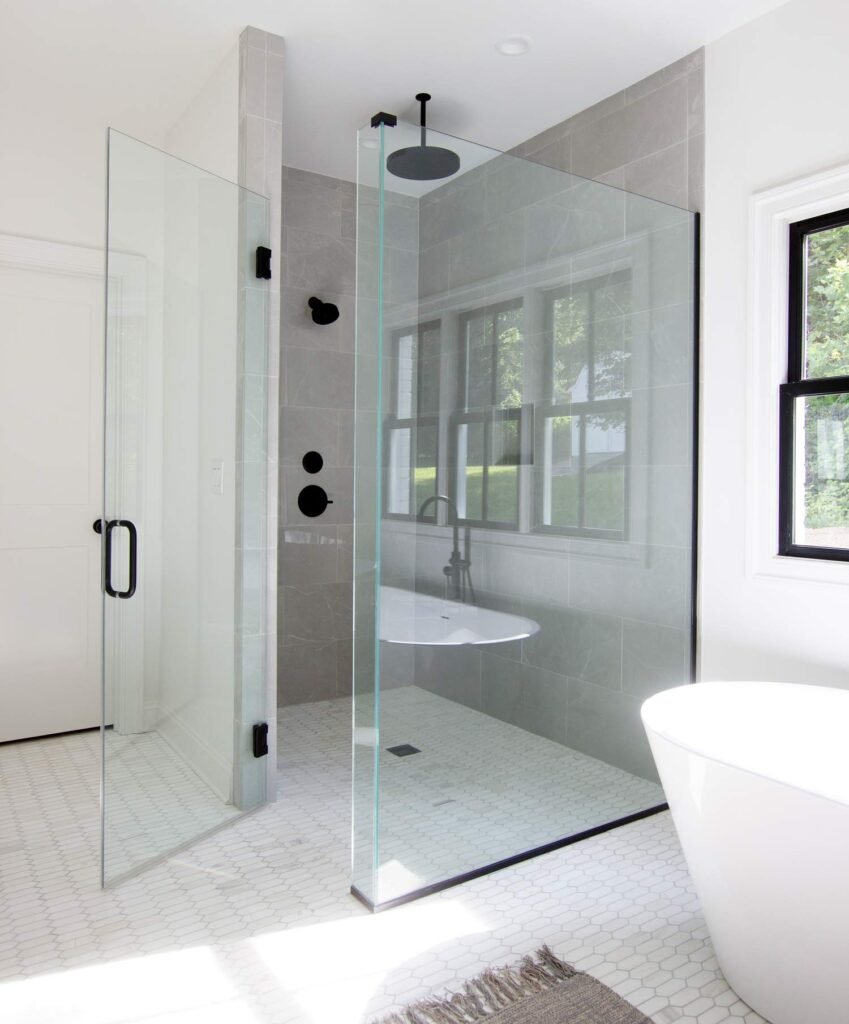
Curbless Shower Comparison: Small Bathroom Edition
| Feature | The Upside (Pros) | The Reality Check (Cons) |
| Space Perception | Makes a 5×8 bathroom look like a palace; no visual breaks. | You lose the “boundary,” meaning water can migrate if you aren’t careful. |
| Accessibility | Perfect for “aging in place” or if you’re just clumsy in the morning. | Requires expensive floor joist alterations to get that flush entry. |
| Cleaning | No nasty tracks or curbs to scrub with an old toothbrush. | You have to clean the drain more often to prevent “the great overflow.” |
| Aesthetic | High-end, modern look that screams “I have my life together.” | Can feel drafty; without a curb to trap steam, you might get a chill. |
| Installation | Increases home value for buyers looking for luxury features. | Costs roughly 30-50% more than a standard tub-to-shower swap. |
Real Talk: The Stuff Nobody Tells You
I’m going to be honest with you: curbless showers are colder. Without a curb and a heavy glass door to trap the steam, the heat escapes much faster. If you’re the kind of person who likes a sauna-like experience, you’re going to be disappointed. I solved this in my own house by installing a heated floor system (Radiant heat) under the tile. It’s a luxury, sure, but stepping onto a warm floor in February makes the $600 investment feel like a bargain.
Another thing? The “overspray.” In a small bathroom, the mist from a rainfall showerhead will get everywhere. Your towels will feel slightly damp, and your mirror will fog up instantly. You need a high-CFM exhaust fan to handle the extra humidity. Don’t just buy the cheapest fan at the big-box store; get one that sounds like a jet engine and moves serious air.
Maintenance is also a bit of a curveball. Because there’s no curb, you can’t just “contain” a mess. If your drain gets hairy (and it will), the water can back up onto the main bathroom floor pretty quickly. You have to be diligent about cleaning the hair trap. I tell my clients that if they have long hair or shedding dogs, they better get used to clearing that drain once a week.
Finally, the “Resale Value” myth. People say curbless showers add tons of value. While they are great for “aging in place” and accessibility, some buyers still want a bathtub for their kids. If you only have one bathroom in the whole house, ripping out the tub for a curbless shower might actually make your house harder to sell to families. Think long and hard about your neighborhood before you commit.
The “Is It Worth It?” Verdict
So, is it worth it? If you have the budget to do it right and you plan on staying in your home for at least five years, yes. The sheer feeling of space you gain in a small bathroom is unbeatable. It’s a sophisticated, “grown-up” look that makes your daily routine feel a lot less cramped.
The Bonus Tip: If you’re on a budget but love the look, try a “low-profile” shower base instead. They have a tiny 1-inch lip that is much easier to install than a true curbless floor but gives you 90% of the aesthetic for 30% of the cost.
Parting Wisdom: Never hire a contractor who says, “We don’t need a permit for this.” Moving drains and altering floor joists is serious business. Protect your investment and your home’s structural integrity by doing it by the book.
What’s the biggest worry holding you back from going curbless—is it the cost, or the fear of a flooded hallway? Drop your thoughts or questions in the comments below, and I’ll help you navigate the madness!