

Staring at a pool of grey, soapy water that refuses to budge is a rite of passage for every homeowner. I’ve been there—usually at 11:00 PM on a Tuesday when I’m exhausted and just want to brush my teeth. I once spent three hours trying to “pressure wash” a clog with a garden hose I dragged through the bathroom window, only to end up with a flooded hallway and a sink that was still backed up.
If your bathroom sink is draining slower than a turtle uphill, don’t reach for those jugs of liquid “drain cleaner.” In my twelve years of ripping apart vanities and swearing at U-bends, I’ve learned that those chemical concoctions are basically overpriced poison that eats your pipes from the inside out. They’re a lazy fix that rarely works on hair-based clogs anyway.
Let’s get your drain running clear using stuff you actually have in your pantry or under the sink. Grab some towels and let’s get dirty.
The Boiling Water Flush for Sluggish Drains
This is the absolute first thing I do. It sounds too simple to work, but you’d be surprised how much soap scum and toothpaste “gunk” builds up on the walls of your pipes. Think of it like arterial plaque for your house. If your drain is just a little sluggish—not totally stopped—boiling water is your best friend.
I remember my first “fix-it” job in my 1920s bungalow. I thought I had a major structural blockage, but it turned out to be five years of accumulated shaving cream and hair gel. A few rounds of boiling water melted that sludge right out. It’s cheap, it’s fast, and it doesn’t involve me getting a face full of caustic fumes.
To do this right, don’t just use hot tap water. Your water heater is likely set to 120°F or 140°F, which isn’t hot enough to melt solidified grease or hair product buildup. You need a rolling boil. Boil a full kettle or a large stockpot on the stove.
Pour it down the drain in three stages. Pour a third, wait 30 seconds, pour another third, wait, then dump the rest. The pauses allow the heat to actually sit against the clog rather than just rushing past it.
Expert Warning: If you have PVC (plastic) pipes, don’t pour boiling water straight from the stove. It can soften the joints or warp the plastic. If you see white or grey plastic pipes under your sink, use very hot—but not boiling—water instead.
Baking Soda and Vinegar: The Natural Drain Opener

Pinterest loves this one, and for once, Pinterest isn’t lying to you. This is the “science fair volcano” method. It’s not just a fun chemical reaction; the fizzing action creates pressure that can physically break apart small clogs. I’ve found that this works wonders for those drains that smell like something died in them because the vinegar kills the bacteria eating the trapped hair.
Start by dumping about half a cup of dry baking soda down the drain. You might need to use a spoon to shove it past the pop-up stopper. Don’t worry if it doesn’t all go down at once. Next, pour in half a cup of white distilled vinegar. Immediately cover the drain with a rag or the sink stopper to force that fizzing energy down into the clog instead of up into the basin.
Let it sit for at least 20 minutes. I usually go make a sandwich or complain about my property taxes while I wait. After it’s had time to eat away at the grime, flush the whole thing with a gallon of hot water.
Is it a miracle cure? No. If your kid dropped a LEGO man down there, vinegar isn’t going to dissolve plastic. But for the “standard” bathroom buildup of skin cells and hair, it’s a solid 8/10 on the effectiveness scale. Plus, it makes your bathroom smell like a salad instead of a swamp.
How to Clean Your Sink P-Trap Without a Plumber
If the boiling water and the vinegar didn’t do the trick, the problem is likely physical. It’s time to look at the P-Trap. That’s the U-shaped pipe under your sink. Its job is to hold a little bit of water to block sewer gases from coming into your house, but it also acts as a “catch-all” for everything you drop down the drain.
I once found a lost wedding ring and three years’ worth of beard trimmings in a P-Trap. It was disgusting, but clearing it saved me a $200 plumber visit. First, clear out all the half-empty bottles of lotion and cleaning supplies from under the sink. Put a bucket or a shallow tray directly under the U-joint.
Most modern P-traps have plastic “slip nuts” that you can unscrew by hand. If they’re stuck, use a pair of channel-lock pliers, but wrap a rag around the nut first so you don’t chew up the plastic. Once you unscrew both sides, the U-bend will drop. Be prepared—the water inside will be black and smelly.
Take that pipe to a different sink (don’t be the person who tries to wash it in the sink you just disassembled; I did that once and it was a very messy realization) and scrub it out with an old toothbrush. Check the horizontal pipe leading into the wall, too. Sometimes the clog is hiding right at the entrance to the wall pipe. Put it all back together, tighten the nuts hand-tight, and you’re golden.
Using a Zip-Tie or Drain Snake for Hair Clogs
When the clog is right near the surface—which is where 90% of bathroom clogs live—you don’t need a heavy-duty motorized snake. You need a “Zip-it” tool. These are those long, flexible plastic strips with little barbs on the sides. They cost about five bucks at the hardware store, and they are the most satisfying/revolting tool in my arsenal.
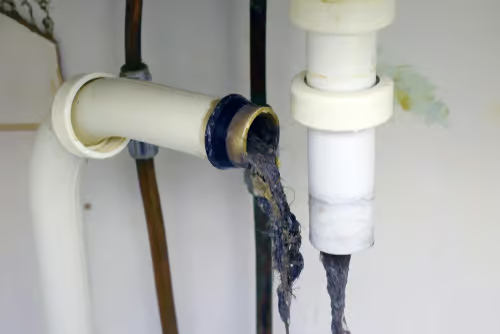
You don’t even have to remove the sink stopper most of the time. Just wiggle that plastic strip down past the stopper as far as it will go, then yank it back up. It’s going to come up covered in what I call “the hair monster.” It’s a wet, grey, tangled mess of hair and soap.
If you don’t have a plastic drain tool, you can DIY one with a long zip-tie. Use a pair of wire cutters to snip little notches into the sides of the zip-tie to create “teeth.” It’s a bit of a MacGyver move, but it works in a pinch when you’re staring at a clogged sink at midnight.
Just a heads-up: wear gloves. Seriously. You do not want “hair monster” juice under your fingernails. It’s a smell that lingers, and no amount of lemon-scented soap will save you.
The Plunger Method (Yes, for Sinks!)
People think plungers are only for toilets. Not true. But don’t use your nasty toilet plunger in your bathroom sink—that’s just unsanitary. Go buy a small “cup plunger” specifically for sinks. They have a flat bottom rather than the extended “flange” you see on toilet plungers.
The trick to plunging a sink that most people miss is the overflow hole. You know that little hole near the rim of the sink? If you don’t plug that, you’re just moving air around, and you’ll never get the suction needed to move the clog. Stuff a damp rag into the overflow hole and hold it tight with one hand while you plunge with the other.
Fill the sink with just enough water to cover the rubber cup of the plunger. Push down gently at first to get the air out, then give it about 10 to 15 vigorous up-and-down pumps. You’re trying to use water pressure to hammer the clog through the pipe.
If the water suddenly drains with a loud “glug,” you’ve won. If you see black flakes floating up into the sink, you’re on the right track—keep going until it clears.

Real Talk: When to Give Up and Call a Pro
I’m all for DIY, but part of being a “guru” is knowing when you’re beat. If you’ve cleaned the P-trap, snaked the drain, and used the baking soda trick, and the water is still backing up, your clog is deeper in the main line.
At that point, you’re looking at a potential vent stack issue or a main line blockage (usually tree roots or a collapsed pipe if you live in an older house). Don’t go renting a massive industrial power snake if you’ve never used one. Those things have enough torque to snap your wrist or crack an old ceramic pipe if they catch on something.
Also, if you tried a chemical cleaner before reading this (it’s okay, I won’t tell), tell your plumber. If they start taking apart pipes and get a face full of sulfuric acid because you didn’t mention you dumped “Liquid Fire” down there, they’re going to be rightfully furious—and you might end up paying for their medical bill.
Bonus Side Note: If your sink is draining fine but smells like a locker room, it might not be a clog at all. Bacteria loves to grow in the “overflow” channel. Take a funnel, stick it in that little hole at the top of the sink, and pour a mix of vinegar and baking soda in there. It’ll fizz out the hidden gunk you can’t see.
Parting Wisdom
Unclogging a sink is 10% tool and 90% persistence. Usually, it’s just a big ball of hair that’s acting like a dam. If you keep it clear of hair and stop washing grease down the drain (looking at you, person who cleans their oily face-wash brushes in the sink), you’ll rarely have to do this.
Now that your sink is flowing freely again, what’s the weirdest thing you’ve ever found in a drain? Drop your “drain horror stories” in the comments below—I need to know I’m not the only one who has found a toy dinosaur in the plumbing!


