Smart kerosene heaters can provide dependable heat when temperatures drop, power fails, or a garage, workshop, or jobsite needs fast supplemental warmth. The right choice depends on more than BTU output: fuel efficiency, ventilation, portability, controls, and safety features all matter.
We compared compact wick heaters, indoor convection models, and high-output forced-air units to help you match heater performance to your space and heating priorities.
Best 10 Smart Kerosene Heaters Picks for 2026
Compact All-Rounder
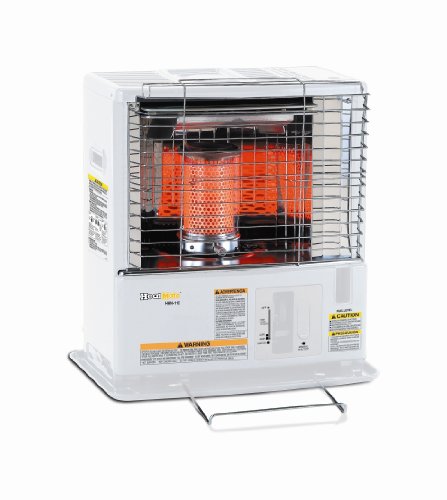
- Up to 14-hour runtime
- Push-button start and safety shut-off
- Heats up to about 400 sq. ft.
Best For: Portable heating in smaller rooms, garages, and outdoor areas
Large-Room Convector

- Rated for up to 1,000 sq. ft.
- 23,000 BTU convection heat
- Tip-over protection and cool-touch design
Best For: Larger indoor rooms, garages, and offices
Emergency-Ready Wick Heater

- Runs up to 15 hours
- Lightweight 12-pound design
- UL-listed with Sure Seat Chimney System
Best For: Backup warmth and portable heating up to 450 sq. ft.
High-Output Forced Air

- 45,000 BTU forced-air output
- 5-gallon tank with wheels and handle
- Works with kerosene or diesel
Best For: Rapid heating in garages, workshops, job sites, and open areas
Compact Off-Grid Pick
Garvee 9000 BTU Portable Kerosene Heater

- 8,000–9,000 BTU output for 140–160 sq. ft.
- Runs up to 20 hours on a 5.5-liter tank
- Heats and supports cookware without electricity
Best For: Small spaces, camping, and outage backup
Versatile Emergency Value
9,000 BTU Kerosene Heater for Indoor and Outdoor Use

- 8,000–10,000 BTU output for 200–350 sq. ft.
- Runs 15–21 hours per tank
- Includes safety features and cooking functionality
Best For: Garages, homes, patios, and emergencies
High-Output Large-Space Pick
Garvee 20000 BTU Portable Kerosene Heater

- 20,000 BTU output for 240–290 sq. ft.
- Runs up to 12 hours on a 7.5-liter tank
- 360-degree heat and cooking grate
Best For: Larger rooms, workshops, and emergency use
Best Large-Garage Pick
CAMMOO 85,000 BTU Forced-Air Heater

- 85,000 BTU heat for areas up to 2,200 sq. ft.
- 40°F–110°F thermostat with automatic cycling
- Wheels, large tank, and multiple safety features
Best For: Garages, workshops, barns, and jobsites
Best Extended-Run Worksite Pick
VEVOR 175,000 BTU Kerosene Heater

- 175,000 BTU output for up to 36,021 cu. ft.
- 13.2-gallon tank runs up to 9.5 hours
- Thermostat, fuel gauge, and low-fuel shutoff
Best For: Large workshops, warehouses, barns, and construction sites
Best Maximum-Output Pick
VEVOR 215,000 BTU Forced-Air Heater

- 215,000 BTU heat for up to 44,496.6 cu. ft.
- 13.2-gallon tank with up to 7.5 hours of runtime
- Thermostat, fuel monitoring, and overheat protection
Best For: Very large barns, warehouses, workshops, and jobsites
Compact All-Rounder – Portable 10,000 BTU Heater
The Sengoku HeatMate 110 is a practical choice among smart kerosene heaters for smaller rooms, garages, and other hard-to-heat spaces. Its 1.2-gallon tank can provide up to 14 hours of operation, while push-button starting avoids the need for matches or electricity.
Best For: Portable heating in spaces up to about 380–400 square feet, including garages, bedrooms, home offices, patios, and camping areas.
Pros:
- 10,000 BTU output with coverage listed up to 400 square feet
- Up to 14 hours of runtime from a 1.2-gallon tank
- Push-button start, automatic shut-off, tip-over switch, and protective grills
- Compact, portable design for indoor and outdoor use
Cons:
- Lower output than larger convection and forced-air models
- Floor-mounted design requires a suitable placement area
This model emphasizes portability and long runtime rather than maximum heating power. It is a sensible fit when you need a manageable kerosene heater for moderate-size spaces and value built-in safety features.
Large-Room Convector – 23,000 BTU Indoor Heater
The Dyna-Glo RMC-95C6B is a high-output option for shoppers comparing smart kerosene heaters for larger indoor areas. Its 23,000 BTU convection design is rated to heat up to 1,000 square feet and includes tip-over protection plus a cool-touch design.
Best For: Indoor heating for larger homes, garages, offices, and rooms requiring substantially more coverage than compact portable heaters provide.
Pros:
- 23,000 BTU output with listed coverage up to 1,000 square feet
- Convection heating distributes warmth through the room
- Tip-over protection and cool-touch design
- Floor-mounted format suits garage, home, and office use
Cons:
- Less compact than lower-output portable models
- Supplied details do not specify runtime or tank capacity
With more than double the output of many compact wick heaters, the Dyna-Glo is aimed at coverage rather than lightweight portability. Consider it when your priority is heating a larger indoor space with a floor-standing convection unit.
Emergency-Ready Wick Heater – Compact 10,500 BTU Model
The Kero World KW-12 is a lightweight, compact choice among smart kerosene heaters, especially for backup warmth during power outages. It produces 10,500 BTUs, heats up to 450 square feet, and can run for up to 15 hours on a 1.1-gallon tank.
Best For: Emergency preparedness, compact indoor heating, and portable use in homes, garages, offices, workshops, and similar spaces.
Pros:
- Up to 15 hours of operation on a 1.1-gallon tank
- Rated to heat up to 450 square feet
- Lightweight 12-pound design for easier transport
- Sure Seat Chimney System and UL listing
Cons:
- 10,500 BTU output is intended for moderate-size spaces
- Supplied details do not specify an automatic ignition system
The KW-12 stands out for its low weight, long stated runtime, and emergency-use positioning. It is a practical option if you want a compact heater that can provide extended warmth when conventional heating is unavailable.
High-Output Forced Air – 45,000 BTU Portable Heater
The VEVOR ZB-K45 is the heavy-duty pick among smart kerosene heaters for job sites, garages, workshops, and other demanding applications. Its 45,000 BTU forced-air system uses a quick-start switch, a 5-gallon tank, and wheels with a handle for easier repositioning.
Best For: Rapid heating in workshops, warehouses, garages, construction areas, patios, tents, and other indoor or outdoor locations listed by the manufacturer.
Pros:
- 45,000 BTU output with 450 m³/h airflow
- Quick-start switch for easier ignition
- Large 5-gallon tank and stated consumption of 0.34 gallons per hour
- Wheels, handle, and dual fuel filters; compatible with kerosene and diesel
Cons:
- Listed coverage is 260 square meters, so placement and ventilation requirements should be checked carefully
- Heavier and less room-friendly than compact radiant or convection heaters
- Forced-air operation may be less suitable where quiet heating is preferred
This model prioritizes fast, powerful airflow over compact indoor comfort. Its mobility, large fuel tank, and dual-fuel compatibility make it better suited to work areas and larger open spaces than bedrooms or small rooms.
Compact Off-Grid Pick – Garvee 9000 BTU Portable Kerosene Heater
For shoppers comparing smart kerosene heaters for backup warmth, the Garvee 9000 BTU model focuses on portability, long runtime, and electricity-free operation. Its 8,000–9,000 BTU output is designed for spaces of about 140–160 square feet, while the top grate can also support cookware.
Best For: Small rooms, garages, camping, hunting, and power-outage preparedness.
Pros:
- 360-degree heat distribution for consistent warmth in smaller spaces.
- Up to 20 hours of runtime from its 5.5-liter tank.
- Works without electricity and includes a cooking grate, fuel gauge, siphon pump, funnel, and spare wicks.
Cons:
- Its stated coverage is limited to approximately 140–160 square feet.
- At 18.9 pounds, it may be less convenient to carry than smaller emergency heaters.
This is a practical choice when extended runtime and compact, non-electric heating matter more than high output. The fuel gauge, flame control, safety guard, and included maintenance accessories add convenience for regular preparedness use.
Versatile Emergency Value – 9,000 BTU Kerosene Heater for Indoor and Outdoor Use
This 9,000 BTU kerosene heater is a versatile option for shoppers seeking smart kerosene heaters with broad indoor and outdoor usability. Its 8,000–10,000 BTU output is rated for roughly 200–350 square feet, and the non-electric design provides warmth during outages or outdoor activities.
Best For: Garages, living areas, mobile homes, patios, camping, and emergency heating.
Pros:
- Heating coverage is listed at approximately 200–350 square feet.
- Runs for about 15–21 hours on its 1.35-gallon tank.
- Includes a fuel gauge, protective safety net, stable base, cooking surface, storage bag, gloves, pump, funnel, and extra wicks.
Cons:
- The supplied details do not specify a 360-degree heating design.
- Its 13-by-13-by-18-inch form may require dedicated floor space.
With adjustable height and temperature features plus a cooking top, this model emphasizes flexibility. Its combination of longer listed runtime, accessory bundle, and indoor/outdoor use makes it a well-rounded backup heater for varied spaces.
High-Output Large-Space Pick – Garvee 20000 BTU Portable Kerosene Heater
For larger areas, this Garvee model is one of the more powerful smart kerosene heaters in the lineup. Its 20,000 BTU output and 360-degree heat distribution are intended for spaces of approximately 240–290 square feet, while the non-electric design suits outages, workshops, barns, and outdoor use.
Best For: Larger rooms, workshops, barns, garages, camping, and emergency cooking and heating.
Pros:
- 20,000 BTU output provides substantially more heat than compact models.
- 7.5-liter tank supports up to 12 hours of continuous runtime.
- Offers 360-degree heating, a cooking grate, adjustable height, flame control, fuel gauge, safety guard, and maintenance accessories.
Cons:
- At 26.7 pounds and over 23 inches tall, it is less compact and portable.
- Its runtime is shorter than the smaller Garvee model because of its higher fuel consumption.
This heater is best when faster, stronger heat is the priority. The larger footprint and higher fuel use are trade-offs for its higher output, but the cooking surface and straightforward controls increase its usefulness in emergency or off-grid settings.
Best Large-Garage Pick – CAMMOO 85,000 BTU Forced-Air Heater
For shoppers comparing smart kerosene heaters for garages, workshops, and jobsites, the CAMMOO KH-85 combines fast forced-air heating with thermostat control. Its 85,000 BTU output is rated for areas up to 2,200 square feet, and the wheeled frame makes repositioning practical.
Best For: Large garages, workshops, barns, and jobsites needing rapid, portable heat.
Pros:
- 85,000 BTU output warms spaces up to 2,200 square feet, with warm air reported in as little as 5 seconds.
- Adjustable 40°F to 110°F thermostat can cycle the heater automatically to maintain the selected temperature.
- Flame-sensing fuel shutoff, overheat protection, ETL certification, and a rugged steel body add practical safety and durability features.
- Large tank, wheels, push handle, and 3.3-foot cord support extended and mobile use.
Cons:
- It is listed for outdoor use and is a forced-air fuel heater, so placement and ventilation require care.
- 1-K kerosene is recommended; diesel requires extra fresh-air ventilation, and fuels should not be mixed.
The CAMMOO is a balanced choice when fast startup, thermostat operation, and mobility matter more than compact size. Its 85,000 BTU rating suits substantial work areas without stepping up to the much larger capacities of industrial models.
Best Extended-Run Worksite Pick – VEVOR 175,000 BTU Kerosene Heater
This VEVOR model is one of the more powerful smart kerosene heaters for large work areas, delivering 175,000 BTU output and coverage up to 36,021 cubic feet. A thermostat, room-temperature display, fuel gauge, and sizable tank make it suited to demanding heating sessions.
Best For: Workshops, warehouses, barns, construction sites, and other wide workspaces requiring long runtime.
Pros:
- 175,000 BTU output is rated for spaces up to 36,021 cubic feet or 1,020 cubic meters.
- 40°F to 110°F thermostat control stops heating when the set temperature is reached, helping manage fuel use.
- 13.2-gallon tank provides up to 9.5 hours of runtime under the stated conditions.
- Supports kerosene or diesel, with low-fuel shutoff, fuel gauge, dual fuel filters, pressure gauge, and overheat protection.
Cons:
- Its 49.2-pound, 40.9-inch-long body is less convenient for tight spaces or frequent hand carrying.
- Only one fuel type should be used at a time, and 1-K kerosene is recommended for comfortable operation.
- The listed fuel consumption is about 1.3 gallons per hour, so extended use can require substantial fuel.
The 175,000 BTU VEVOR stands out for coverage and runtime rather than compactness. Choose it when a large barn, warehouse, or worksite needs strong heat and thermostat-based control over a longer shift.
Best Maximum-Output Pick – VEVOR 215,000 BTU Forced-Air Heater
For the largest spaces in a smart kerosene heaters roundup, this VEVOR unit increases output to 215,000 BTU and is rated for up to 44,496.6 cubic feet. It combines thermostat adjustment with a 13.2-gallon tank and fuel-monitoring features for demanding worksite heating.
Best For: Very large workshops, farms, barns, warehouses, construction sites, and open work areas.
Pros:
- 215,000 BTU output is rated for spaces up to 44,496.6 cubic feet or 1,260 cubic meters.
- Thermostat control adjusts from 40°F to 110°F and can stop heating after reaching the selected temperature.
- 13.2-gallon tank supports up to 7.5 hours of runtime under the stated conditions.
- Fuel gauge, low-fuel automatic shutoff, dual fuel filters, pressure gauge, and overheat protection support monitored operation.
Cons:
- At 1.5 gallons per hour, it has higher stated fuel consumption than the 175,000 BTU VEVOR model.
- The large output may be excessive for smaller garages or compact rooms.
- Kerosene and diesel should not be mixed; 1-K kerosene is recommended for comfortable operation.
This is the strongest option of the three for maximum coverage. Its higher output can heat very large work areas quickly, but the increased fuel rate makes it most sensible where substantial heating capacity is genuinely needed.
How We Picked the Best Smart Kerosene Heaters
We evaluated this selection by heater type, rated heat output, portability, intended environment, fuel capacity, and operating convenience. Compact convection and radiant models are suited to smaller rooms or emergency use, while forced-air heaters are designed for garages, workshops, construction areas, and other large, ventilated spaces. We also considered practical features such as wheels, handles, thermostats, cordless operation, and whether a model can function as a basic stove.
Because kerosene heaters can create combustion gases, safe placement and ventilation are essential. Always follow the manufacturer’s instructions and local regulations, and use carbon monoxide alarms where appropriate.
Quick Comparison
- Small-room and backup heating: Look for compact 9,000- to 10,000-BTU convection or radiant heaters.
- Flexible indoor supplemental heat: Midrange models around 20,000 to 23,000 BTU can warm larger areas, subject to ventilation requirements.
- Large spaces and jobsites: Forced-air models from 45,000 BTU upward deliver faster, broader heat but generally require more ventilation and may need electricity for the blower.
- Maximum output: Units rated at 85,000 to 215,000 BTU are intended for very large, open, or industrial-style spaces rather than typical living areas.
Key Buying Factors for Smart Kerosene Heaters
Heater Type and Ventilation
Wick-based convection and radiant heaters are typically quieter and simpler. Forced-air torpedo heaters move heat quickly, but their combustion exhaust and blower operation make proper ventilation especially important. Never use a fuel-burning heater in an enclosed space unless the manufacturer specifically permits it.
Heat Output and Space Size
Choose BTU output according to room size, insulation, ceiling height, outdoor temperature, and airflow. More BTUs are not automatically better: an oversized unit may waste fuel and create uncomfortable heat, while an undersized heater may run continuously without warming the space effectively.
Controls, Runtime, and Portability
Thermostats can help maintain a steadier temperature, while larger tanks may reduce refueling interruptions. Wheels and handles are valuable on high-output models. For emergency use, a cordless heater offers convenience, but forced-air models may require power for ignition or the fan.
Safety and Fuel Handling
Check for stable bases, reliable shutoff systems, flame-control features, and clear fuel requirements. Use only the recommended kerosene, store fuel in an approved container, keep the heater away from combustibles, and allow it to cool before refueling.
Who Should Buy Which Smart Kerosene Heaters?
Apartment, cabin, or emergency-backup users should prioritize a compact, lower-BTU wick heater with straightforward controls and easy storage. Homeowners heating a larger room or open-plan area may prefer a midrange convection unit, provided ventilation and placement requirements can be met. Garage and workshop users should consider a portable forced-air heater with wheels, a handle, and enough output for the space. Contractors and industrial users need high-BTU forced-air equipment, but should reserve the largest models for expansive, well-ventilated areas where their fuel consumption and exhaust can be managed safely.