When the power goes out or a drafty workspace needs dependable heat, the right kerosene heater can provide warmth without relying on household electricity. This roundup compares compact wick models, portable heater-stove designs, indoor convection heaters, and high-output forced-air units.
Use the guide below to match fuel capacity, heat output, portability, ventilation requirements, and intended location with your needs.
Best 10 Kerosene Heaters Picks for 2026
Best Portable Pick
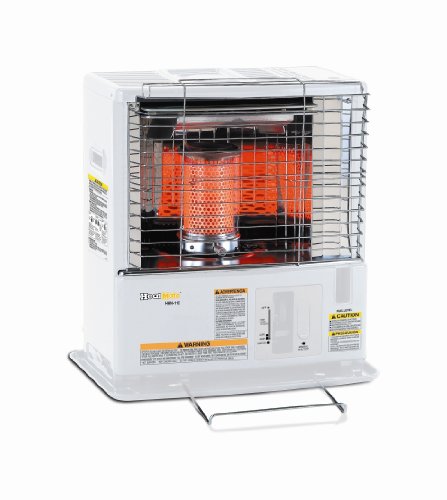
- Up to 14 hours of runtime
- Push-button, no-electricity start
- Safety shut-off and tip-over switch
Best For: Portable heating for rooms, garages, patios, and camping
Most Versatile Pick
Portable Kerosene Heater and Stove

- 6-liter tank for longer use
- 360-degree, 10,000-BTU heating
- Heats and cooks without electricity
Best For: Camping, outdoor cooking, and emergency heating
Best Emergency Option
Kero World 10,000 BTU Wick Heater

- Up to 14 hours per tank
- No electricity required
- Radiant heat plus emergency light
Best For: Power outages, winter emergencies, and garages
Longest Runtime Pick

- Up to 20 hours of runtime
- 360-degree heat without electricity
- Built-in grate for cooking
Best For: Extended camping, outages, garages, and off-grid use
Reliable Emergency Heat
Compact Kerosene Convection Heater

- 10,500 BTUs for up to 450 sq. ft.
- Up to 15 hours per fill
- Portable 12-pound design
Best For: Indoor emergency and backup heating
Versatile Value Pick

- Adjustable 8,000–10,000 BTUs
- 15–21 hours of stated runtime
- Heater and cooking surface in one
Best For: Small spaces, camping, and emergency use
High-Output Choice
Garvee 20,000 BTU Kerosene Heater

- 20,000 BTUs with 360-degree heat
- Up to 12 hours per fill
- Top grate supports cooking
Best For: Garages, workshops, and off-grid backup heat
Best Indoor Pick
Compact 23,000 BTU Convection Heater

- Covers up to 1,000 square feet
- Tip-over protection and cool-touch design
- Suitable for indoor rooms and offices
Best For: Moderate indoor heating in rooms, garages, and offices
Best Heavy-Duty Pick

- Heats up to 44,496.6 cubic feet
- 13.2-gallon tank runs up to 7.5 hours
- Thermostat, wheels, and overheat protection
Best For: Large workshops, warehouses, barns, and construction sites
Best Extended-Run Pick

- Covers up to 36,021 cubic feet
- Runs up to 9.5 hours on a full tank
- Thermostat and safety monitoring features
Best For: Large workspaces needing portable heat and longer runtime
Best Portable Pick – Sengoku HeatMate 10,000 BTU
The Sengoku HeatMate is a practical choice among kerosene heaters for garages, poorly insulated rooms, patios, and other spaces where portable, non-electric warmth is useful. Its 10,000-BTU output, 1.2-gallon tank, and push-button start make it straightforward to set up and move.
Best For: Portable indoor or outdoor heating with extended runtime.
Pros:
- Runs for up to 14 hours on its 1.2-gallon tank.
- Push-button start does not require matches or electricity.
- Includes automatic shut-off, tip-over protection, and safety grills.
- Designed to heat spaces up to about 380–400 square feet.
Cons:
- At about 22 inches deep, it may require more floor space than compact models.
- Its listed coverage is best suited to small and medium-size spaces.
Choose this model if easy carrying, simple ignition, and balanced safety features matter more than the smallest possible footprint.
Most Versatile Pick – Portable Kerosene Heater and Stove
This multifunctional kerosene heater is aimed at buyers who want more than room warmth. It operates without electricity, offers 10,000 BTUs of heat, and has a top designed for boiling, cooking, or barbecuing during camping, emergencies, or outdoor use.
Best For: Camping and emergency use where heating and cooking are both useful.
Pros:
- Its 6-liter tank supports extended use without frequent refueling.
- Provides 360-degree heating for spaces listed at roughly 215–323 square feet.
- Can heat, boil, cook, and barbecue.
- Includes a fuel gauge, flame adjuster, safety grills, and automatic tip-over shut-off.
Cons:
- Its multifunction design may be unnecessary if you only need room heating.
- The listed coverage is smaller than some 10,000-BTU alternatives.
- Cooking use requires extra attention to placement and safe operation.
This is a flexible option for off-grid situations, but buyers seeking a dedicated indoor heater may prefer a simpler design.
Best Emergency Option – Kero World 10,000 BTU Wick Heater
The Kero World wick heater is designed for dependable radiant warmth during outages, winter emergencies, or everyday use in rooms, garages, workshops, and basements. It needs no electricity and can provide up to 14 hours of operation on one tank.
Best For: Emergency heating and radiant warmth in spaces up to about 420–450 square feet.
Pros:
- Runs up to 14 hours on a full tank.
- Operates without household electricity and includes battery-powered ignition.
- Radiant heat warms spaces quickly and can also provide light during outages.
- Includes shut-off and tip-over safety features.
Cons:
- Its cabinet-style design weighs about 22 pounds.
- The notes cite both a 1.0-gallon tank and a removable 1.1-gallon tank.
- A wick system requires attention to normal wick-related maintenance.
For shoppers prioritizing outage readiness and longer burn time, this established-style radiant heater offers useful functionality in a freestanding format.
Longest Runtime Pick – Garvee 9,000 BTU Heater
The Garvee portable kerosene heater stands out among kerosene heaters for its claimed runtime of up to 20 hours. It provides 8,000–9,000 BTUs, surrounds a space with 360-degree heat, and includes a cooking grate for camping, hunting, garage, and off-grid use.
Best For: Extended portable heating where long runtime and cooking capability are priorities.
Pros:
- Claims up to 20 hours of continuous runtime from its 5.5-liter tank.
- Operates without electricity for outages and outdoor activities.
- Top grate supports cookware such as kettles, pans, and Dutch ovens.
- Includes a fuel gauge, flame-control knob, siphon pump, funnel, and spare wicks.
Cons:
- Its listed heating coverage is about 140–160 square feet.
- At 18.9 pounds, it is heavier than some compact portable heaters.
- Cooking and heating at the same time may not suit buyers seeking a dedicated room heater.
This model is a strong fit for extended off-grid use, especially when minimizing refueling and carrying basic cooking accessories are important.
Reliable Emergency Heat – Compact Kerosene Convection Heater
For shoppers comparing kerosene heaters, the Kero World KW-12 offers a straightforward balance of portable design, steady output, and extended runtime. Its 10,500 BTUs are rated to heat spaces up to 450 square feet, while the 1.1-gallon tank can run for up to 15 hours.
Best For: Emergency backup heating in homes, garages, offices, and other indoor spaces.
Pros:
- Provides 10,500 BTUs of radiant and convective heat.
- Rated for spaces up to 450 square feet.
- Runs for up to 15 hours on a 1.1-gallon tank.
- Compact 12-pound design is easy to transport.
Cons:
- Designed for indoor use rather than general outdoor applications.
- Uses a smaller fuel tank than some larger kerosene heaters.
The KW-12 is a practical choice when reliable, electricity-free warmth and long operation matter more than maximum heating power. Its portable footprint also makes it useful as a flexible backup heater.
Versatile Value Pick – 9,000 BTU Kerosene Heater
This 9,000 BTU model is one of the more versatile kerosene heaters for buyers who want portable, non-electric warmth with added utility. It is designed for spaces from about 150 to 350 square feet and includes accessories for fueling, storage, and wick replacement.
Best For: Smaller rooms, garages, camping areas, and emergency heating where portability and multipurpose use are priorities.
Pros:
- Adjustable 8,000–10,000 BTU output for spaces up to 350 square feet.
- Runs approximately 15–21 hours on its 1.35-gallon tank.
- Includes a cooking surface, making it useful as a two-in-one heater and stove.
- Comes with a funnel, siphon pump, gloves, storage bag, and extra wicks.
Cons:
- Its 150–350-square-foot coverage is more limited than higher-output models.
- The cooking function may not suit shoppers seeking a heater only.
With adjustable output, long stated runtime, and a useful accessory package, this heater stands out for flexible home, garage, and outdoor backup use. It is best matched to modestly sized spaces.
High-Output Choice – Garvee 20,000 BTU Kerosene Heater
The Garvee S-120 is built for shoppers who want high-output heat without relying on electricity. Its 20,000 BTU output provides 360-degree surround heat for approximately 240–290 square feet, and the nearly 2-gallon tank offers up to 12 hours of stated runtime.
Best For: Workshops, garages, barns, and off-grid or emergency situations requiring powerful non-electric heat.
Pros:
- Delivers a strong 20,000 BTU output with 360-degree heating.
- Runs for up to 12 hours with its 7.5-liter fuel tank.
- Top grate supports heating or cooking with pots and pans.
- Includes a fuel gauge, adjustable flame control, safety guard, pump, funnel, and spare wicks.
Cons:
- At 26.7 pounds, it is less portable than smaller models.
- Its stated coverage is approximately 240–290 square feet despite the higher output.
The Garvee combines substantial heat output with cooking capability and useful operating controls. Its larger, heavier build makes it a stronger fit for demanding spaces where power and versatility outweigh compact portability.
Best Indoor Pick – Compact 23,000 BTU Convection Heater
For shoppers comparing kerosene heaters for home offices, bedrooms, garages, or study spaces, the Dyna-Glo RMC-95C6 offers a straightforward indoor heating setup. Its floor-mounted convection design produces 23,000 BTUs and is rated to cover up to 1,000 square feet.
Best For: Indoor rooms and smaller work areas that need floor-mounted kerosene heat.
Pros:
- 23,000 BTU output with coverage listed up to 1,000 square feet
- Tip-over protection adds a useful safety feature
- Cool-touch design and simple floor-mounted form factor
Cons:
- Much lower heat output than the heavy-duty forced-air models in this roundup
- Designed for indoor use rather than large open workspaces
The Dyna-Glo is the most practical choice here for moderate indoor heating needs. Its compact, boxy design and safety features make it easier to consider for occupied rooms, while its 23,000 BTU output limits it to smaller spaces.
Best Heavy-Duty Pick – 215,000 BTU Forced-Air Heater
For large workshops, construction sites, warehouses, and other demanding spaces, this VEVOR kerosene heater delivers 215,000 BTUs and coverage up to 44,496.6 cubic feet. Its forced-air design, thermostat, wheels, and handle are geared toward portable jobsite heating.
Best For: Large industrial, agricultural, and construction areas requiring maximum heat output.
Pros:
- Powerful 215,000 BTU output for spaces up to 44,496.6 cubic feet
- 13.2-gallon tank provides up to 7.5 hours of operation under stated conditions
- Thermostat, temperature display, fuel gauge, and overheat protection
- Supports kerosene or diesel and includes wheels and a carrying handle
Cons:
- Fuel consumption is listed at 1.5 gallons per hour
- Its 50.3-pound size is better suited to jobsite use than casual room heating
- Recommended primarily for outdoor and industrial-style applications
This is the strongest option when raw heating capacity matters most. The large tank and thermostat reduce interruptions, but its high fuel consumption and heavy-duty format make it excessive for small indoor rooms.
Best Extended-Run Pick – 175,000 BTU Portable Heater
This VEVOR model is a balanced choice among kerosene heaters for workshops, barns, warehouses, and construction areas. It produces 175,000 BTUs, covers up to 36,021 cubic feet, and uses a 13.2-gallon tank for a stated runtime of up to 9.5 hours.
Best For: Large work areas where longer runtime and portable forced-air heating are priorities.
Pros:
- 175,000 BTU output covers up to 36,021 cubic feet
- Lower listed fuel consumption of 1.3 gallons per hour
- 13.2-gallon tank provides up to 9.5 hours of operation under stated conditions
- Thermostat, temperature display, fuel gauge, and overheat protection included
Cons:
- Less heat output and coverage than the 215,000 BTU VEVOR model
- Its 49.2-pound weight may be cumbersome for frequent repositioning
- Forced-air operation is better suited to work areas than quiet residential spaces
The 175,000 BTU model gives up some maximum coverage in exchange for lower stated fuel consumption and longer runtime. It is a sensible middle ground for users who need substantial portable heat without choosing the largest unit.
How We Picked These Kerosene Heaters
We selected models across the main categories buyers consider: compact radiant and convection heaters, no-electric heater-stove combinations, indoor-rated units, and forced-air heaters for large spaces. The lineup includes outputs from about 9,000 BTU to 215,000 BTU, covering emergency rooms, garages, workshops, outdoor areas, and construction settings.
Our comparison emphasizes practical specifications, including heat output, portability, fuel-tank design, operating method, thermostat availability, and whether a model is intended for indoor or jobsite use. Always confirm the manufacturer’s instructions, local regulations, and ventilation requirements before operating any kerosene heater.
Quick Comparison
| Type | Typical Use | Main Advantage | Key Trade-Off |
|---|---|---|---|
| Compact wick heater | Small rooms, outages, camping | Portable and often electricity-free | Lower heat output and manual operation |
| Heater-stove model | Emergency cooking and supplemental heat | Dual-purpose design | Requires careful placement and ventilation |
| Indoor convection heater | Living areas and garages where approved | Quiet, broad-area warmth | Needs clearance and proper fuel handling |
| Forced-air heater | Large workshops and jobsites | Very high heat output | Usually louder and ventilation-dependent |
Key Buying Factors for Kerosene Heaters
Heat Output and Room Size
BTU ratings indicate heating capacity, not guaranteed room temperature. A 9,000- to 10,000-BTU unit is better suited to a small, reasonably enclosed area, while 20,000 BTU or more may be useful in larger or draftier spaces. Forced-air models exceeding 100,000 BTU are generally intended for large open areas, workshops, or jobsites rather than ordinary living rooms.
Indoor Approval and Ventilation
Never assume that every kerosene heater is safe for indoor use. Look for clear indoor-use instructions and follow required clearances. Combustion consumes oxygen and can produce carbon monoxide, so ventilation and a working carbon-monoxide alarm are essential. Forced-air torpedo heaters commonly require substantial ventilation and should not be treated as residential room heaters.
Fuel Capacity and Runtime
Larger tanks can reduce refueling, but they also add weight. Check the stated tank size, estimated runtime, fuel grade, and storage guidance. Use only the fuel specified by the manufacturer, keep it in an approved container, and avoid refueling while the heater is hot or operating.
Portability and Controls
Handles, compact dimensions, automatic shutoff features, ignition design, and thermostat controls affect everyday usability. A wick heater is typically easier to move and operate without power, while forced-air models may need electricity for fans or controls despite using kerosene as fuel.
Who Should Buy Which Kerosene Heaters?
Choose a compact 9,000- or 10,000-BTU wick heater for emergency backup, a small room, or portable use where low weight matters most. Choose a heater-stove combination if cooking capability is important during camping or outages, provided the product is used only as directed.
Choose an indoor convection model for broad, quiet supplemental warmth in an approved space. Choose a 20,000-BTU class unit for a larger garage or workshop when its safety requirements fit the location. Choose a 175,000- to 215,000-BTU forced-air heater for large ventilated work areas, agricultural spaces, or construction sites—not enclosed residential rooms.