Small gaps around a studio door can let in drafts, hallway noise, dust, and distracting light. The right door seal can improve room comfort and help create a more controlled recording or practice space without the cost of major renovations.
This roundup compares 10 affordable options, including under-door sweeps, silicone strips, rubber weatherstripping, and foam seals, so you can match the product to your door, gap size, and installation needs.
Best 10 Budget Studio Door Seals Picks for 2026
Best Adhesive Bottom Seal
Holikme 41-Inch Silicone Door Sweep
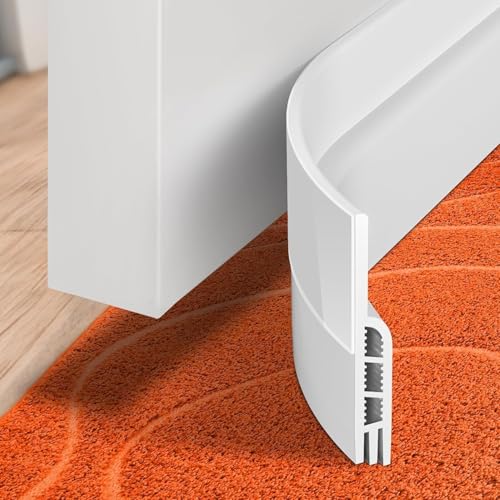
- 41-inch strip fills gaps up to 1 inch
- Strong adhesive with flexible silicone construction
- Helps reduce drafts, noise, and temperature loss
Best For: Smooth-surface doors needing an adhesive bottom seal
Best No-Adhesive Draft Blocker
MAXTID 36-Inch Under-Door Sweep

- Large foam covers gaps up to 1.7 inches
- Stays with the door while it moves
- Trims for shorter interior doors
Best For: Interior doors needing a removable, repositionable blocker
Best Long-Roll Seal
20FT Silicone D-Shaped Weather Strip

- 20 feet of cut-to-fit silicone strip
- Designed for 1/8- to 1/4-inch gaps
- Helps block drafts, dust, moisture, light, and noise
Best For: Multiple narrow gaps around doors, windows, and frames
Best Transparent Seal
Updated 1.4-Inch Silicone Draft Strip

- Transparent silicone is discreet on glass and frames
- 16-foot roll cuts to different lengths
- Handles gaps up to 0.8 inch
Best For: Visible door and window edges needing a subtle seal
Best Silicone Option
20-Foot White D-Shape Weather Strip

- Flexible silicone construction
- 20-foot cut-to-length roll
- Helps limit noise, drafts, dust, and light
Best For: White, compact door and window sealing
Best Under-Door Pick
36-Inch Under-Door Draft Stopper

- Covers gaps up to 1.5 inches
- Fits doors up to 36 inches wide
- Helps block drafts, noise, light, and odors
Best For: Large gaps beneath interior or exterior doors
Flexible Fit

- Tapered profile fits multiple gap sizes
- PU foam helps block drafts and sound
- Works on doors, windows, and cabinets
Best For: Versatile studio sealing across different gap sizes
Quiet Threshold

- Seals bottom gaps up to 1.5 inches
- Flexible silicone moves over carpet
- Designed to reduce drafts and outside noise
Best For: Studio doors with large bottom gaps
Low-Profile Coverage
Transparent Silicone Seal Tape

- Includes 20 feet across two rolls
- Transparent and visually discreet
- Silicone stays flexible in cold months
Best For: Multiple smaller gaps where appearance matters
Best Adhesive Bottom Seal – Holikme 41-Inch Silicone Door Sweep
For budget studio door seals, the Holikme Door Draft Stopper is a practical bottom-of-door option when you want to cover a broad gap with a single adhesive strip. Its 41-inch silicone design fills gaps up to 1 inch and is intended to help reduce drafts, noise, light, and energy loss.
Best For: Interior or exterior doors with smooth, level surfaces and gaps up to 1 inch.
Pros:
- Strong adhesive backing is designed for a secure, lasting bond.
- Silicone construction is heat- and cold-resistant and safer around kids and pets than glass-filled alternatives.
- Installs quickly and can help reduce drafts, noise, and temperature loss.
Cons:
- May not adhere well to rough or textured doors, walls, or surfaces.
- Requires careful surface preparation and firm pressing; the door should remain closed for 24 hours after installation.
- Works best with a level floor for a close fit.
This is a strong budget pick when adhesive installation and a larger bottom gap are priorities. Warm the strip in cold weather and confirm your door and floor surfaces are suitable before applying it.
Best No-Adhesive Draft Blocker – MAXTID 36-Inch Under-Door Sweep
Among budget studio door seals, the MAXTID Draft Stopper stands out for its removable, under-door design. The large 2-inch foam cylinder covers gaps from 0.5 to 1.7 inches, stays in place as the door moves, and avoids the potential door damage associated with stick-on products.
Best For: Interior doors with larger gaps where a repositionable, non-adhesive draft blocker is preferred.
Pros:
- Covers gaps from 0.5 to 1.7 inches with its large foam profile.
- Stays attached to the door as it moves, so it does not need constant repositioning.
- Can be trimmed for 30-, 32-, or 34-inch doors and helps block cold air, noise, light, and odors.
Cons:
- Not suitable for exterior doors with a threshold.
- The 36-inch length may require cutting to fit shorter doors.
- Its polyester-and-foam design is an under-door blocker rather than a permanent adhesive seal.
The MAXTID is a sensible choice for renters, studios, or anyone who wants easy installation without adhesive. Measure the door and check clearance before trimming the foam.
Best Long-Roll Seal – 20FT Silicone D-Shaped Weather Strip
For budget studio door seals that also work around windows and frames, this 20-foot D-shaped silicone strip offers plenty of cut-to-fit material. It compresses into smaller gaps and is designed to help limit drafts, dust, moisture, light, and everyday noise.
Best For: Small door, window, cabinet, garage, and frame gaps measuring about 1/8 to 1/4 inch.
Pros:
- Generous 20-foot roll can cover multiple sealing projects.
- Flexible silicone compresses smoothly and remains soft through changing temperatures.
- Peel-and-stick installation requires only cleaning, cutting, peeling, and pressing.
Cons:
- Recommended for smaller gaps than the larger bottom-door stoppers in this roundup.
- Adhesive performance depends on a clean, dry surface.
- The included adhesive promoter may be needed for a stronger bond on smooth surfaces.
This roll is the most versatile option when you need to seal several narrow gaps rather than one large door-bottom opening. Measure the gap first so the 0.25-inch-thick profile can compress correctly.
Best Transparent Seal – Updated 1.4-Inch Silicone Draft Strip
This transparent silicone strip is a useful budget studio door seal when you want a less noticeable installation across door frames, glass doors, windows, or shower areas. The 16-foot roll can be cut to length and is designed for gaps from 0 to 0.8 inch.
Best For: Door and window edges where a transparent, flexible seal is preferred for gaps up to 0.8 inch.
Pros:
- Transparent 1.4-inch-wide silicone blends more discreetly with glass and light-colored surfaces.
- Sixteen feet of material can be cut for different applications.
- Flexible waterproof silicone helps with wind, dust, weather, energy loss, sound, and minor collisions.
Cons:
- Its stated gap range is limited to 0.8 inch.
- Adhesive requires a clean, dry, dust-free surface for reliable installation.
- Cold-weather application may require warming the backing with a hair dryer.
Choose this strip when appearance matters as much as basic draft control. It offers broad household use, but careful measuring and surface preparation are important for a durable seal.
Best Value Long-Roll Seal – 50-Foot D-Shape Rubber Door Seal
For budget studio door seals, this 50-foot rubber D-shaped strip offers plenty of material for multiple doors, windows, or other gap-sealing projects. Its 0.23-inch thickness suits gaps from approximately 2.5 to 5.5 mm, so measure first for a reliable fit.
Best For: Buyers needing a long, black self-adhesive seal for several small-to-medium gaps.
Pros:
- Generous 50-foot roll supports multiple installations.
- Includes tailor scissors for cutting to size.
- Flexible rubber helps reduce drafts, dust, and sound.
- Suitable for doors, windows, cabinets, speakers, and craft projects.
Cons:
- Designed for gaps only around 2.5 to 5.5 mm.
- Requires a 24-hour setting period after installation.
- Black color may not suit every studio door or frame.
This is a practical low-cost choice when you need substantial length and already know your gap falls within the stated range. Clean the surface carefully and allow the adhesive to set before regular use.
Best Silicone Option – 20-Foot White D-Shape Weather Strip
This silicone strip is a straightforward pick for budget studio door seals when you want a flexible white profile and a compact 20-foot roll. Its 3/8-inch width and 1/4-inch thickness can be cut to fit many door and window gaps.
Best For: Studio doors or windows where a white, flexible silicone seal is preferred.
Pros:
- Silicone construction is described as dense, flexible, and temperature-resistant.
- 20 feet is suitable for many single-door or window projects.
- Peel-and-stick installation requires no special tools.
- Can help reduce noise, wind, dust, insects, and light leakage.
Cons:
- Provides less total material than the 50-foot alternative.
- Surface preparation is important for adhesive performance.
- White may show dirt more readily in a high-traffic studio.
Choose this model for a clean-looking installation and the resilience of silicone. Its stated dimensions make it important to compare the strip size with the actual door gap before ordering.
Best Under-Door Pick – 36-Inch Under-Door Draft Stopper
For budget studio door seals focused on the bottom of the door, this 36-inch draft stopper targets larger under-door gaps rather than the frame perimeter. It can cover gaps up to 1.5 inches and is designed for interior or exterior use.
Best For: Interior doors with noticeable space beneath them where drafts, corridor noise, light, or odors are concerns.
Pros:
- Designed to cover under-door gaps up to 1.5 inches.
- Fits doors up to 36 inches wide and can be cut to length.
- Single-sided design is positioned as a cost-effective option.
- Helps reduce cold air, sound, light, dust, smoke, and odors.
Cons:
- Only addresses the bottom of the door, not side or top gaps.
- May require a hair dryer to strengthen the adhesive bond.
- Limited to doors up to 36 inches unless modified.
This is the better match for a studio door with a large visible gap underneath. It complements, rather than replaces, perimeter weatherstripping when sound or air is also entering around the frame.
Flexible Fit – Wedge Foam Door Seal
For budget studio door seals, this 118-inch wedge-style foam strip is a versatile choice when the gap size varies. Its tapered profile fits openings from about 5/32 to 11/32 inch, while the nylon-cloth-and-PU-foam construction helps reduce drafts, light, dust, and sound without interfering with normal door or window movement.
Best For: Studios needing a flexible seal for doors, windows, cabinets, or other household gaps.
Pros:
- Tapered wedge design accommodates several gap sizes.
- PU foam provides cushioning without easily deforming.
- Grid-style adhesive backing is designed for a secure hold.
- Can also help with insulation, sound reduction, light blocking, and collision protection.
Cons:
- At 0.95 inches wide, it may require careful placement on narrower frames.
- Cold-weather installation may require warming the adhesive with a hair dryer.
This is a strong all-purpose pick when a studio has more than one type of gap to seal. Measure the opening first, and warm the adhesive during colder installation conditions for better adhesion.
Quiet Threshold – Silicone Door Draft Stopper
For budget studio door seals focused on the bottom of a door, this 39-inch silicone sweep covers gaps up to 1.5 inches. Its flexible material glides over carpet and uneven floors, while the triple-cavity design is intended to reduce airflow and muffle outside noise.
Best For: Interior or exterior doors with noticeable bottom gaps, drafts, or noise intrusion.
Pros:
- Adjustable design can cover gaps from zero to 1.5 inches.
- Flexible silicone resists cold, heat, wear, and compression memory.
- Wide adhesive backing is designed to stay attached during door movement.
- Can help block drafts, noise, dust, and pests.
Cons:
- Adhesion may be weaker on rough or textured surfaces.
- Requires careful measuring and cutting before installation.
- The adhesive should be pressed firmly and left undisturbed for 24 hours.
This option makes sense when the main problem is a large gap beneath a studio door. It offers a low-cost bottom seal, but installation preparation matters—especially on textured surfaces or in cold weather.
Low-Profile Coverage – Transparent Silicone Seal Tape
For budget studio door seals that should remain visually unobtrusive, this transparent silicone tape supplies 20 feet across two rolls. It can be measured and cut for doors, windows, sliding doors, garage doors, and shower applications, with an adhesive designed to resist moisture, splashes, and rain.
Best For: Studios wanting long, discreet seal strips for multiple doors or windows.
Pros:
- 20 feet of total material provides coverage for several gaps.
- Transparent design is less noticeable than colored weather stripping.
- Silicone remains flexible and is designed to resist creasing and hardening.
- Adheres to surfaces including wood, glass, metal, ceramic, fiberglass, and plastic.
Cons:
- It must be measured and cut to each installation area.
- Supplied notes do not specify the maximum gap size it can seal.
This is a practical choice for covering several smaller gaps without adding much visual bulk. Its long length and broad surface compatibility are useful for a studio, provided the surfaces are prepared and the gap is suitable for a tape-style seal.
How We Picked These Budget Studio Door Seals
We focused on affordable seals that address the most common studio-door problems: air movement, light leakage, dust, odors, and some transmission of outside noise. The selection includes adhesive frame seals, under-door draft blockers, adjustable sweeps, and foam strips in several lengths and profiles.
We also considered installation effort, coverage, flexibility, likely compatibility with interior and exterior doors, and whether a product can be trimmed or adjusted. These products are intended to close small gaps and improve room isolation; they are not substitutes for a solid-core door, acoustic construction, or professional soundproofing.
Quick Comparison
| Seal Type | Best For | Installation | Main Advantage |
|---|---|---|---|
| Under-door sweep | Large bottom gaps and drafts | Adhesive or adjustable | Fast coverage at the threshold |
| Silicone D-strip | Small to medium frame gaps | Self-adhesive | Flexible, clean-looking seal |
| Rubber weatherstripping | Long runs around frames | Self-adhesive | Good coverage per roll |
| Foam seal | Light-duty irregular gaps | Adhesive | Low cost and easy trimming |
Key Buying Factors for Budget Studio Door Seals
Measure the Gap First
Measure the width of the door and the largest gap when the door is closed. A bottom sweep should cover the full width without dragging heavily, while frame weatherstripping should compress gently rather than preventing the latch from engaging.
Choose the Correct Profile
D-shaped silicone and rubber strips are useful for consistent frame gaps. Foam works better for lighter-duty sealing or uneven surfaces. Under-door blockers are the practical choice when the main opening is beneath the door.
Check Adhesive and Surface Condition
Clean, dry, smooth surfaces provide the best bond. Remove dust and grease before installation, and let adhesive-backed products set according to the instructions. Painted, textured, damp, or dusty surfaces may require extra preparation or mechanical fastening.
Consider Door Movement
A thick seal can make a door harder to close or cause it to rub against the frame. If the door is frequently used, favor a flexible, compressible product or an adjustable sweep that can be positioned precisely.
Set Realistic Acoustic Expectations
Sealing gaps can reduce some voices, hallway sounds, wind, and rattling, but it will not make a room soundproof. For recording, combine door sealing with a solid door, wall treatment, and control of noise sources elsewhere in the room.
Who Should Buy Which Budget Studio Door Seals?
Choose an under-door draft stopper or adjustable sweep if you have a visible gap at the threshold, need quick installation, or want to limit light and airflow beneath the door. The Holikme, MAXTID, HomeProtect, and adjustable sweep options fit this use case.
Choose a self-adhesive silicone or rubber strip if the problem is a narrow gap around the sides or top of the frame. The 20-foot and 50-foot D-shaped products are useful when you need enough material for one or more doors. Select a narrower strip when the gap is small and consistent.
Foam wedge weatherstripping is best for a low-cost, light-duty fix or an uneven gap where compressibility matters more than maximum durability. Transparent silicone tape is a discreet option for windows or door edges where appearance is important.
For the best result, measure before ordering, clean the mounting surface, install one side first, and test the latch and swing before sealing the entire door. That approach helps Budget Studio Door Seals perform effectively without creating a new fit problem.