Excess humidity can damage instruments, electronics, acoustics, artwork, and recording equipment while making a studio feel uncomfortable. The right dehumidifier keeps moisture under control without demanding constant emptying or supervision.
We selected 10 premium studio dehumidifiers across residential, large-room, and commercial categories, emphasizing capacity, drainage options, efficiency, controls, and practical studio usability.
Best 10 Premium Studio Dehumidifiers Picks for 2026
Efficiency Leader
AEOCKY 5,500 Sq. Ft. Compressor Dehumidifier
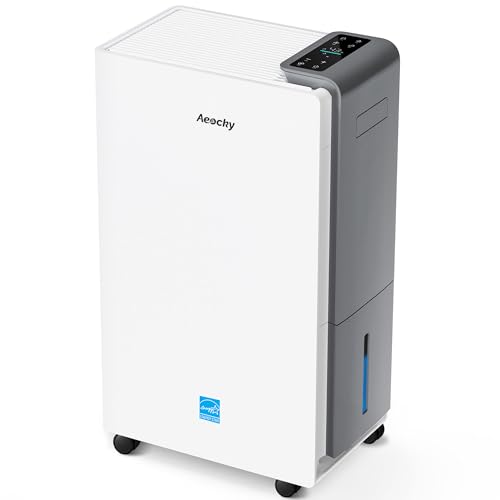
- ENERGY STAR Most Efficient 2025 certified
- Rated for spaces up to 5,500 sq. ft.
- Power-off memory and precise humidity control
Best For: Large homes, basements, and studios prioritizing efficiency
Connected Comfort Pick
hOmeLabs 7,500 Sq. Ft. Dehumidifier

- Wi-Fi control for remote adjustments
- Built-in pump enables continuous drainage
- Rated for spaces up to 7,500 sq. ft.
Best For: Large spaces needing remote control and easy drainage
Large-Space Workhorse
Waykar 150-Pint 2025 Energy Star Dehumidifier

- Rated for up to 7,000 sq. ft.
- Auto defrost and self-drying functions
- Tank or continuous drainage with included hose
Best For: Large residential, commercial, and storage spaces
Restoration Powerhouse
310-Pint LGR Commercial Dehumidifier

- Up to 310 pints per day at saturation
- Built-in pump with 15-foot lift head
- Automatic restart and live humidity readings
Best For: Water-damage restoration and heavy-duty commercial drying
High-Capacity Pick
Waykar 120-Pint Studio Dehumidifier

- Covers up to 6,000 square feet
- 90° swing airflow and 30%–80% control
- ENERGY STAR certified with continuous-drain support
Best For: Large basements, whole-home areas, garages, and commercial spaces
Commercial-Grade Pick
Airzentti 155-Pint Dehumidifier

- Designed for spaces up to 7,500 square feet
- Built-in pump drains up to 16.4 feet
- Auto-defrost, auto-drain, and ENERGY STAR certification
Best For: Commercial, industrial, crawl-space, attic, and restoration use
Quiet Residential Pick

- Covers up to 2,500 square feet
- Quiet 32 dB operation
- Three modes, rolling mobility, and power-outage memory
Best For: Bedrooms, offices, bathrooms, living rooms, and residential basements
Best Smart Efficiency Pick
DREO 75-Pint Studio Dehumidifier

- 75-pint capacity for areas up to 4,500 square feet
- App control with energy tracking and scheduling
- Quiet 41dB operation with continuous-drain support
Best For: Large rooms and connected-home humidity control
Best Maximum Coverage Pick
KNKA 80-Pint Basement Dehumidifier

- 80-pint capacity for spaces up to 5,500 square feet
- Includes 6.56-foot hose for continuous drainage
- AUTO, DRY, and 30%–80% humidity settings
Best For: Large spaces needing high-capacity moisture removal
Best Connected-Home Alternative
DREO 75-Pint Silver Dehumidifier

- 75-pint capacity for areas up to 4,500 square feet
- Energy Star 2025 certification with app energy tracking
- Quiet 41dB operation and 1.85-gallon tank
Best For: Studios and homes needing remote humidity control
Efficiency Leader – AEOCKY 5,500 Sq. Ft. Compressor Dehumidifier
For shoppers comparing premium studio dehumidifiers, the AEOCKY RHEA-001 stands out for its ENERGY STAR Most Efficient 2025 certification, precise humidity control, and strong performance in large residential spaces. Its compressor design is rated at up to 80 pints per day in hot, very humid conditions and includes power-off memory for convenient smart-socket use.
Best For: Large homes, basements, and studios where efficiency, humidity precision, and low-temperature operation matter.
Pros:
- ENERGY STAR Most Efficient 2025 certification
- Rated for spaces up to 5,500 square feet
- Power-off memory and dynamic humidity control
- Designed to operate reliably in cooler conditions with advanced defrost sensing
Cons:
- Performance figures vary substantially with temperature and relative humidity
- The supplied notes do not specify a built-in pump
Choose this model when verified efficiency and detailed humidity management are higher priorities than specialized restoration capacity. Its premium components and smart-home-friendly memory feature make it a compelling large-space option.
Connected Comfort Pick – hOmeLabs 7,500 Sq. Ft. Dehumidifier
The hOmeLabs HME1004 is a practical choice among premium studio dehumidifiers for users who want broad coverage, Wi-Fi control, and automatic pumping in one unit. It removes up to 50 pints per day at standard testing conditions, offers Turbo airflow up to 218 CFM, and supports continuous drainage.
Best For: Large basements, homes, or studios needing remote control and built-in condensate pumping.
Pros:
- Coverage rated up to 7,500 square feet
- Wi-Fi connectivity for remote adjustment
- Built-in pump supports continuous drainage
- Comfort, Turbo, and Continuous modes with a digital humidity display
Cons:
- Standard dehumidification capacity is 50 pints per day
- The 1.6-gallon tank may require frequent emptying if pump drainage is not used
- The supplied details list quiet operation but do not provide a specific noise rating
This model is especially convenient when remote access and drainage flexibility are central to the buying decision. Its large stated coverage and straightforward controls suit everyday residential humidity management.
Large-Space Workhorse – Waykar 150-Pint 2025 Energy Star Dehumidifier
The Waykar 150-pint unit is a strong large-room option for buyers evaluating premium studio dehumidifiers with flexible operating modes and maintenance-friendly features. It is rated for up to 7,000 square feet, includes a drain hose, and adds auto defrost and self-drying functions for demanding basement, commercial, or storage environments.
Best For: Large basements, warehouses, garages, and commercial or industrial spaces needing high moisture-removal capacity.
Pros:
- Removes up to 150 pints per day under high-temperature, high-humidity conditions
- 2025 Energy Star certification and a 24-hour timer
- Auto-swing airflow, auto defrost, and self-drying functions
- Tank or continuous drainage using the included hose
Cons:
- Rated capacity is based on 95°F and 90% relative humidity
- Included drain hose is only 3.3 feet long
- Coverage and capacity may exceed the needs of smaller rooms
The Waykar balances high capacity with useful automation and portability. It is a sensible pick for broad spaces where self-drying, scheduled operation, and multiple drainage options can reduce routine upkeep.
Restoration Powerhouse – 310-Pint LGR Commercial Dehumidifier
For restoration work and severe moisture problems, this LGR unit offers a level of capacity beyond typical premium studio dehumidifiers. It removes up to 310 pints per day at saturation and 165 pints at AHAM conditions, while its built-in pump, automatic restart, and live humidity and temperature displays support continuous job-site operation.
Best For: Water-damage restoration, flood recovery, carpet cleaning, basements, and other heavy-duty commercial applications.
Pros:
- Up to 310 pints per day at saturation and 165 pints at AHAM conditions
- Built-in pump with a 15-foot lift head
- Automatic digital humidistat and real-time environmental readings
- Automatic restart and memory after power outages
Cons:
- Heavy 125-pound design is less convenient for ordinary home use
- Large 35-inch height and commercial form factor require substantial storage space
- Consumes 1,150 watts and is designed for demanding applications rather than light-duty rooms
This is the specialist choice in the group. Its LGR technology, 550 CFM airflow, and pump-equipped continuous drainage make it appropriate when moisture removal speed and job-site reliability outweigh portability and residential simplicity.
High-Capacity Pick – Waykar 120-Pint Studio Dehumidifier
For shoppers comparing premium studio dehumidifiers, the Waykar combines high moisture-removal capacity with flexible humidity control. It is rated for spaces up to 6,000 square feet and includes airflow swing, continuous-drain support, and ENERGY STAR certification for extended operation.
Best For: Large basements, whole-home areas, garages, and commercial spaces that need sustained moisture control.
Pros:
- Removes up to 120 pints per day and covers up to 6,000 square feet.
- 90° auto-swing airflow helps distribute dry air more evenly.
- Offers a broad 30%–80% humidity setting range, ENERGY STAR certification, and automatic defrost and overload protection.
- Runs at approximately 42 dB and supports both tank and continuous drainage.
Cons:
- The 4.3-liter tank may require frequent emptying during heavy use without a drain hose.
- Its large-capacity design is likely more than smaller rooms require.
The Waykar is a strong choice when coverage and control matter more than compact sizing. Its swing airflow and wide humidity range make it particularly practical for large or persistently damp spaces.
Commercial-Grade Pick – Airzentti 155-Pint Dehumidifier
Among premium studio dehumidifiers, this Airzentti model stands out for commercial-scale extraction and built-in pumping. It is designed for spaces up to 7,500 square feet, delivers 220 CFM airflow, and supports continuous operation in basements, crawl spaces, warehouses, and restoration settings.
Best For: Large commercial, industrial, attic, crawl-space, and water-damage-restoration applications where pumped drainage is useful.
Pros:
- Rated to remove up to 155 pints per day under nearly saturated conditions, with a 70 PPD AHAM capacity.
- Built-in pump can drain water vertically up to 16.4 feet.
- Includes humidity settings, timer, gravity-drain capability, auto defrost, auto drain, and screen lock.
- ENERGY STAR certified and TUV compliant.
Cons:
- At approximately 59 pounds, it is substantially less portable than residential units.
- The commercial footprint and 220 CFM airflow may be excessive for small rooms.
This is the most suitable option for demanding installations where tankless operation and elevated drainage simplify maintenance. Its size and weight make it better suited to a planned utility location than frequent room-to-room moving.
Quiet Residential Pick – BANABIE 32-Pint Dehumidifier
For buyers seeking premium studio dehumidifiers in a more compact residential format, the BANABIE offers coverage up to 2,500 square feet with a 32-pint daily extraction rating. Its quiet 32 dB operation, selectable modes, and mobile design make it convenient for living spaces as well as basements.
Best For: Bedrooms, home offices, bathrooms, living rooms, basements, and other residential areas needing quiet, portable moisture control.
Pros:
- Removes up to 32 pints per day and is rated for spaces up to 2,500 square feet.
- Operates at approximately 32 dB for quieter nighttime or work-area use.
- Provides Auto, Continuous, and Custom modes with humidity targets from 30% to 90% RH.
- Includes gravity drainage, auto shutoff, auto defrost, power-outage memory, child lock, and wheels.
Cons:
- The 2.5-liter tank is relatively small for continuous high-moisture operation.
- Its 32-pint capacity is not intended for the largest commercial or whole-building spaces.
The BANABIE favors quiet comfort and everyday convenience over maximum extraction. It is a practical fit when portability, low operating noise, and flexible residential controls are higher priorities than industrial capacity.
Best Smart Efficiency Pick – DREO 75-Pint Studio Dehumidifier
For shoppers comparing premium studio dehumidifiers, the DREO DR-HDH003S combines high moisture-removal capacity with quiet operation and app-based controls. It is rated for spaces up to 4,500 square feet and removes up to 75 pints per day under stated test conditions.
Best For: Large rooms, basements, garages, bedrooms, and users who want remote humidity and energy monitoring.
Pros:
- 75-pint daily dehumidification capacity for spaces up to 4,500 square feet.
- Large 1.85-gallon tank, included drain hose, full-tank alert, and auto shut-off.
- DREO app supports humidity targets, scheduling, filter reminders, and energy tracking.
- Quiet 41dB operation with sleep mode, child lock, timer, and soft night light.
Cons:
- The 33-pound chassis may be cumbersome to move despite its portable design.
- The 12-month limited warranty is relatively short for a larger home appliance.
Choose this model if smart controls and low operating noise matter as much as moisture removal. Its continuous-drain option also makes it practical for extended basement or studio use.
Best Maximum Coverage Pick – KNKA 80-Pint Basement Dehumidifier
The KNKA 80-pint model is a strong option among premium studio dehumidifiers when maximum stated coverage is the priority. It is designed for spaces up to 5,500 square feet and offers multiple humidity modes, continuous drainage, and a quieter 40–45dB operating range.
Best For: Large basements, laundry rooms, living areas, and users who need flexible humidity settings or extended drainage.
Pros:
- Removes up to 80 pints per day under stated 95°F, 95% RH conditions.
- Supports spaces up to 5,500 square feet and includes a 6.56-foot drain hose.
- AUTO, DRY, and adjustable SETTING modes cover everyday humidity and clothes-drying needs.
- 40–45dB operation, washable filter, casters, child lock, and 12-hour timer add convenience.
Cons:
- The optional 2.64-gallon external tank is sold separately.
- The supplied specifications list 220 volts, so electrical compatibility should be verified before purchase.
- Humidity readings may vary slightly from readings taken with an external hygrometer.
Its higher stated capacity and broader coverage make the KNKA worth considering for especially large or persistently damp spaces. Confirm the electrical requirements and plan for hose drainage if you want to minimize tank emptying.
Best Connected-Home Alternative – DREO 75-Pint Silver Dehumidifier
For buyers seeking premium studio dehumidifiers with connected controls, this silver DREO model pairs 75-pint performance with app access and Energy Star 2025 certification. It is rated for spaces up to 4,500 square feet and includes a large tank plus hose-based continuous drainage.
Best For: Home studios, basements, bedrooms, and users who want to adjust humidity and review energy use remotely.
Pros:
- 75-pint daily capacity and stated coverage up to 4,500 square feet.
- Energy Star 2025 certified and described as using 30% less energy than standard DOE models.
- DREO app enables remote humidity adjustment, energy-use monitoring, and power-cost tracking.
- Quiet 41dB operation, 1.85-gallon tank, included drain hose, auto shut-off, and auto defrost.
Cons:
- Manual tank emptying may still be needed if continuous drainage is not used.
- The 12-month limited warranty provides a relatively limited coverage period.
This model is a practical fit when app control and efficiency are central to the buying decision. Its silver finish, quiet operation, and safety features make it suitable for living spaces as well as utility areas.
How We Picked the Best Premium Studio Dehumidifiers
We focused on models suited to studios, rehearsal rooms, production spaces, and equipment storage areas rather than evaluating compact bedroom units alone. Our comparison considers stated coverage, moisture-removal capacity, Energy Star efficiency, continuous-drain or built-in-pump functionality, tank size, operating conditions, controls, and the type of space each unit can realistically serve.
Capacity claims vary by testing conditions, so treat square-foot ratings as starting points. A poorly insulated room, open doors, high ceilings, frequent instrument use, or unusually damp weather can require more capacity than the headline rating suggests.
Quick Comparison
- Small to medium studios: Look at the 2,500- to 4,500-square-foot models, especially when the room has moderate moisture and convenient manual emptying is acceptable.
- Large studios and equipment rooms: Models rated from 5,500 to 7,500 square feet offer more reserve capacity for open layouts or persistent humidity.
- Severely damp spaces: Commercial 120- to 155-pint units are better suited to basements, warehouses, large rehearsal areas, and spaces with frequent moisture intrusion.
- Restoration or demanding industrial use: A 250- or 310-pint LGR-style machine is intended for rapid extraction and unusually wet environments, not routine light-duty studio operation.
Key Buying Factors for Premium Studio Dehumidifiers
Moisture Capacity and Room Conditions
Choose by both room size and humidity load. A studio in a dry climate may need far less capacity than a similarly sized basement near a humid coast. Oversizing can provide faster pull-down, but it may also cost more, take up more space, and cycle differently.
Drainage and Maintenance
Continuous drainage is often more important than tank capacity. A hose connection can reduce interruptions, while a built-in pump helps when the drain is above the unit or far away. Confirm that the included hose, pump lift, and drain setup match your room before buying.
Noise, Placement, and Airflow
For recording or mixing rooms, check noise expectations and place the unit away from microphones and listening positions when possible. Leave the recommended clearance around air inlets and outlets, and avoid blocking doors, vents, or instrument cases.
Efficiency and Controls
Energy Star certification, humidistat control, automatic restart, timer settings, and readable displays can reduce operating costs and simplify unattended use. Smart connectivity is useful when you want remote monitoring, but it should not replace a dependable built-in humidity control.
Who Should Buy Which Premium Studio Dehumidifiers?
Choose a mid-capacity residential model for a home studio, office studio, or moderate basement where noise, portability, and energy use matter. Choose a high-capacity residential unit for a large studio or connected room layout with persistent but manageable humidity. Choose a commercial model with a pump when drainage, rapid moisture removal, or demanding conditions are priorities. Choose an LGR commercial dehumidifier only when you need restoration-grade extraction or operate in an exceptionally wet environment.
Before purchasing, measure the room, identify the nearest drain, check available power, and decide whether the unit will run during recording sessions. Those details will narrow the list more reliably than square-footage claims alone.