Large homes need more than a basic exhaust fan to move stale, hot, or humid air effectively. The best whole-house ventilation systems balance airflow capacity, energy use, noise, controls, and installation requirements.
This roundup compares high-output whole-house fans and energy recovery ventilators, including wireless models for rapid cooling and ERVs designed for continuous fresh-air exchange with less energy loss.
Best 10 Whole House Ventilation Systems for Large Homes Picks for 2026
Best High-Capacity ECM Pick

- Up to 6,878 CFM
- Efficient ECM motor
- Wireless control with timer
Best For: Large homes needing powerful, efficient cooling and ventilation
Best Balanced Ventilation Pick

- Up to 210 CFM
- Auto-balancing VIRTUO technology
- Wall or ceiling mounting
Best For: Controlled energy recovery ventilation with built-in system management
Best PSC High-Airflow Pick

- Up to 6,924 CFM
- Wireless control and timer
- R5 insulated damper box
Best For: Large homes where maximum whole-house airflow is the priority
Best Energy-Recovery Fresh-Air Pick

- Up to 213 CFM fresh-air exchange
- Energy recovery core
- Defrost protection and washable filters
Best For: Continuous balanced ventilation with energy recovery
High-Capacity Whole-House Cooling

- 4,415 CFM high airflow
- Wireless control with timer
- R5 insulated damper box
Best For: Average-size homes needing fast cooling and remote operation
Large-Home Airflow Value

- 5,878 CFM airflow
- Rated for two-story homes up to 4,400 sq. ft.
- Remote with timer included
Best For: Large two-story homes needing strong whole-house cooling airflow
Balanced Fresh-Air Ventilation
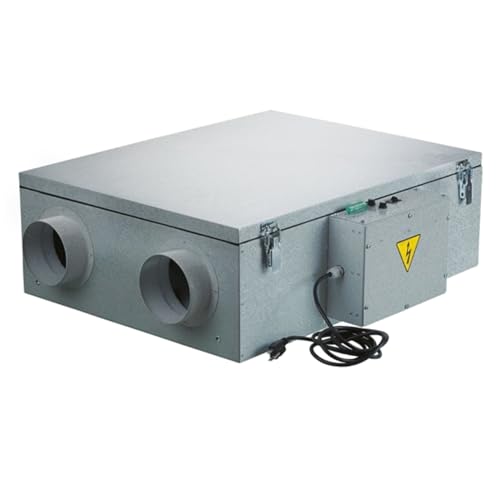
- Balanced ventilation up to 180 CFM
- Enthalpy core recovers heat and moisture
- Quiet 1.9-sone operation
Best For: Homes prioritizing filtered fresh air and energy recovery
High-Capacity Wireless Cooling
QuietCool QC-5400 RF Whole House Fan
- 5,024 CFM high airflow
- Wireless control with 12-hour timer
- R5 insulated damper doors
Best For: High-airflow cooling and wireless control in homes up to 2,510 square feet
Quiet Seven-Speed Ventilation
Solatube EPS Extreme Whole House Fan

- 4,567 CFM airflow
- Seven adjustable speeds
- R6 insulated damper doors
Best For: DIY attic ventilation with adjustable airflow for homes up to 3,000 square feet
Balanced Fresh-Air Exchange

- Up to 162 CFM balanced airflow
- Heat and humidity recovery
- Freeze protection and washable MERV 6 filters
Best For: Continuous, energy-conscious fresh-air exchange in cold-climate homes
Best High-Capacity ECM Pick – QuietCool QC ES-7000 RF
For shoppers comparing whole house ventilation systems for large homes, the QuietCool QC ES-7000 RF emphasizes high airflow, efficient operation, and convenient wireless control. Its ECM motor delivers up to 6,878 CFM, with a lower-speed setting for more moderate ventilation.
Best For: Large homes up to approximately 3,440 square feet that need powerful cooling and ventilation with energy-conscious motor operation.
Pros:
- Moves up to 6,878 CFM on high and 4,304 CFM on low.
- ECM motor uses 727 watts on high and 164 watts on low.
- Includes wireless RF control, glass wireless switch, and a 12-hour countdown timer.
- R5 damper doors help insulate the home from the attic when the fan is off.
Cons:
- It is a ceiling-mounted whole-house fan, so installation planning is required.
- Its two-speed design offers fewer operating levels than some dedicated ERV systems.
The QC ES-7000 RF is a strong fit when rapid air movement and efficient motor performance matter most. The included controls and insulated damper box add useful day-to-day convenience.
Best Balanced Ventilation Pick – Broan B210E75RS AI ERV
Among whole house ventilation systems for large homes, the Broan B210E75RS AI is geared toward controlled energy recovery rather than the very high airflow of a whole-house cooling fan. It provides up to 210 CFM and includes VIRTUO technology with auto-balancing and an integrated LCD screen.
Best For: Homeowners seeking a wall- or ceiling-mounted energy recovery ventilator with automatic balancing and a compact, built-in control interface.
Pros:
- Provides up to 210 CFM of airflow.
- VIRTUO technology offers auto-balancing and an integrated LCD screen.
- Supports suspended or wall-mounted installation.
- Includes a MERV 8 filter.
Cons:
- Its 210 CFM capacity is substantially lower than the listed QuietCool whole-house fans.
- The supplied notes do not specify a remote control or timer.
- Installation may require suspended or wall-mount hardware and planning.
The Broan is better suited to balanced, managed ventilation than fast whole-home cooling. Its auto-balancing feature and LCD interface make it appealing where system control is a priority.
Best PSC High-Airflow Pick – QuietCool QC CL-7000 RF
The QuietCool QC CL-7000 RF is a high-output option for comparing whole house ventilation systems for large homes. It delivers up to 6,924 CFM and includes wireless controls, while its R5 damper box helps limit attic exposure when the fan is not operating.
Best For: Large homes up to approximately 3,470 square feet that prioritize maximum airflow and wireless operation.
Pros:
- Provides up to 6,924 CFM on high and 5,518 CFM on low.
- Includes a wireless RF control kit, glass wireless switch, and 12-hour countdown timer.
- R5 damper doors help insulate the home from the attic during inactive periods.
- Includes acoustical ducting, ceiling grille, window locks, and a 20-foot power cord.
Cons:
- The PSC motor uses 1,147 watts on high and 794 watts on low.
- At 92 pounds, the unit may require careful handling during ceiling installation.
- Its two-speed operation provides less adjustment than a three-speed ventilator.
The QC CL-7000 RF is a practical choice when airflow is the main selection criterion. It offers slightly more listed high-speed capacity than the ES-7000 RF, though its PSC motor has higher stated wattage.
Best Energy-Recovery Fresh-Air Pick – VENTS-US BRIG ERV 200
The VENTS-US BRIG ERV 200 takes a different approach to whole house ventilation systems for large homes by continuously exchanging stale indoor air for outdoor air while recovering energy. It supplies up to 213 CFM and includes a polymer enthalpic recovery core, defrost protection, and washable filters.
Best For: Homes needing balanced fresh-air exchange with energy recovery, washable filtration, and built-in freeze protection.
Pros:
- Provides up to 213 CFM of net supply airflow at 0.1 in. w.g.
- Energy recovery core helps recover energy from outgoing air.
- Electronic defrost protection helps protect the recovery core in freezing conditions.
- Includes washable MERV 6 filters for supply and exhaust air streams.
Cons:
- Its 213 CFM airflow is far lower than the listed QuietCool whole-house fans.
- The built-in side-panel control provides standby, low, and medium settings; high-speed boosting requires additional external controls.
- A 6-inch duct connection and ceiling-mounted installation require ductwork planning.
The BRIG ERV 200 is designed for continuous, balanced air exchange rather than rapid whole-home cooling. Its recovery core, defrost protection, and washable filters make it a well-rounded fresh-air ventilation option.
High-Capacity Whole-House Cooling – QuietCool QC CL-4700 RF
For homeowners comparing whole house ventilation systems for large homes, the QuietCool QC CL-4700 RF combines high airflow with convenient wireless control. Its 4,415 CFM high setting, two speeds, timer, and insulated R5 damper box make it a practical option for cooling and ventilating homes up to 2,210 square feet.
Best For: Average-size homes needing fast whole-house cooling, remote operation, and seasonal attic insulation.
Pros:
- Moves up to 4,415 CFM on high and 3,402 CFM on low.
- Includes a wireless RF control kit, glass wireless switch, and up to 12-hour countdown timer.
- R5 damper doors help insulate the home from the attic when the fan is off.
- Backed by a 10-year manufacturer warranty.
Cons:
- Its stated coverage is up to 2,210 square feet, so it may not suit very large homes.
- Requires ceiling mounting and appropriate installation space.
- Uses 551 watts on high.
The QC CL-4700 RF is a strong fit when rapid cooling and wireless convenience matter more than maximum square-footage coverage. Confirm the home size and ceiling installation requirements before choosing it.
Large-Home Airflow Value – QA-Deluxe 6500
The QA-Deluxe 6500 is designed for homeowners evaluating whole house ventilation systems for large homes, especially two-story properties. It delivers 5,878 CFM, includes a remote with timer, and is rated for two-story homes up to 4,400 square feet or single-story homes up to 3,000 square feet.
Best For: Large two-story homes seeking high airflow, remote scheduling, and an installation design that fits 16- or 24-inch on-center joists.
Pros:
- Provides 5,878 CFM, with 4,478 CFM listed for CA Title 24 airflow.
- Designed for two-story homes up to 4,400 square feet.
- Includes an ON/OFF remote with timer.
- Acoustical ducting, rubber bushings, and insulated R5 damper construction help address noise, vibration, and heat transfer.
Cons:
- The listed noise level is 51 dB.
- Requires about 5.5 square feet of attic ventilation.
- The product details list one power level rather than multiple operating speeds.
With its broad stated coverage and powerful airflow, the QA-Deluxe 6500 is the most directly targeted option here for larger homes. Check attic ventilation capacity and joist spacing before installation.
Balanced Fresh-Air Ventilation – VENTS-US Frigate ERV 150
Unlike exhaust-focused whole-house fans, the VENTS-US Frigate ERV 150 provides balanced fresh-air exchange for homeowners comparing whole house ventilation systems for large homes. It supplies filtered outdoor air while removing stale indoor air, with an enthalpy core that recovers heat and moisture at up to 180 CFM.
Best For: Homes needing continuous balanced ventilation, filtered incoming air, and reduced heating or cooling loss.
Pros:
- Provides balanced supply and exhaust airflow up to 180 CFM.
- Enthalpy-core recovery helps retain warmth and humidity in winter and reduce cooling loss in summer.
- Runs at a stated 1.9 sones and includes washable MERV 6 filters.
- Slim 9.6-inch-deep casing and included mounting brackets suit tight ceiling installations.
Cons:
- Its 180 CFM capacity is much lower than the airflow of whole-house cooling fans.
- Listed control is push-button rather than remote control.
- MERV 6 filtration may be less suitable for buyers seeking higher-grade particulate filtration.
The Frigate ERV 150 is best understood as a fresh-air exchange system rather than a rapid whole-house cooling fan. Its energy-recovery core, compact casing, and quiet operation make it a thoughtful choice for ventilation-focused installations.
High-Capacity Wireless Cooling – QuietCool QC-5400 RF Whole House Fan
For homeowners comparing whole house ventilation systems for large homes, the QuietCool QC CL-5400 RF emphasizes high airflow and straightforward wireless control. Its 5,024 CFM high setting is designed for homes up to 2,510 square feet, making it a practical choice for rapid cooling and ventilation in appropriately sized spaces.
Best For: Homeowners who want high airflow, ceiling-mounted installation, and wireless timer control.
Pros:
- Moves up to 5,024 CFM on high and 4,406 CFM on low.
- Includes a wireless RF control kit with a glass wireless switch and up to a 12-hour countdown timer.
- R5 damper doors help insulate the home from the attic when the fan is not operating.
- Includes acoustical ducting, ceiling grille, window locks, and a 20-foot power cord.
Cons:
- The listed recommended coverage is up to 2,510 square feet, so it may not suit very large homes as a single-fan solution.
- It has only two speeds.
- The unit weighs 74 pounds, which may make installation more demanding.
The QC CL-5400 RF is a strong fit when maximum airflow and convenient wireless scheduling matter most. Check the coverage guidance and ceiling-installation requirements before choosing it for a large-home layout.
Quiet Seven-Speed Ventilation – Solatube EPS Extreme Whole House Fan
The Solatube EPS Extreme is a versatile option among whole house ventilation systems for large homes, offering up to 4,567 CFM and coverage listed for homes up to 3,000 square feet. Its seven-speed EC brushless motor and HushMount 2 system give shoppers more control over airflow and operating noise.
Best For: DIY-minded homeowners who want adjustable airflow, insulated dampers, and a complete attic-mount kit.
Pros:
- Provides up to 4,567 CFM with seven adjustable speed settings.
- HushMount 2 technology is designed to minimize noise and vibration.
- R6 insulated damper doors help prevent air infiltration when the fan is off.
- Includes the motor, fan, mounting system, remote, grille, fasteners, and ducting for a complete DIY kit.
Cons:
- The listed noise level is 50 dB, so it is not the quietest specification among all ventilation options.
- Its coverage is listed up to 3,000 square feet, which may require additional planning for larger homes.
- Electrical components have a shorter warranty period than the motor’s mechanical coverage.
With seven speeds and included installation components, the EPS Extreme offers flexibility for homeowners who want to fine-tune ventilation. Confirm attic access, duct routing, and coverage needs before installation.
Balanced Fresh-Air Exchange – VENTS-US Frigate ERV 120s
Unlike high-volume whole-house cooling fans, the VENTS-US Frigate ERV 120s focuses on continuous fresh-air exchange. For shoppers evaluating whole house ventilation systems for large homes, it supplies and exhausts air at up to 162 CFM while recovering heat and humidity through its enthalpy core.
Best For: Homes needing balanced year-round ventilation, filtration, and cold-climate freeze protection.
Pros:
- Provides balanced supply and exhaust ventilation with up to 162 CFM net airflow.
- Electronic anti-frost protection helps safeguard the core in freezing conditions.
- The enthalpy core transfers heat and moisture, with up to 65% apparent sensible effectiveness.
- Includes washable MERV 6 filters and uses as little as 19 watts on low speed.
Cons:
- Its 162 CFM maximum airflow is much lower than the cooling-focused fans in this roundup.
- It has three basic operating modes rather than a remote-controlled multi-speed system.
- Installation requires standard 5-inch duct connections and ceiling mounting with brackets.
The Frigate ERV 120s is better suited to controlled indoor-air exchange than fast whole-house cooling. Its filtration, heat-and-moisture recovery, and freeze protection make it a practical choice where ventilation quality and efficiency take priority.
How We Picked These Whole House Ventilation Systems for Large Homes
We focused on systems suited to larger floor plans, emphasizing published airflow ratings, ventilation type, control options, efficiency features, and installation flexibility. The selection includes high-CFM whole-house fans for quickly exhausting warm indoor air, along with ERVs that continuously bring in filtered outdoor air while helping retain indoor heating or cooling energy.
Because homes differ in climate, layout, insulation, and attic configuration, no single system is best for everyone. We also considered practical details such as wireless controls, timers, multi-speed operation, filtration, freeze protection, and whether a unit is intended for wall, ceiling, ducted, or attic installation.
Quick Comparison
- Fast summer cooling: High-output QuietCool, QA-Deluxe, and Solatube whole-house fans are designed to move large volumes of air when outdoor temperatures are favorable.
- Year-round fresh air: Broan and VENTS-US ERV models are better suited to controlled ventilation and energy-conscious air exchange.
- Large open layouts: Look for models near or above 5,000 CFM, provided the home has adequate intake openings and exhaust paths.
- Smaller zones or tighter budgets: Lower-CFM ERVs can provide steady ventilation without the electrical demand of a large cooling fan.
Key Buying Factors for Large Homes
Airflow and Home Layout
CFM is a useful starting point, but the right capacity depends on square footage, ceiling height, room layout, and the number of windows or doors available for intake. A powerful fan cannot perform well if the attic exhaust area or intake openings are undersized. Confirm the manufacturer’s sizing guidance and installation requirements before choosing the highest-rated model.
Whole-House Fan or ERV?
A whole-house fan is primarily a cooling tool. It works best when outdoor air is cooler than indoor air and can reduce reliance on air conditioning. An ERV is a ventilation appliance for more consistent fresh-air exchange. It is often the better choice in humid, cold, or tightly sealed homes where uncontrolled ventilation could waste energy or introduce excess moisture.
Noise, Controls, and Efficiency
Review sound ratings, speed settings, timers, and remote or wall-control options. Wireless control can simplify operation in a large home, while multiple speeds make it easier to balance comfort and noise. For ERVs, compare filtration, heat-and-moisture recovery performance, maintenance access, and freeze protection where relevant.
Installation and Maintenance
Check electrical requirements, duct or ceiling clearances, attic access, intake sizing, and whether professional installation is recommended. Filters need periodic replacement or cleaning, and fans require clear airflow paths. Proper sealing and insulation around penetrations also help prevent drafts and unwanted energy loss.
Who Should Buy Which Whole House Ventilation Systems for Large Homes?
Choose a high-CFM whole-house fan if your priority is rapid evening or overnight cooling in a climate with cooler outdoor air. Choose an ERV if you want balanced, year-round ventilation, filtration, and better control of heating or cooling losses. Choose a multi-speed wireless model for a large or multi-level home where convenient zone or timed operation matters. Before buying, match the system to your climate, home size, attic or duct design, and local building requirements.