Small homes, apartments, workshops, and tightly sealed rooms can develop stale air, excess humidity, and lingering odors quickly. The right ventilation system improves air exchange without demanding excessive space, noise, or energy.
This roundup compares 10 options across compact ERVs, wall-mounted exhaust fans, and whole-house cooling systems. Use the guide below to match airflow, controls, filtration, and installation requirements to your space.
Best 10 Whole House Ventilation Systems for Small Spaces Picks for 2026
Best Filtered Airflow Pick
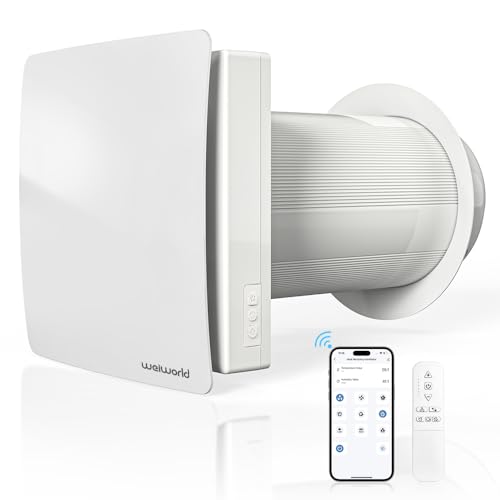
- Three-stage HEPA, carbon, and pre-filter setup
- Fresh-air intake and stale-air exhaust modes
- Quiet 30 dB EC motor with app and remote control
Best For: Bedrooms, offices, and other small enclosed rooms
Best High-Volume Attic Exhaust

- 1,250 CFM airflow for strong heat exhaust
- 10-speed wireless controller
- EC motor and damper-equipped two-door shutters
Best For: Attic installations needing powerful exhaust airflow
Best Balanced Fresh-Air Recovery

- Balanced supply and exhaust ventilation
- Recovers heat and moisture with an enthalpic core
- Up to 186 CFM with automatic frost protection
Best For: Compact whole-house layouts needing year-round comfort
Best Smart Attic Scheduling

- Wi-Fi app with climate data and automation
- Temperature, humidity, VPD, timer, and scheduling controls
- 1,250 CFM attic exhaust with an EC motor
Best For: Attic exhaust installations needing programmable control
Best Slim ERV
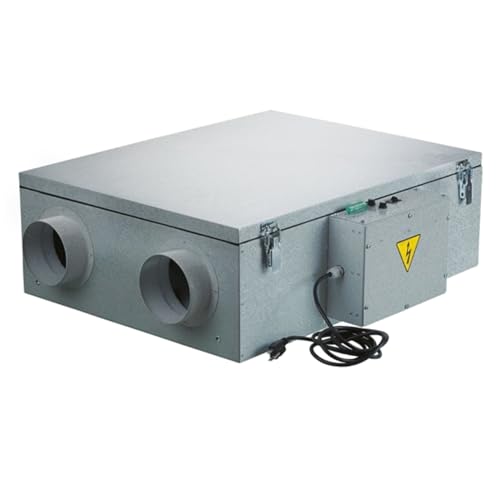
- 180 CFM balanced ventilation with heat and moisture recovery
- Slim 9.6-inch-deep corrosion-resistant casing
- Quiet 1.9-sones operation with washable MERV 6 filters
Best For: Tight ceiling installations needing efficient whole-house air exchange
Best High-Flow Exhaust Fan

- Up to 820 CFM for spaces up to 1,200 square feet
- Variable-speed and thermostat control included
- Durable wall-mounted design with automatic shutters
Best For: Powerful exhaust in garages, workshops, sheds, and greenhouses
Best Compact Cold-Climate ERV

- Up to 162 CFM of balanced whole-house airflow
- Electronic anti-frost protection for freezing conditions
- Low-speed operation uses as little as 19 watts
Best For: Small homes needing efficient continuous ventilation in cold climates
Smart Attic Airflow
- Compact 10-inch attic fan
- 10-speed wireless control
- EC motor with damper shutters
Best For: Small attic installations needing adjustable ventilation
Quiet Whole-Home Cooling
Solatube Whole House Fan Zone 1400

- Up to 1,400 CFM
- Seven-speed remote control
- Includes insulated damper and installation parts
Best For: Homes up to 1,200 square feet prioritizing quieter ventilation
Garage-Focused Ventilation
QuietCool GA PRO-2.0 Garage Fan

- Up to 1,834 CFM
- Wireless RF control and 20-foot cord
- Integrated two-hour fire damper
Best For: Garages with an accessible attic and high airflow needs
Best Filtered Airflow Pick – Compact HEPA Wall Ventilator
For shoppers comparing whole house ventilation systems for small spaces, this through-wall model emphasizes filtered fresh-air exchange without requiring complex ductwork. Its three-stage filtration, quiet EC motor, and compact wall-mounted design suit targeted ventilation in bedrooms, offices, and other enclosed rooms.
Best For: Bedrooms, home offices, and small enclosed spaces where filtered intake and quiet operation matter.
Pros:
- Combines fresh-air intake and stale-air exhaust in one system.
- Three-stage filtration includes a pre-filter, HEPA filter, and activated carbon layer.
- Offers app, remote, and button controls with intake, exhaust, and circulation modes.
- Operates at a listed 30 dB with an energy-efficient EC motor.
Cons:
- Its listed airflow is 60 cubic meters per hour, so it is geared toward smaller areas rather than high-volume whole-home exhaust.
- Through-wall installation still requires creating a suitable wall opening.
The VT501F is a practical choice when air filtration and flexible controls are higher priorities than maximum airflow. The magnetic front panel also simplifies access for cleaning and pre-filter replacement.
Best High-Volume Attic Exhaust – AC Infinity CLOUDWAY S12
The AC Infinity CLOUDWAY S12 is an attic-focused option for buyers evaluating whole house ventilation systems for small spaces that need powerful heat removal. Its 12-inch duct size, 1,250 CFM airflow rating, and remote speed control are designed to exhaust hot air from connected indoor areas.
Best For: Homes with an attic installation area where strong exhaust airflow and remote adjustment are useful.
Pros:
- Provides a listed 1,250 CFM of airflow for high-volume exhaust.
- Offers 10 speed settings through a wireless controller.
- PWM-controlled EC motor is designed for quieter, more energy-efficient operation than many conventional fans.
- Two-door shutters with a damper help block attic air from entering when the fan is off.
Cons:
- At a listed 62 dBA, it is substantially louder than the compact HEPA wall ventilator in this roundup.
- It is an exhaust-focused attic fan rather than a balanced fresh-air recovery system.
- The 12-inch duct and mounted installation require adequate space and preparation.
The CLOUDWAY S12 makes the most sense when cooling and exhausting hot air are the main goals. Its high airflow is useful, but the attic-focused installation and noise rating deserve careful consideration in smaller homes.
Best Balanced Fresh-Air Recovery – VENTS-US Frigate ERV 150
Among whole house ventilation systems for small spaces, the VENTS-US Frigate ERV 150 stands out for balanced ventilation rather than simple exhaust. It simultaneously supplies fresh air and removes stale air while its enthalpic core recovers heat and moisture, helping support more consistent indoor comfort.
Best For: Small homes or compact whole-house layouts where balanced airflow and heat-and-humidity recovery are priorities.
Pros:
- Supplies and exhausts air simultaneously for balanced ventilation.
- Enthalpic core recovers both heat and moisture.
- Provides up to 186 CFM of listed airflow.
- Electronic frost protection helps prevent freezing during low temperatures.
Cons:
- It is a more involved whole-house ventilation installation than a simple wall-mounted fan.
- The supplied notes do not specify app, Wi-Fi, or remote-control functionality.
- Its 186-watt rating may be more than needed for a single small room.
The Frigate ERV 150 is the strongest fit when year-round air exchange and energy-conscious recovery matter more than minimal installation. Its steel casing, filters, and mounting brackets support a dedicated ventilation-system setup.
Best Smart Attic Scheduling – AC Infinity CLOUDWAY T12
The AC Infinity CLOUDWAY T12 is a smart attic exhaust fan for shoppers seeking whole house ventilation systems for small spaces with automated climate control. Its Wi-Fi controller supports temperature, humidity, VPD, timers, cycles, schedules, and minimum-speed settings for more hands-off operation.
Best For: Attic-based exhaust setups where app access and climate-based automation are more important than balanced air exchange.
Pros:
- Supports remote Wi-Fi access through the manufacturer’s app.
- Offers temperature, humidity, VPD, timer, cycle, and scheduling programs.
- Uses a PWM-controlled EC motor intended to improve efficiency and reduce noise compared with many other fans.
- Lists 1,250 CFM airflow and a 12-inch duct size.
Cons:
- The listed 62 dBA noise level may be noticeable.
- It exhausts hot air rather than providing balanced supply-and-exhaust ventilation.
- Attic mounting and a 12-inch duct require sufficient installation space.
The CLOUDWAY T12 is a good match for users who want ventilation to respond automatically to changing conditions. Choose it over a simpler controller when remote monitoring and programmable climate rules are central to the buying decision.
Best Slim ERV – Frigate ERV 150
For shoppers comparing whole house ventilation systems for small spaces, the VENTS-US Frigate ERV 150 stands out with a slim 9.6-inch-deep casing and balanced 180 CFM airflow. Its enthalpy core exchanges stale indoor air for filtered outdoor air while recovering heat and moisture, and the ceiling-mount design helps conserve usable room space.
Best For: Small homes or tight ceiling installations where balanced ventilation and energy recovery matter.
Pros:
- Enthalpy core recovers heat and humidity without requiring a drain.
- Slim, corrosion-resistant steel housing is suited to constrained installation areas.
- Quiet 1.9-sone operation with washable MERV 6 filters.
- Electronic frost protection helps protect the core in cold conditions.
Cons:
- Ceiling mounting and permanent installation may require more planning than a plug-in fan.
- Its single listed power level offers less speed flexibility.
- At 31 inches deep and 24 inches wide, the overall unit still needs substantial clearance.
The Frigate ERV 150 is a strong choice when a small-space ventilation project needs more than simple exhaust. Its compact depth, quiet operation, and heat-and-moisture recovery make it especially practical for continuous whole-house air exchange.
Best High-Flow Exhaust Fan – iLiving 10-Inch Shutter Fan
Among whole house ventilation systems for small spaces, the iLiving 10-inch shutter exhaust fan is best viewed as a high-volume exhaust option for spaces such as garages, workshops, attics, and utility areas. It delivers up to 820 CFM, includes automatic shutters, and combines variable-speed and thermostat control in a wall-mounted design.
Best For: Garages, workshops, sheds, greenhouses, and other areas needing powerful wall-mounted exhaust.
Pros:
- Moves up to 820 CFM and is rated for coverage up to 1,200 square feet.
- Variable-speed control and a 32–130°F thermostat range support flexible operation.
- Galvanized steel framing, aluminum shutters, and corrosion-resistant construction suit utility spaces.
- Automatic shutters help close the opening when the fan is not operating.
Cons:
- At less than 65 dB, it is considerably louder than the ERV options here.
- It exhausts air rather than providing balanced supply-and-exhaust ventilation or energy recovery.
- Wall mounting and hardwiring may limit placement in some small homes.
This iLiving model is a practical choice when rapid air removal is the priority. It is less suited to quiet living areas or energy-conscious balanced ventilation, but its airflow and controls are useful for heat, odors, and stale air in utility spaces.
Best Compact Cold-Climate ERV – Frigate ERV 120S
The VENTS-US Frigate ERV 120S is a practical candidate for whole house ventilation systems for small spaces when low operating power and cold-weather protection are priorities. It provides balanced fresh-air supply and stale-air exhaust at up to 162 CFM, while its enthalpy core transfers heat and moisture through standard 5-inch duct connections.
Best For: Smaller homes seeking continuous, low-power balanced ventilation in cold climates.
Pros:
- Electronic anti-frost protection helps safeguard the core during freezing conditions.
- Three-key control offers LOW, MED, and STANDBY settings for ongoing operation.
- Low-speed power consumption can be as low as 19 watts.
- Includes washable MERV 6 filters and ceiling-mount brackets.
Cons:
- Its maximum 162 CFM is lower than the 180 CFM Frigate ERV 150.
- Standard 5-inch duct connections may require ductwork planning or adapters.
- The supplied notes do not specify a separate wall-control or remote-control system.
The Frigate ERV 120S balances useful airflow with economical low-speed operation. Its frost protection, enthalpy recovery, and simple three-speed control make it a sensible fit for compact homes that need steady ventilation through changing seasons.
Smart Attic Airflow – AC Infinity CLOUDWAY S10
For homeowners comparing whole house ventilation systems for small spaces, the AC Infinity CLOUDWAY S10 is a compact attic-mounted option with a 10-inch duct size and a 9.8 x 15.1 x 11.3-inch footprint. Its 10-speed wireless controller makes it easy to fine-tune airflow for different conditions.
Best For: Smaller homes or attic installations that need adjustable, remote-controlled ventilation.
Pros:
- Compact ceiling-mount design for attic installation.
- 10-speed wireless controller allows precise airflow adjustment.
- PWM-controlled EC motor is designed for quieter, more energy-efficient operation.
- Two-door shutters and a damper help block attic air when the fan is off.
Cons:
- Its 791 CFM listed airflow is more limited than larger whole-house fans.
- Installation requires a suitable attic and ceiling-mount location.
The CLOUDWAY S10 stands out when space and control matter more than maximum output. Its compact dimensions, adjustable speeds, and included remote make it a practical fit for targeted whole-house or attic ventilation.
Quiet Whole-Home Cooling – Solatube Whole House Fan Zone 1400
The Solatube Whole House Fan is a strong choice among whole house ventilation systems for small spaces when quiet operation is a priority. It delivers up to 1,400 CFM, includes insulated R6 damper doors, and is designed for homes up to 1,200 square feet.
Best For: Smaller homes where quiet, remote-controlled cooling and a complete installation kit are important.
Pros:
- Rated for up to 1,400 CFM and 1,200 square feet.
- Seven adjustable speeds provide flexible airflow control.
- HushMount 2 technology is designed to minimize operating noise.
- Kit includes the fan, damper, mounting system, remote, grille, fasteners, and ducting.
Cons:
- Its 17 x 15 x 15-inch dimensions require more installation space than compact models.
- Listed noise level is 50 dB, so it is not completely silent.
- Attic mounting is required.
With its included components, insulated dampers, and seven-speed remote, the Solatube model offers a well-rounded package for a smaller home. It is especially appealing if reducing vibration and noise is central to the buying decision.
Garage-Focused Ventilation – QuietCool GA PRO-2.0 Garage Fan
For a garage rather than a living-space installation, the QuietCool GA PRO-2.0 is a specialized option among whole house ventilation systems for small spaces. It moves up to 1,834 CFM, includes wireless RF control, and is designed to ventilate garages of up to four-car capacity.
Best For: Garages with an attic above them that need high-volume ventilation and simple plug-and-play installation.
Pros:
- Moves up to 1,834 CFM on high and 1,396 CFM on low.
- Uses only 133 watts according to the listed specifications.
- Includes wireless RF control, a 20-foot power cord, and an integrated ceiling box.
- Includes a two-hour-rated fire damper, ceiling grille, and thermostat.
Cons:
- Designed specifically for garage ventilation, not general room ventilation.
- Requires an attic above the garage for installation.
- Its 24 x 20 x 20-inch dimensions may be too large for especially tight spaces.
The GA PRO-2.0 is best evaluated as a dedicated garage fan. Its high airflow, wireless control, fire damper, and included cord simplify the setup, but the attic requirement and larger housing limit where it can be used.
How We Picked the Best Whole House Ventilation Systems for Small Spaces
We evaluated the selected systems by considering airflow capacity, physical footprint, noise control, operating efficiency, filtration or heat-recovery features, controls, and installation demands. Because “small space” can mean anything from a compact home to a garage or single-zone workspace, we included several ventilation designs rather than treating one fan type as ideal for every application.
ERV systems are especially useful where continuous fresh-air exchange and humidity management matter. Wall-mounted exhaust and intake fans can be simpler choices for targeted air movement, while whole-house fans are better suited to rapid cooling when outdoor air and installation conditions are favorable.
Quick Comparison
| System type | Best suited for | Typical advantage | Main consideration |
|---|---|---|---|
| Compact ERV | Homes needing balanced fresh-air exchange | Heat recovery and filtered intake | More involved ductwork and installation |
| Wall-mounted ventilation fan | Single rooms, additions, and small homes | Simple direct-through-wall setup | May offer less balanced ventilation |
| Whole-house fan | Attic-connected homes and larger air volumes | Fast cooling with relatively low energy use | Needs suitable attic and outdoor conditions |
| Garage or utility-space fan | Garages, workshops, and high-heat areas | High airflow and convenient remote control | Not always appropriate for occupied living spaces |
Key Buying Factors for Whole House Ventilation Systems for Small Spaces
Airflow and Room Size
Check the fan’s rated CFM against the area you need to ventilate. A high-CFM model is not automatically better in a small home: excessive airflow can increase noise, drafts, and heating or cooling losses. Variable-speed controls make it easier to run gently for continuous ventilation and increase airflow when needed.
Ventilation Method
Balanced ERVs bring in outdoor air while exhausting stale air, often transferring heat and moisture between the two streams. Exhaust fans remove indoor air but rely on replacement air entering through leaks or dedicated inlets. Whole-house fans move large volumes for cooling and usually work best when windows can provide a clear intake path.
Noise, Controls, and Efficiency
For bedrooms and compact living areas, prioritize quiet motors, low-speed settings, timers, thermostats, and wireless controls. Energy-efficient EC motors can reduce operating costs, while automatic shutters, freeze protection, and integrated sensors may improve convenience and reliability.
Filtration and Installation
Look for accessible filters and confirm replacement costs before buying. Verify wall thickness, duct diameter, electrical requirements, exterior clearances, attic access, and whether professional installation is recommended. A system that fits your airflow needs but cannot be installed correctly will underperform.
Who Should Buy Which Whole House Ventilation Systems for Small Spaces?
Choose a compact ERV such as the VENTS-US Frigate models if you want continuous, balanced ventilation with filtration and energy recovery. Choose a wall-mounted HEPA or exhaust system when you need a relatively direct solution for a room, small addition, or space without extensive ductwork.
AC Infinity CLOUDWAY models are a strong fit for buyers who value adjustable airflow and wireless controls. The Solatube option is better for homes designed around whole-house cooling and attic installation, while the QuietCool garage model targets workshops and garages requiring strong airflow. The iLiving wall fan suits larger utility areas where high exhaust capacity and thermostat control are more important than compact indoor operation.