Smart heat pump water heaters can reduce energy use while giving households more control over hot-water schedules, temperature, and performance. The right choice depends on tank capacity, installation requirements, household demand, and whether you need a complete water heater or a recirculation upgrade.
We evaluated 10 options, including Energy Star heat pump tanks, connected electric water heaters, tankless systems, and under-sink recirculation pumps. Use the guide below to narrow the list by efficiency, capacity, controls, installation, and value.
Best 10 Smart Heat Pump Water Heaters Picks for 2026
Efficient Family Heating
Senville 50-Gallon Hybrid Heat Pump

- 3.75 UEF and 69-gallon first-hour rating
- ENERGY STAR, UL, and AHRI certified
- 7-year parts and 10-year compressor warranties
Best For: Medium to large households prioritizing efficient electric heating
Endless Flow Smart Sense
Rinnai RXP199iN Tankless Heater

- Up to 11.1 GPM flow rate
- Natural gas or propane operation
- Smart-Circ recirculation with optional Wi-Fi module
Best For: Large homes needing compact, continuous gas-fired hot water
Connected Electric Convenience
GE 30-Gallon Smart Water Heater

- Built-in Wi-Fi with SmartHQ controls
- 60-gallon first-hour rating
- Two 5,500-watt heating elements
Best For: One- to three-person households wanting connected electric heating
Water-Saving Upgrade
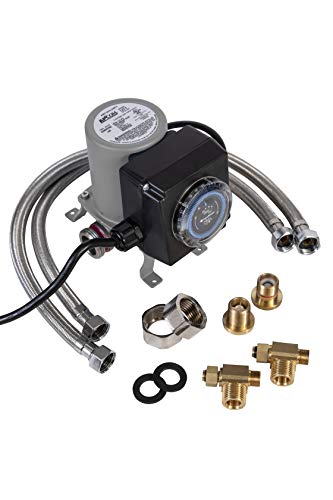
- Under-sink design for single-pipe homes
- Built-in thermostat and timer
- Includes hoses, tees, and fittings
Best For: Tank-heater homes seeking faster hot water
Whole-Home Efficiency Pick
Rinnai REHP50 Heat Pump Water Heater

- 50-gallon Energy Star heat pump tank
- 3.75 UEF and demand-response enabled
- Up to 73-gallon first-hour delivery
Best For: Three- to four-person households with 240V service
On-Demand Recirculation Control
HBS24-12E Smart Recirculating Pump

- Remote-controlled on-demand operation
- 6.1 GPM flow and 39.3-foot lift
- Supports up to five remote controls
Best For: Homes wanting remote hot-water recirculation
Best Overall
Rinnai 65-Gallon Heat Pump Water Heater

- Energy Star certified with 4.00 UEF
- Up to 80-gallon first-hour delivery
- 10-year residential tank and parts warranty
Best For: Families of four to five with high hot-water demand
Best Variable-Speed Upgrade
10.1 GPM Smart Recirculation Pump

- Up to 10.1 GPM flow and 23-foot lift
- Auto, Differential, and Constant Pressure modes
- Includes plumbing adapters and a three-year warranty
Best For: Reducing hot-water wait times in existing residential systems
Best Under-Sink Kit
VEVOR Digital Smart Recirculating Pump
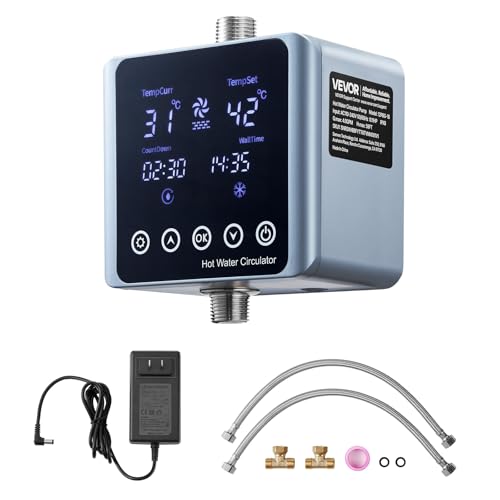
- Digital thermostat, timer, and memory function
- 4.0 GPM flow with 59-foot lift
- Designed for under-sink installation without pipe modifications
Best For: Programmable hot-water circulation at a distant fixture
Efficient Family Heating – Senville 50-Gallon Hybrid Heat Pump
For households comparing smart heat pump water heaters, the Senville 50-gallon hybrid model stands out for its air-source heat pump design and strong storage capacity. It offers a 3.75 UEF rating, a 69-gallon first-hour rating, and claimed electricity savings of up to 70% compared with a standard electric water heater.
Best For: Medium to large households seeking an efficient 50-gallon electric water heater with certified performance and substantial warranty coverage.
Pros:
- Heat pump technology can reduce electricity use compared with conventional electric models.
- 69-gallon first-hour rating supports showers, laundry, and dishwashing.
- ENERGY STAR, UL, and AHRI certified.
- Includes a 7-year parts warranty and 10-year compressor warranty.
Cons:
- At 218 pounds and 66.5 inches high, it may require careful planning for installation.
- Its 50-gallon tank format takes more space than a compact tankless unit.
The Senville is a practical choice when energy efficiency and stored hot-water capacity matter more than having the smallest possible footprint. Verify the installation space and electrical requirements before purchase.
Endless Flow Smart Sense – Rinnai RXP199iN Tankless Heater
Although it is a gas tankless system rather than a storage-tank heat pump, the Rinnai RXP199iN is a smart hot-water option for buyers comparing smart heat pump water heaters and other connected solutions. It delivers up to 11.1 GPM, supports indoor or outdoor installation, and includes intelligent recirculation.
Best For: Homes needing high simultaneous flow, compact wall-mounted installation, and natural-gas or propane flexibility.
Pros:
- Provides up to 11.1 GPM, rated for as many as seven fixtures at once.
- Works with natural gas or propane and can be installed indoors or outdoors.
- Smart-Circ learns usage patterns to schedule recirculation.
- Offers a .98 UEF rating and built-in pump.
Cons:
- Wi-Fi control requires the separately sold Control-R module.
- Professional installation is recommended.
- Requires gas service rather than an all-electric setup.
The Rinnai is better suited to shoppers who want continuous, high-volume hot water and gas-fueled efficiency than to those specifically seeking heat pump technology. Its recirculation features can also reduce waiting at faucets.
On-Demand Comfort Upgrade – Watts Programmable Recirculation System
The Watts Heat H2O is not a water heater itself, but it can complement smart heat pump water heaters by bringing hot water to faucets faster. Its thermal-bypass design uses an under-sink sensor valve, needs no dedicated return line, and includes a programmable timer.
Best For: Homes with a compatible tank-style water heater where reducing faucet wait time and water waste is a priority.
Pros:
- Supplies hot water in seconds and may save up to 15,000 gallons annually.
- Installs without a dedicated return line.
- Programmable 24-hour timer supports household usage schedules.
- Includes the pump, sensor valve, fittings, supply lines, and mounting hardware.
Cons:
- Not designed for tankless water heaters.
- A flexible water-heater supply line is not included.
- Rigid supply pipes may require additional tools for installation.
This system is a targeted convenience upgrade rather than a replacement water heater. Confirm that your existing unit is a compatible tank model and review the plumbing requirements before attempting a DIY installation.
Connected Electric Convenience – GE 30-Gallon Smart Water Heater
For shoppers comparing smart heat pump water heaters with conventional electric alternatives, the GE 30-gallon model adds built-in Wi-Fi and useful scheduling controls without using heat pump technology. SmartHQ lets you adjust temperature, set vacation mode, and receive notifications from a connected device.
Best For: One- to three-person households wanting a straightforward electric tank with app-based controls and quick recovery.
Pros:
- Built-in Wi-Fi supports temperature changes, vacation schedules, and notifications.
- Two 5,500-watt elements provide quick recovery.
- Delivers a 60-gallon first-hour rating despite its 30-gallon capacity.
- Anode sensing alerts you when the anode rod needs replacement.
Cons:
- It is a standard electric tank, not a heat pump water heater.
- The 30-gallon capacity is intended for smaller households.
- Its 240-volt, 5,500-watt electrical setup must match the home’s connections.
The GE is a sensible option when app control and easy replacement matter more than heat pump energy savings. Its first-hour rating and dual heating elements help offset the relatively compact tank size.
Water-Saving Upgrade – APCOM UT1 Recirculation Pump
The APCOM UT1 is not a smart heat pump water heater; it is an under-sink recirculation pump for standard tank or indirect water heaters. Its thermostat and timer help deliver hot water faster while reducing the water wasted while waiting for the tap to warm.
Best For: Homes with a tank-style water heater, a single-pipe plumbing system, and an electrical outlet under the sink.
Pros:
- Installs under the sink without a dedicated return line.
- Built-in thermostat and timer support automatic operation.
- Includes the pump, hoses, tees, and fittings for one-wrench installation.
- Designed for up to 250 feet of household piping.
Cons:
- Requires an indoor installation location and an electrical outlet under the sink.
- Compatible with tank or indirect water heaters, not a replacement water-heating system.
Choose the UT1 when your priority is reducing wait time and water waste rather than replacing your existing heater. Its compact under-sink design and automatic controls make it a practical retrofit for compatible plumbing layouts.
Whole-Home Efficiency Pick – Rinnai REHP50 Heat Pump Water Heater
The Rinnai REHP50 is the closest match here to a smart heat pump water heater, using ambient air to heat its 50-gallon tank. Energy Star certification, a 3.75 UEF, and demand-response capability make it suited to households looking to reduce water-heating energy use.
Best For: Households of three to four people that need strong first-hour hot-water delivery and have compatible 240V electrical service.
Pros:
- Energy Star certified heat pump operation with a 3.75 UEF.
- Delivers up to 73 gallons in the first hour.
- Demand-response enabled for utility-coordinated peak-hour savings.
- Includes a glass-lined steel tank and 10-year residential tank and parts warranties.
Cons:
- Requires 240V, 30A electrical service.
- At 212 pounds and nearly 67 inches tall, it requires careful placement planning.
- Its 50-gallon tank may not suit unusually high-demand households.
For shoppers specifically comparing smart heat pump water heaters, the REHP50 stands out for combining heat pump efficiency with demand-response support and high first-hour capacity. Verify electrical requirements, dimensions, and installation conditions before purchase.
On-Demand Recirculation Control – HBS24-12E Smart Recirculating Pump
The HBS24-12E is a smart recirculating pump rather than a smart heat pump water heater. It uses a remote controller, temperature sensors, and a built-in thermostat to provide hot water in about two to three minutes from a cold start without requiring continuous operation.
Best For: Residential users who want remote, on-demand hot-water recirculation and have a compatible 24V installation.
Pros:
- Remote control can start the pump when hot water is needed.
- Claims a 6.1 GPM flow rate and 39.3-foot maximum lifting height.
- Dual temperature sensors support adjustable comfort settings.
- Supports up to five remote controls and includes a built-in check valve.
Cons:
- Operates at 24 volts, so installation compatibility must be confirmed.
- Provides recirculation, not heat-pump water heating or additional tank capacity.
- The listed version does not include the 60-minute extension feature.
This pump is a useful convenience upgrade when you want control over when recirculation runs. Its remote operation can help avoid constant circulation, but it should be evaluated as an accessory for an existing hot-water system rather than as a heater replacement.
Best Overall – Rinnai 65-Gallon Heat Pump Water Heater
The Rinnai REHP65 is a strong choice among smart heat pump water heaters for households that need substantial hot-water capacity and lower operating costs. Its Energy Star certification, 4.00 UEF, demand-response capability, and 80-gallon first-hour delivery suit busy homes with consistently high demand.
Best For: Families of four to five seeking an efficient, high-capacity heat pump water heater.
Pros:
- Energy Star certified with a 4.00 UEF and zero-emission operation.
- Delivers up to 80 gallons in the first hour.
- Includes demand-response functionality and a 10-year residential tank and parts warranty.
- Offers flexible installation features, including zero clearance on the top, back, and sides.
Cons:
- Its 250-pound weight may require planning for delivery and installation.
- Requires a 240V, 30A electrical connection.
With its large tank, high first-hour output, and long residential warranty, the REHP65 is the most complete option here for a conventional whole-home hot-water upgrade. Confirm electrical and plumbing requirements before purchase.
Best Variable-Speed Upgrade – 10.1 GPM Smart Recirculation Pump
This 45-watt recirculating pump is a practical add-on for homes that already have a water heater but want faster hot water at the tap. While it is not a heat pump water heater itself, its variable-speed controls and automatic operating modes complement smart heat pump water heaters by reducing circulation-related energy use.
Best For: Homeowners who want faster hot water and adjustable circulation for residential plumbing, radiant floors, or hydronic systems.
Pros:
- Provides up to 10.1 GPM flow and 23 feet of lift.
- Offers Auto, Differential, and Constant Pressure modes.
- Includes a stainless steel 3/4-inch coupler and 1-inch-to-3/4-inch reducer.
- Uses a stainless steel construction and comes with a three-year warranty.
Cons:
- It is a circulation pump, not a standalone water heater.
- Requires a 115V electrical connection.
- Installation compatibility still depends on the home’s plumbing layout.
This pump makes the most sense when the existing heater works well but distant fixtures take too long to receive hot water. Its adjustable controls add flexibility, though buyers should verify pipe connections and installation needs.
Best Under-Sink Kit – VEVOR Digital Smart Recirculating Pump
The VEVOR digital recirculating pump kit is designed for convenient hot-water circulation without modifying existing pipes. Its thermostat, timer, digital screen, memory function, and under-sink installation make it a useful companion to smart heat pump water heaters and other tank or tankless systems.
Best For: Homeowners who want programmable, under-sink hot-water recirculation with straightforward installation.
Pros:
- Provides up to 4.0 GPM flow and 59 feet of lift.
- Combines a digital screen, thermostat, timer, and memory function.
- Includes a check valve, adapter, pump, and braided hose for installation.
- Works with tank and tankless water heaters and requires no pipe modifications according to the supplied notes.
Cons:
- Its 4.0 GPM flow is lower than the other circulation pump in this roundup.
- It is a recirculation accessory rather than a complete water-heating system.
- Under-sink placement may not suit every plumbing configuration.
The VEVOR kit stands out for control and convenience rather than maximum flow. It is a sensible choice when programmable temperature and timing matter, particularly for installations near the fixture farthest from the water heater.
How We Picked the Best Smart Heat Pump Water Heaters
We selected products across the main categories shoppers may encounter when searching for Smart Heat Pump Water Heaters: full-size heat pump tanks, connected electric storage heaters, tankless units, and hot-water recirculation systems. We focused on useful capacity or flow information, energy-saving features, smart controls, scheduling, included components, and compatibility with common residential plumbing setups.
Because these products do not all serve the same purpose, compare them by category rather than treating a recirculation pump as a replacement for a water heater. Product specifications, installation requirements, warranty coverage, and local code requirements should be confirmed before purchase.
Quick Comparison
| Product type | Best for | Main consideration |
|---|---|---|
| Heat pump tank | Lower operating costs and substantial storage | Requires adequate space, electrical service, and condensate management |
| Smart electric tank | Connected monitoring and straightforward replacement | Typically uses more electricity than a heat pump model |
| Tankless heater | Continuous hot water and compact installation | Needs suitable gas or electrical capacity and correct sizing |
| Recirculation pump | Faster hot water at distant fixtures | Improves delivery time but does not create additional hot-water capacity |
Key Buying Factors for Smart Heat Pump Water Heaters
Capacity and Household Demand
Choose tank capacity based on the number of occupants, bathrooms, bathing habits, and simultaneous usage. A 50-gallon tank may suit many households, while a 65-gallon model can provide more recovery reserve for larger families. Tankless systems should be sized by peak flow rate and required temperature rise, not gallons.
Efficiency and Operating Cost
Look for Energy Star certification and compare efficiency ratings when available. Heat pump tanks generally use less electricity than standard resistance heaters, but performance depends on installation location, ambient temperature, airflow, and operating mode. Recirculation pumps can reduce wait times but may add energy use if scheduled poorly or operated continuously.
Smart Controls and Scheduling
Wi-Fi monitoring, digital displays, timers, vacation modes, leak alerts, and adjustable operating schedules can make a system easier to manage. Confirm whether smart features require an app, a separate hub, or a stable home network. A simple built-in timer may be preferable if you want dependable automation without cloud-dependent controls.
Installation and Compatibility
Check voltage, amperage, pipe connections, tank dimensions, ventilation, condensate drainage, and clearance requirements. Heat pump units need sufficient surrounding air volume and may produce cool exhaust air and operating noise. Recirculation kits also require compatible plumbing and an accessible return path or under-sink crossover design.
Who Should Buy Which Smart Heat Pump Water Heaters?
Choose a heat pump tank if energy efficiency is your priority and you have room for a properly installed storage unit. A 50-gallon option is a practical starting point for many homes; larger households may benefit from 65 gallons.
Choose a smart electric tank if you want connected controls and a familiar storage-water-heater format, especially when installation simplicity matters more than maximum efficiency.
Choose a tankless model if space is limited or you prefer continuous hot water, provided your fuel supply, electrical service, flow demand, and installation site support the unit.
Choose a recirculation pump if your existing heater works well but hot water takes too long to reach a remote faucet. Use programmable schedules or thermostatic control to balance convenience with energy consumption.