Small gaps around a door can let in more than cold air—they can also carry hallway noise, light, odors, and outside distractions. The best space-saving door soundproofing kits address those leaks without requiring a bulky renovation or sacrificing usable floor space.
This roundup compares adhesive weatherstripping, under-door sweeps, adjustable draft stoppers, acoustic foam, and a heavier soundproofing blanket so you can match the solution to your door, room, and noise problem.
Best 10 Space-Saving Door Soundproofing Kits Picks for 2026
Best Adhesive Seal

- 33-foot self-adhesive roll
- Slim 0.35-inch profile
- Helps seal drafts, dust, and noise
Best For: Small gaps around doors, windows, closets, and cabinets
Best No-Reposition Draft Blocker

- Covers 0.5- to 1.7-inch gaps
- Moves with the door
- Adjusts to several interior door widths
Best For: Interior bedroom doors needing bottom-gap coverage
Best for Room Treatment
Focusound Acoustic Foam Panels

- 52 grooved one-inch panels
- Includes 300 adhesive pieces
- Targets echo, reverb, and reflections
Best For: Home offices, studios, vocal booths, and control rooms
Best Budget Under-Door Seal

- Fits doors up to 36 inches
- Covers gaps up to 1.5 inches
- Reduces drafts, light, odors, and noise
Best For: Budget-conscious interior or exterior door sealing
Best Renter-Friendly Option
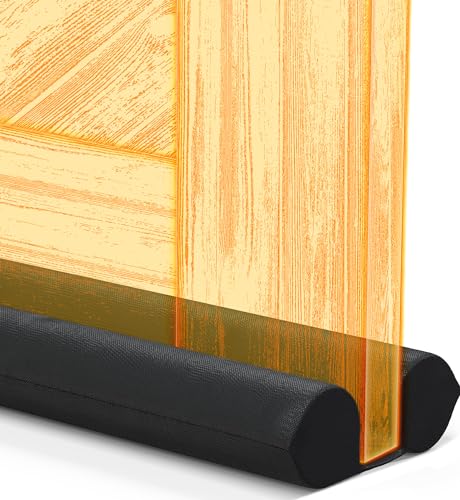
- Targets noise, light, odors, dust, and drafts beneath doors
- Installs without drilling, tape, or tacks
- Slides with doors across several common flooring types
Best For: Apartment, dorm, and bedroom under-door gaps
Best for Flexible Gap Sealing
EVA Foam Weather Stripping Tape

- 33-foot roll can cover multiple door or window gaps
- Cut-to-size EVA strip accommodates varied sealing needs
- Self-adhesive design also helps with insulation and light blocking
Best For: Low-profile sealing around door and window frames
Quick-Fit Door Bottom Seal
Flexible Silicone Draft Stopper

- Seals bottom gaps up to 1.5 inches
- Helps reduce drafts and room noise
- Peel-and-stick 39-inch design
Best For: Bedrooms, offices, and standard interior or exterior doors
Long-Roll Gap Seal
50-Foot D-Shaped Weather Strip
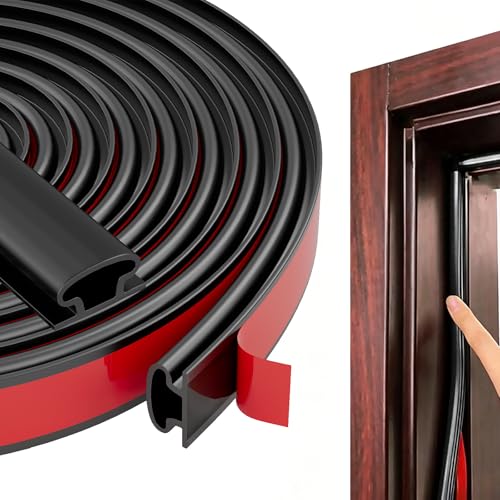
- Provides 50 feet of customizable strip
- Fits gaps from 0.1 to 0.22 inch
- Helps block noise, drafts, and rattles
Best For: Multiple narrow door or window frame gaps
Adjustable Under-Door Barrier
Triple-Design Silicone Door Sweep

- Adjusts to gaps up to 1.5 inches
- Helps muffle noise and block drafts
- Flexible design glides over carpet
Best For: Uneven or carpeted door bottoms with larger gaps
Best Adhesive Seal – Gray Brush Weather Stripping
For shoppers comparing space-saving door soundproofing kits, this 33-foot self-adhesive brush strip is a practical choice for sealing narrow gaps around doors, windows, closets, and cabinets. Its slim 0.35-inch width is useful where a bulkier draft blocker would be inconvenient.
Best For: Sealing small gaps around interior doors, windows, sliding doors, and cabinets while also reducing drafts, dust, and some outside noise.
Pros:
- 33 feet of self-adhesive weather stripping for multiple applications.
- High-density soft brush material is designed to bend without deforming.
- Helps address drafts, rain, dust, collisions, and sound leakage.
- Can be measured and cut to fit the exact gap.
Cons:
- Best suited to gap sealing rather than broad sound absorption.
- Adhesive installation requires a clean, accurately measured surface.
This is a versatile, low-profile option for small perimeter gaps. It makes the most sense when you want one long roll for several doors or windows without adding a noticeable fixture.
Best No-Reposition Draft Blocker – MAXTID Large Door Sweep
Among space-saving door soundproofing kits, this adjustable under-door stopper is a straightforward way to block sound, light, odors, and drafts without attaching a permanent strip to the door. The sleeve moves with the door, so it does not need constant repositioning.
Best For: Interior doors with bottom gaps from 0.5 to 1.7 inches, especially bedrooms where reducing corridor noise and light may help with sleep.
Pros:
- Two-inch foam diameter covers relatively large bottom gaps.
- Slides under the door and stays in place as the door moves.
- Adjusts from 36 inches and can be cut for 30-, 32-, or 34-inch doors.
- Does not rely on stick-on installation that could damage the door.
Cons:
- Not suitable for exterior doors with a threshold.
- Its under-door design addresses the bottom gap, not the full door perimeter.
This is a convenient pick when you want removable gap coverage and a larger foam profile than a thin sweep. Check your door width and clearance before ordering.
Best for Room Treatment – Focusound Acoustic Foam Panels
For shoppers building space-saving door soundproofing kits around a home office or recording setup, these 52 acoustic foam panels provide broader room treatment than a door sweep alone. Their grooved surfaces are intended to reduce echoes, reverb, and unwanted reflections.
Best For: Home offices, recording studios, vocal booths, control rooms, and other spaces where echo reduction matters alongside door-gap sealing.
Pros:
- Includes 52 one-inch foam panels measuring 12 by 12 inches.
- Triangular grooves help absorb unwanted echoes, waves, and reverb.
- Includes 300 pieces of double-sided adhesive for installation.
- Designed with fire resistance, air permeability, and non-toxic materials.
Cons:
- These panels treat room reflections rather than sealing a door gap.
- Adhesive mounting still requires planning for wall placement and removal.
- Panels may need 24 to 48 hours to recover shape after water treatment.
This kit is a strong complement to a door seal when the main problem is room echo or recording quality. It is not a replacement for weather stripping or an under-door blocker.
Best Budget Under-Door Seal – HomeProtect Draft Stopper
This one-sided under-door seal is a budget-friendly addition to space-saving door soundproofing kits, particularly when cold air, corridor light, odors, and some noise enter through a bottom gap. Its adhesive-backed design keeps the installation compact and unobtrusive.
Best For: Interior or exterior doors up to 36 inches wide with bottom gaps up to 1.5 inches.
Pros:
- Fits doors up to 36 inches and covers gaps up to 1.5 inches.
- Helps reduce drafts, light, noise, odors, dust, and smoke movement.
- Can be measured, cut, installed, and removed as needed.
- Uses abrasion-resistant fabric and styrofoam construction.
Cons:
- Single-sided coverage is less comprehensive than sealing the full door perimeter.
- Installation depends on adhesive; preheating it with a hair dryer is recommended.
- Noise reduction is focused on the bottom gap rather than room-wide soundproofing.
This is a practical low-cost choice for renters, bedrooms, dorms, and utility spaces where a compact bottom seal can address several everyday drafts and leakage issues at once.
Best Full-Door Coverage – Thick Door Soundproofing Blanket
For shoppers comparing space-saving door soundproofing kits, this weighted blanket provides broad coverage without requiring a permanent door replacement. Its 37.5-by-86.6-inch size is designed for standard doors and can also be used as a divider or temporary acoustic enclosure.
Best For: Bedrooms, recording studios, music rooms, offices, and renters who need full-door coverage plus light and draft reduction.
Pros:
- Thick, weighted cotton-filled construction helps reduce noise, echo, and reverb.
- Includes screws and hooks for long-term installation plus hook-and-loop strips for temporary use.
- Also blocks light and helps limit heat loss or air-conditioning escape.
- Can be adapted for doorways, walls, ceilings, vocal booths, or drum cages.
Cons:
- At 9.6 pounds, it may need secure installation hardware and support.
- The large blanket may be more coverage than needed for shoppers targeting only an under-door gap.
- Odor-sensitive users are advised to ventilate it before use.
This is the most comprehensive option of the three for covering a door surface, while its two mounting methods add flexibility. Choose it when sound absorption, privacy, and broad thermal or light blocking matter more than the smallest possible installation.
Best Renter-Friendly Option – Under Door Draft Stopper
For a compact approach to space-saving door soundproofing kits, this under-door stopper targets the gap where hallway chatter, light, odors, dust, and drafts can enter. It installs without drilling, tape, or tacks and is sized for doors from 30 to 36 inches wide.
Best For: Bedrooms, apartments, dorms, home offices, and other smooth-floor doorways where a removable bottom seal is preferred.
Pros:
- Thick sound-absorbing foam helps reduce noise traveling beneath the door.
- Slides with the door across tile, hardwood, vinyl, and low-pile carpet.
- Quick, renter-friendly installation requires cutting the foam, inserting it into the cover, and sliding it under the door.
- Machine-washable polyester cover supports regular household use.
Cons:
- Fits doors 30 to 36 inches wide and under-door gaps from 0.25 to 1.25 inches, so measuring is important.
- Does not work on barn doors.
- Addresses the bottom gap rather than sound passing through the entire door.
This is the simplest choice when the main problem is noise, light, or drafts entering under a door. Its no-drill design suits renters and busy households, provided the door width and clearance match the stated range.
Best for Flexible Gap Sealing – EVA Foam Weather Stripping Tape
For highly compact space-saving door soundproofing kits, this 33-foot self-adhesive EVA strip lets you seal door-frame gaps with custom-cut lengths. The flexible tape is also intended for windows and other household surfaces, making it useful when several small leaks need attention.
Best For: Door and window frame gaps, ventilation openings, and other narrow areas where a cut-to-size adhesive seal is practical.
Pros:
- 33 feet of strip provides material for multiple gaps or replacement projects.
- Can be cut to fit varying gap sizes and is described as flexible, waterproof, and thermally insulating.
- Upgraded mesh adhesive is designed for firm attachment and easier application.
- Supports sealing, sound insulation, light blocking, and anti-friction uses.
Cons:
- Requires preparing the surface and applying adhesive correctly.
- As a narrow weatherstrip, it is intended for gaps rather than full-door sound blocking.
- The notes do not specify a maximum gap size or a door-width range.
This strip is the most adaptable and unobtrusive option for sealing several small openings. It makes sense when you want a low-profile material that can be trimmed for doors and windows, rather than a hanging blanket or sliding under-door barrier.
Quick-Fit Door Bottom Seal – Flexible Silicone Draft Stopper
For shoppers comparing space-saving door soundproofing kits, this self-adhesive silicone sweep is a compact way to seal the gap beneath an interior or exterior door. It is designed to help reduce noise while also limiting drafts, dust, odors, light, rain, and insects.
Best For: Bedrooms, offices, and doors with bottom gaps up to 1.5 inches.
Pros:
- Flexible silicone construction resists heat, cold, and daily wear.
- 39-inch strip can be measured and cut for a quick peel-and-stick installation.
- Strong adhesive backing is intended for wood, glass, metal, and plastic doors.
- Also helps conserve heating and cooling energy.
Cons:
- May not adhere well to rough or textured door surfaces.
- Requires 24 hours to bond firmly; cold-weather installation may require a hair dryer.
- One package contains a single 39-inch strip.
This is a straightforward choice when you want an unobtrusive bottom seal rather than bulky hardware. Measure the gap and door length first, then allow the adhesive to set before regular use.
Long-Roll Gap Seal – 50-Foot D-Shaped Weather Strip
This 50-foot self-adhesive strip is a practical option for space-saving door soundproofing kits when you need to seal narrow gaps around a door frame or window. Its compact roll can be cut to length and helps limit noise, drafts, light, dust, rain, and odors.
Best For: Narrow 0.1- to 0.22-inch gaps around doors, windows, furniture, and similar surfaces.
Pros:
- Generous 50-foot roll supports multiple sections or projects.
- Flexible TPE/rubber material can be cut with scissors and bent into different shapes.
- Helps reduce rattles, vibrations, squeaks, airflow, and outside noise.
- Self-adhesive installation requires cleaning, measuring, cutting, and pressing into place.
Cons:
- Designed for relatively narrow gaps from 0.1 to 0.22 inch.
- Adhesive performance can suffer in low temperatures without warming.
- Gap width should be measured carefully before purchase.
Choose this strip when coverage length matters more than sealing a large under-door opening. Its low-profile roll is especially useful for extending a seal around several narrow frame gaps without adding bulky components.
Adjustable Under-Door Barrier – Triple-Design Silicone Door Sweep
For a wider under-door opening, this adjustable silicone sweep offers a space-saving approach to door soundproofing kits without bulky attachments. Its triple-design structure and widened adhesive backing are intended to help muffle noise while blocking drafts, dust, pests, and unwanted airflow.
Best For: Interior or exterior doors with bottom gaps from 0 to 1.5 inches, including doors over carpet.
Pros:
- Adjustable 39-inch strip can be cut to fit the door.
- Flexible silicone glides over carpet and is designed not to damage floors.
- Hollow arc and triple-design construction helps muffle outside noise.
- Widened 1.5-inch adhesive backing is intended to resist lifting from friction.
Cons:
- Rough or textured surfaces may reduce adhesion.
- Needs pressing and 24 hours of curing before frequent door use.
- Cold-weather installation may require warming the adhesive with a hair dryer.
This model is a sensible fit when the main problem is a larger or uneven space beneath the door. Its adjustable format and carpet-friendly design make it more versatile than a rigid threshold-style blocker, provided the installation surface is clean and smooth.
How We Picked These Space-Saving Door Soundproofing Kits
We focused on compact products that can improve a door’s air seal without taking up significant room or requiring permanent construction. The selection includes perimeter weatherstripping, bottom-door seals, adjustable draft blockers, acoustic panels, and a heavier barrier blanket. We considered installation method, adjustability, material, coverage, likely durability, and how well each option addresses common leakage points.
It is important to set expectations: most residential door products reduce sound transmission rather than creating a truly soundproof room. Sealing gaps is often the most practical first step, especially for speech, hallway activity, traffic noise, drafts, and light.
Quick Comparison
| Best For | Product Type | Why Consider It |
|---|---|---|
| Door-frame gaps | Self-adhesive weatherstripping | Low-profile sealing around the jamb and header |
| Large bottom gaps | Adjustable door sweep or draft stopper | Helps block noise, air, odors, and light beneath the door |
| Room echo and reflections | Acoustic foam panels | Reduces some internal reflections; not a door-gap seal |
| Broad, temporary coverage | Soundproofing blanket | Adds a removable barrier over or near the doorway |
Key Buying Factors for Space-Saving Door Soundproofing Kits
Measure the Gaps First
Measure the width of the door, the clearance beneath it, and the size of any visible side or top gaps. Weatherstripping must compress against the frame without preventing the door from latching. Bottom sweeps should contact the floor lightly; excessive friction can make the door difficult to open.
Choose the Right Installation Style
Adhesive foam and rubber strips are usually the least obtrusive options and work well for renters or quick upgrades, provided the surface is clean, dry, and smooth. Under-door stoppers are easy to reposition, while adjustable models are useful when the gap or door position changes. A blanket requires more space and a secure hanging method but can cover a larger area.
Match the Material to the Problem
Dense rubber or EVA seals are practical for closing air paths. Foam weatherstripping is compressible and convenient for uneven gaps. Draft stoppers work primarily at the threshold. Acoustic foam can help tame room reflections, but it should not be treated as a substitute for sealing the door perimeter. For meaningful noise reduction, combine a perimeter seal with a bottom sweep when possible.
Check Compatibility and Maintenance
Confirm that the product dimensions suit your door and that adhesive will bond to the painted, metal, wood, or textured surface. Avoid blocking door hardware, hinges, vents, or required egress. Clean removable seals periodically, and replace compressed or peeling materials when they no longer maintain contact.
Who Should Buy Which Space-Saving Door Soundproofing Kits?
Choose adhesive perimeter weatherstripping if your main issue is noise or drafts around the sides and top of the door. Choose an under-door sweep or adjustable draft stopper for a visible threshold gap, hallway light, odors, or sound entering beneath the door. A foam-panel set is better for reducing echo inside a home office or recording space, while a thick door blanket suits shoppers who want broad, removable coverage and have room to hang it.
For the strongest space-conscious upgrade, pair correctly sized frame weatherstripping with a low-profile bottom seal. This layered approach closes the most common leakage paths while preserving door access and floor space.