Low or inconsistent water pressure can make showers, faucets, and appliances frustrating to use. The right booster system can improve flow while matching output to demand instead of wasting energy.
We compared 10 energy-efficient water pressure booster systems across pressure ratings, flow capacity, automation, noise, controls, and installation needs to help you choose a practical fit for your home.
Best 10 Energy-Efficient Water Pressure Booster Systems Picks for 2026
Smart, Quiet Pressure Control
GWANZI K90S600L Variable-Speed Booster
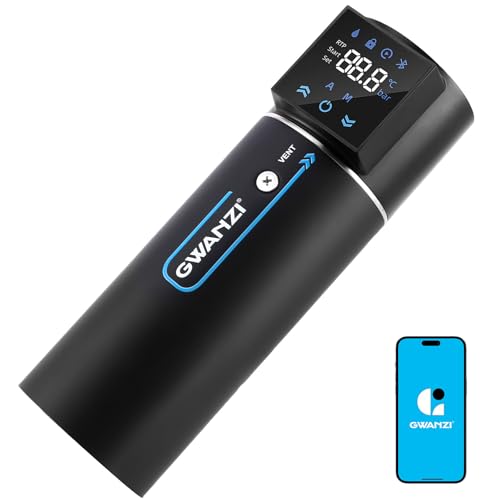
- Up to 50% greater energy efficiency than traditional pumps
- 15–90 PSI adjustment with app-based monitoring
- Water-cooled operation rated around 30 dB
Best For: Whole-house systems needing quiet, remotely adjustable pressure
Compact Constant-Pressure System
DAB E.SYBOX Mini Electronic System

- Uses only the power needed for demand
- About 30% smaller than traditional systems
- Supports horizontal or vertical mounting
Best For: Space-conscious residential installations needing steady pressure
High-Head Whole-Home Booster
MS-VSBP-2 Variable-Speed Booster Pump

- Up to 1,400 GPH and 180 feet of lift
- 22–80 PSI adjustable pressure range
- 30% energy savings claim versus traditional pumps
Best For: Multi-floor homes and high-demand water systems
Premium Quiet Pressurization

- VFD technology adjusts output for energy savings
- 15–80 PSI adjustment with 45 dB(A) noise rating
- Built-in tank, sensors, display, and check valve
Best For: Single residences wanting quiet, integrated pressure control
Best Whole-House Pick
EVO BOOST5 Variable-Speed Booster

- Up to 26.5 GPM with adjustable 22–92 PSI pressure
- App control monitors pressure, energy, and temperature
- Quiet 50 dB operation with automatic demand adjustment
Best For: Whole-house systems and multi-floor homes
Best High-Flow Option
PW01 1.6HP Automatic Booster Pump

- Up to 2,100 GPH and 140-foot maximum head
- Flow-activated start/stop helps avoid idle operation
- Digital display with adjustable pressure up to 50 PSI
Best For: High-flow home, irrigation, RV, and marine applications
Best Compact Pick

- Compact 4-pound design for tight installation spaces
- Advertised to save over 50% energy with a PM motor
- Quiet 40 dB operation with automatic or manual modes
Best For: Apartments and point-of-use pressure boosting
Best Smart Whole-Home Pick

- Automatic variable-speed constant pressure
- 22–80 PSI range and 150-foot head
- Over 50% claimed energy savings
Best For: Whole-house systems needing stable, efficient pressure
Best Quiet High-Pressure Value

- Boosts pressure up to 72 PSI
- 22.9 GPM maximum flow
- Quiet 45 dB automatic operation
Best For: Multi-story homes and whole-house water boosting
Best Low-Power Fixture Booster

- 85W, 24V low-voltage design
- Up to 9.2 GPM and 26.1 PSI
- Manual and automatic modes
Best For: Individual showers and fixtures, not whole-house systems
Smart, Quiet Pressure Control – GWANZI K90S600L Variable-Speed Booster
For shoppers comparing energy-efficient water pressure booster systems, the GWANZI K90S600L combines variable-speed operation, a permanent-magnet motor, and adjustable pressure from 15 to 90 PSI. Its compact stainless-steel construction and wireless app control make it practical for whole-house installations where quiet operation and remote monitoring matter.
Best For: Whole-house systems, apartments, villas, and installations where space, low noise, and app-based control are priorities.
Pros:
- Permanent-magnet motor is designed to use up to 50% less energy than traditional pumps.
- Adjustable 15–90 PSI pressure range and variable-speed operation support consistent flow.
- Water-cooling technology keeps operating noise around 30 dB.
- Compact 1-inch NPT inlet and outlet, wireless app control, and multiple protection functions simplify installation and monitoring.
Cons:
- Wireless connection distance is approximately 30 feet, which may limit remote placement.
- Maximum pressure depends on the water source; the notes specify up to 80 PSI for mains water and 58 PSI from a tank.
- The app may require OTA firmware updates if fault codes occur.
With its energy-conscious motor, quiet water-cooled design, and broad pressure adjustment, this is a strong fit for homeowners who want smart control without dedicating a full pump room.
Compact Constant-Pressure System – DAB E.SYBOX Mini Electronic System
The DAB E.SYBOX Mini is a compact option for shoppers seeking energy-efficient water pressure booster systems in a smaller package. It automatically provides the pressure and flow needed across multiple rooms, while its reduced footprint and flexible horizontal or vertical mounting help accommodate space-limited installations.
Best For: Homes that need consistent water pressure with a compact, flexible system for above-ground installation.
Pros:
- Uses only the power needed to provide the required pressure and flow.
- Approximately 30% smaller than traditional pump-and-controller systems.
- Can be mounted horizontally or vertically to suit available space.
- Listed flow rate reaches 22 GPM.
Cons:
- The supplied notes do not list a specific pressure-adjustment range or noise rating.
- Cast iron and stainless-steel materials are listed, so construction details may vary by component.
- The product is intended for above-ground use rather than a concealed or submersible installation.
The E.SYBOX Mini emphasizes space savings and automatic pressure management, making it a sensible choice when a conventional booster setup would be too bulky.
High-Head Whole-Home Booster – MS-VSBP-2 Variable-Speed Booster Pump
The MS-VSBP-2 is built for shoppers comparing energy-efficient water pressure booster systems for demanding residential layouts. Its 750W permanent-magnet motor and intelligent frequency conversion adjust output to water demand, while the 22–80 PSI range and 180-foot maximum lifting height address low municipal pressure, multi-floor supply, and high-use situations.
Best For: Multi-floor homes, apartments, gardens, and properties drawing from municipal, underground, or surface water sources.
Pros:
- Variable-speed operation is designed to save 30% energy compared with traditional booster pumps.
- Provides up to 1,400 GPH flow, 180 feet of lift, and adjustable pressure from 22 to 80 PSI.
- 304 stainless-steel pump head resists rust and corrosion better than cast iron.
- Leak, dry-run, overheating, power-failure, and overload protections are built in.
Cons:
- Its 15-by-8-by-12-inch dimensions require more installation space than the most compact systems.
- The supplied information does not specify an operating noise level.
- The listed warranty is one year.
This model stands out when lifting height and whole-house capacity matter more than the smallest footprint, with automatic speed control helping limit unnecessary energy use.
Premium Quiet Pressurization – DAB E.SYBOX Mini 3 VFD System
The DAB E.SYBOX Mini 3 is a fully integrated choice for buyers evaluating energy-efficient water pressure booster systems for a single residence. Its VFD technology adjusts operation for energy savings, while built-in sensors, an expansion tank, check valve, and LCD screen reduce the need for separate components.
Best For: Single-residence household and gardening applications where quiet performance, integrated controls, and flexible installation are valuable.
Pros:
- VFD technology is designed to improve energy efficiency by matching pump operation to demand.
- Adjustable pressure spans 15–80 PSI, with a maximum lifting height of 55 meters.
- Ultra-low 45 dB(A) noise rating supports quieter household use.
- Includes pressure and flow sensors, LCD display, expansion tank, and check valve without extra installation parts.
Cons:
- At 32 pounds and 19 by 11 by 11 inches, it is not the lightest or smallest option in this group.
- Its design is specified for supplying a single residence rather than larger multi-property systems.
- Its 1.1-horsepower capacity may be more than needed for modest, low-demand installations.
The Mini 3 is a polished all-in-one solution for homeowners who want steady pressure, quiet operation, and fewer separate components to source or install.
Best Whole-House Pick – EVO BOOST5 Variable-Speed Booster
For shoppers comparing energy-efficient water pressure booster systems, the EVO BOOST5 stands out for whole-house coverage and demand-based operation. Its 1.2 HP permanent-magnet variable-frequency motor delivers up to 26.5 GPM, supports pressure adjustment from 22 to 92 PSI, and is designed to maintain steady pressure across up to eight faucets on three floors.
Best For: Whole-house pressure boosting, multi-floor homes, and users who want app-based monitoring.
Pros:
- Variable-frequency motor is advertised to use over 50% less energy than standard pumps.
- Automatic demand adjustment helps maintain consistent pressure.
- Wireless Smart Life App control tracks pressure, energy use, temperature, and pump status.
- Stainless steel housing, built-in fault protections, and a three-year full warranty add practical durability.
Cons:
- The larger 20.7-inch-long housing may require more installation space.
- Professional installation guidance is offered, but installation may be more involved than for a compact booster.
Choose this model when broad household coverage, quiet 50 dB operation, and detailed controls matter more than a compact footprint. Its adjustable pressure range also gives it flexibility for showers, storage tanks, irrigation, and shallow-well applications.
Best High-Flow Option – PW01 1.6HP Automatic Booster Pump
The PW01 is a practical choice among energy-efficient water pressure booster systems when you need strong flow for several outlets or outdoor equipment. Its 1.6 HP motor provides up to 2,100 GPH and a 140-foot maximum head, while the flow-activated start and stop feature avoids running the pump when water is not being used.
Best For: Homes, showers, tankless water heaters, irrigation, RVs, camping, and marine water systems needing high flow.
Pros:
- High-flow design delivers up to 2,100 GPH with a 140-foot maximum head.
- Automatic flow-activated operation can reduce unnecessary energy use.
- Digital pressure display and adjustable control provide pressure visibility up to 50 PSI.
- Stainless steel construction includes dry-run and thermal protection.
Cons:
- Its 1.6 HP motor may be more capacity than a small apartment or single-outlet setup requires.
- The listed specifications include both 35 GPM and 2,100 GPH flow figures, so buyers should confirm operating conditions before installation.
This model makes sense for buyers prioritizing flow capacity and versatile residential or outdoor use. The digital display and automatic operation add convenience, while the compact 9.86-inch-long body may simplify placement compared with larger whole-house units.
Best Compact Pick – M88 100W Smart Water Booster
The M88 is a compact option for energy-efficient water pressure booster systems in smaller applications. Its 100-watt permanent-magnet variable-frequency motor is advertised to save over 50% energy versus regular pumps, while automatic flow monitoring adjusts pressure and flow for a steady supply to a shower, kitchen, water heater, or apartment.
Best For: Apartments, showers, kitchens, and point-of-use water heaters where space and low operating noise are priorities.
Pros:
- Compact four-pound design measures only 3.7 by 4.1 by 5.3 inches.
- Permanent-magnet variable-frequency motor is advertised to save over 50% energy.
- Quiet 40 dB operation with 304 stainless steel wetted parts.
- Auto and manual modes allow automatic start-stop or direct adjustment of pressure and flow.
Cons:
- Its 264 GPH rated flow is intended for smaller point-of-use needs rather than large whole-house demand.
- Maximum pressure is 32.7 PSI, lower than the larger systems in this roundup.
- The two-year warranty is shorter than the EVO BOOST5’s three-year coverage.
Consider the M88 when a small footprint, low noise, and modest power draw are more important than maximum flow. It includes installation adapters and a mounting bracket, making it especially suitable for targeted pressure improvement in compact residential spaces.
Best Smart Whole-Home Pick – Aquastrong Smart 45
For shoppers comparing energy-efficient water pressure booster systems, the Aquastrong Smart 45 stands out with automatic variable-speed control, constant-pressure operation, and a broad 22–80 PSI adjustment range. Its 550W rated motor can deliver up to 1,500 GPH and a 150-foot maximum head, making it suited to demanding residential water systems.
Best For: Whole-house boosting from city mains, storage tanks, roof tanks, shallow wells, or garden systems where stable pressure and quieter operation matter.
Pros:
- Automatically adjusts pump performance to water demand and maintains pressure across multiple faucets.
- Permanent-magnet inverter motor claims over 50% energy savings versus standard pumps and operates at about 55 dB(A).
- Includes dry-run, overheating, blockage, leakage, and pressure-sensor protections.
- Stainless steel impeller and connectors support water temperatures up to 175°F.
Cons:
- Its whole-house capacity and integrated controls may be more than needed for a single shower or fixture.
- Installation may require professional guidance, especially when connecting to an existing home water system.
The Smart 45 is a strong choice when consistent whole-home pressure, automated control, and lower operating consumption are priorities. Its protection features and self-priming design add convenience for varied residential applications.
Best Quiet High-Pressure Value – 550W 72 PSI Booster Pump
This 550W automatic pump is a practical contender among energy-efficient water pressure booster systems for homes with weak municipal pressure or upper-floor flow problems. It can boost pressure up to 72 PSI, reach 22.9 GPM maximum flow, and provide a 164-foot maximum head while using automatic start-and-stop control.
Best For: Multi-story homes, whole-house fixtures, water heaters, showers, and irrigation systems that need strong flow without excessive operating noise.
Pros:
- Provides up to 72 PSI, 22.9 GPM maximum flow, and 164 feet of maximum head.
- Automatic pressure control starts the pump when water is needed and stops it when demand ends.
- Rated at just 45 dB, making it suitable for basements, garages, and utility rooms.
- Adjustable 22–72 PSI range supports different household water-pressure needs.
Cons:
- It has a narrower stated temperature range than the Aquastrong, supporting water up to 167°F.
- The notes do not specify advanced dry-run or blockage protection features.
- It is a 110V corded pump, so placement depends on access to a compatible household outlet.
Choose this model when high pressure, substantial flow, and quiet automatic operation are more important than advanced smart monitoring. It offers broad whole-house and irrigation suitability in a straightforward package.
Best Low-Power Fixture Booster – Smart Shower Booster Pump
For localized needs, this 85W shower pump offers an energy-conscious alternative to larger whole-house systems. It uses a 24V power design, provides up to 9.2 GPM and 26.1 PSI, and supports manual or automatic operation with adaptive flow control.
Best For: Showers, sinks, toilets, washing machines, and other individual fixtures where low-voltage, quiet pressure assistance is needed rather than whole-house boosting.
Pros:
- Low 85W power rating and 24V operation are suited to localized boosting.
- Automatic mode adapts to demand, while manual mode provides an alternative control option.
- Designed for quiet operation at up to 40 dB, with a stated 20 dB level at 3 feet.
- Compact body and included 1/2-inch G-to-NPT adapter simplify compatibility with supported connections.
Cons:
- Not suitable for whole-house water pressure boosting.
- Maximum pressure is 26.1 PSI, considerably below the two whole-house models.
- Must be installed with hard pipes and cannot be used with flexible pipe.
This is the most targeted option of the three: its low power consumption, low-voltage design, and quiet operation fit a single shower or fixture. Confirm the hard-pipe installation requirement and connection size before buying.
How We Picked These Energy-Efficient Water Pressure Booster Systems
We focused on systems that can improve household water pressure without relying solely on inefficient full-power operation. The selection includes variable-speed pumps, automatic pressure systems, compact shower boosters, and higher-capacity whole-house models.
We considered advertised pressure and flow, voltage, control features, self-priming capability, noise claims, display or app support, and the likely installation environment. Because specifications vary by plumbing layout and water source, treat the listed maximums as comparison points rather than guaranteed results at every fixture.
Quick Comparison
| Best for | What to prioritize | Models to consider |
|---|---|---|
| Whole-house demand | Higher flow, constant-pressure control, and adequate electrical capacity | 1.2 HP, 1.6HP, Aquastrong, and 1HP systems |
| Quiet indoor installation | Low-noise operation and compact dimensions | DAB E.SYBOX Mini and E.Sybox Mini 3 |
| Single shower or fixture | Low wattage, modest flow, and compatible connections | Smart Shower Booster Pump |
| Small, budget-conscious boost | Simple automatic control and lower power demand | 100-watt and 550W automatic pumps |
Key Buying Factors
Pressure and Flow
Pressure, measured in PSI, affects how forcefully water exits a fixture; flow, usually listed in GPM or GPH, determines how much water the pump can deliver. A shower-only application may need far less capacity than a home running multiple fixtures simultaneously. Avoid choosing solely by the highest PSI rating, since excessive pressure can stress plumbing and fixtures.
Variable-Speed Efficiency
Variable-speed systems can adjust motor output as demand changes, making them especially useful for homes with fluctuating usage. They may reduce unnecessary energy consumption and provide steadier pressure than basic on/off pumps. Look for constant-pressure control, automatic speed adjustment, and clear programming options.
Electrical and Plumbing Compatibility
Check voltage, connection size, inlet and outlet orientation, pipe diameter, and available space before buying. Most options here are designed around 110V or 115V household power, but installation may still require dedicated wiring, valves, bypass plumbing, or a pressure tank. Confirm that the pump is suitable for potable water if it will serve household fixtures.
Noise, Controls, and Protection
Noise matters when a pump is installed near bedrooms, living areas, or bathrooms. Digital displays, wireless apps, dry-run protection, overload protection, self-priming, and leak or fault alerts can make operation easier and safer. A quieter or smarter pump may justify a higher purchase price in an occupied home.
Who Should Buy Which Energy-Efficient Water Pressure Booster Systems?
Choose a high-capacity 1.2HP or 1.6HP model when several fixtures need dependable flow at once. A 1HP variable-speed whole-house pump is a better middle ground for many apartments and moderate-size homes, particularly when constant-pressure control or app monitoring is useful.
Choose a DAB E.SYBOX Mini system when compact size, refined controls, and quieter operation are more important than maximum output. For one shower or a limited fixture, the 85-watt smart booster is likely more appropriate than an oversized whole-house pump. The lower-wattage automatic options suit smaller installations, but verify their pressure and flow against your actual demand.
Finally, have a qualified plumber confirm the water source, incoming pressure, pipework, electrical requirements, and local code before installation. Correct sizing usually delivers better comfort, efficiency, and reliability than simply selecting the pump with the largest headline rating.