Well water can contain sediment, iron, manganese, metals, odors, and microorganisms that affect taste, plumbing, laundry, and fixtures. The right whole-house system can address those concerns without adding unnecessary operating costs.
We compared 10 energy-efficient well water filtration systems across filtration stages, treatment methods, maintenance demands, capacity, and installation considerations so you can choose a practical match for your home and water conditions.
Best 10 Energy-Efficient Well Water Filtration Systems Picks for 2026
Best No-Power Value

- Three-stage filtration for well or city water
- No electricity, backwashing, or regeneration
- 15 GPM flow with pressure gauges
Best For: Small to medium homes seeking low-maintenance filtration without power use
Best for Iron and Manganese

- Targets iron up to 3.0 ppm
- Reduces manganese up to 1.0 ppm
- Up to 15 GPM with one-inch ports
Best For: Well homes needing iron and manganese reduction with replaceable cartridges
Best Long-Life Well System

- 500,000-gallon or five-year service life
- UV, carbon, KDF, and scale control
- 14.7 GPM maximum flow
Best For: Larger households with moderate-hardness well water wanting UV and scale control
Best Set-and-Forget Option
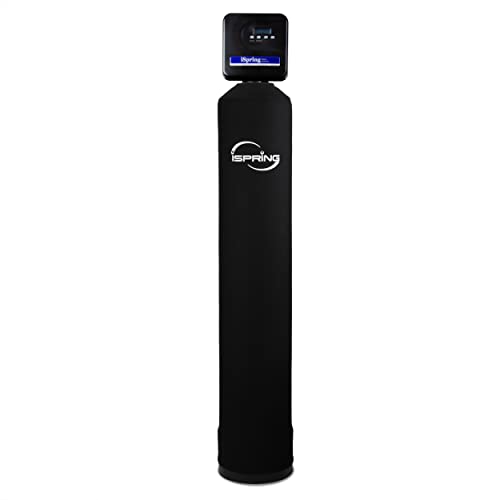
- Smart valve automates flushing and regeneration
- Up to 10 years for two-to-three-bathroom homes
- 15 GPM maximum flow
Best For: Households wanting programmable, low-maintenance whole-house filtration
Well Water Iron Defense
Waterdrop WHF3T-FG 3-Stage Whole House Filter

- SGS-tested iron and manganese reduction
- Seven-stage filtration for well-water impurities
- 15 GPM flow with 1-inch connections
Best For: Well-water homes with iron, manganese, sediment, or odor concerns
High-Flow Carbon Protection
iSpring WGB32B Commercial-Grade Filter

- Up to 99% chlorine reduction
- 15 GPM flow with 1-inch connections
- 100,000-gallon, approximately one-year capacity
Best For: Homes prioritizing chlorine, odor, sediment, and taste reduction
Heavy-Metal Monitoring
WF3-01 3-Stage Whole House Filter

- Reduces listed heavy metals, chlorine, sediment, and VOCs
- Pressure gauges and 180-day filter timers
- Adapters for 3/4-inch or 1-inch NPT plumbing
Best For: Users wanting broad filtration plus visible maintenance tracking
Top-Tier Sediment Protection

- Reusable 50-micron spin-down prefilter
- Up to 100,000-gallon stated capacity
- No power or wastewater required
Best For: High-flow whole-house well-water filtration
Mineral-Preserving Value
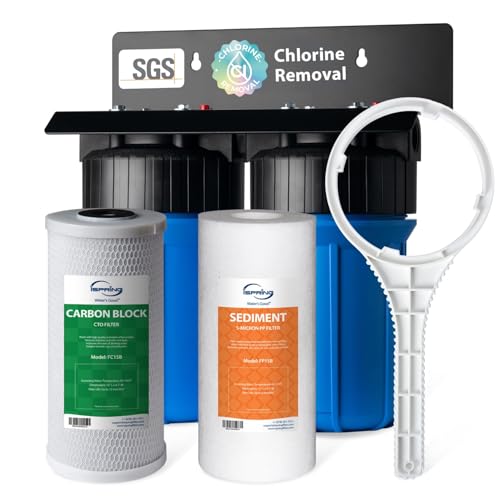
- No power needed for operation
- Up to 50,000 gallons or one year
- Retains minerals and does not lower TDS
Best For: Families wanting simple annual cartridge changes
Extended Cartridge Supply

- Includes nine replacement cartridges
- Built-in shutoff valves ease changes
- No power required; up to 15 gpm
Best For: Compact installations with planned cartridge savings
Best No-Power Value – Pro+Aqua Elite GEN2 PRO-100-E
For shoppers comparing energy-efficient well water filtration systems, the Pro+Aqua Elite GEN2 PRO-100-E stands out because it needs no electricity, regeneration, backwashing, or draining. Its three-stage design combines sediment, CRK media, and coconut-shell carbon filtration for homes using well or city water.
Best For: Small to medium households with one to three bathrooms that want whole-house filtration without ongoing power use.
Pros:
- No electricity, backwashing, regeneration, or draining required.
- Reduces sediment, selected heavy metals, hydrogen sulfide odors, chlorine, VOCs, pesticides, and other chemicals.
- 15 GPM maximum flow rate and stainless steel pressure gauges help monitor performance.
- Includes a five-year manufacturer warranty and lifetime U.S. technical support.
Cons:
- Filters are recommended for replacement every six months.
- Professional installation is specified in the product details.
- It does not provide UV purification.
This is a practical low-energy choice when easy maintenance and broad contaminant reduction matter more than automated operation. Check the supplied water conditions and installation requirements before choosing it for a well.
Best for Iron and Manganese – iSpring WGB32BM
The iSpring WGB32BM is a strong candidate among energy-efficient well water filtration systems for households dealing with iron and manganese. Its three-stage cartridge setup also targets sediment, chlorine, rust, odors, and several other contaminants while maintaining up to 15 GPM flow.
Best For: Well-water homes that specifically need iron and manganese reduction and prefer a cartridge-based system.
Pros:
- Third-stage media is designed to reduce up to 3.0 ppm iron and 1.0 ppm manganese.
- Three-stage filtration also addresses sediment, chlorine, rust, herbicides, industrial solvents, taste, and odor.
- 20-by-4.5-inch cartridges and one-inch connections support up to 15 GPM flow.
- Filters are rated for up to 100,000 gallons or one year, with DIY installation guidance available.
Cons:
- It requires cartridge replacement rather than a long-life tank media system.
- The product does not reduce total dissolved solids.
- It is not presented as a UV disinfection system.
Choose this model when iron and manganese are the primary well-water concerns and you want a relatively straightforward whole-house installation. Test your water first to confirm contaminant levels are within the stated reduction ranges.
Best Long-Life Well System – Aquasana WH-Well-CT-UVS
For buyers prioritizing long service intervals, the Aquasana WH-Well-CT-UVS combines carbon, KDF, UV, pre- and post-filtration, and salt-free scale control. It is designed specifically for well water and processes up to 500,000 gallons, making it one of the more comprehensive energy-efficient well water filtration systems in this group.
Best For: Households of four or more with moderate-hardness well water that want filtration, UV treatment, and scale control in one system.
Pros:
- UV is NSF tested and certified to NSF/ANSI Standard 55, Class B.
- Combines carbon and KDF filtration with UV and salt-free scale control.
- Rated for up to 500,000 gallons or five years and includes a five-year limited warranty.
- Operates at up to 14.7 GPM and does not require salt bags, backwashing, or cleaning for scale control.
Cons:
- It requires corded electricity for the UV component.
- Best performance is specified for water under 15 gpg hardness, 250 mg/L alkalinity, and pH below 8.3.
- The 57-inch-tall system may require substantial installation space.
This is the most feature-rich option here for well-water households that want long-lasting filtration plus UV treatment. Verify water chemistry, available space, and access to power before installation.
Best Set-and-Forget Option – iSpring WF150K
The iSpring WF150K suits shoppers who value automation over cartridge changes. Its digital smart valve automatically backflushes and regenerates the filtration media, while the programmable controls let you adjust flush intervals for your water quality and usage.
Best For: Homes with two to three bathrooms that want automated maintenance and a long-life central filtration system.
Pros:
- Designed to last up to 10 years for homes with two to three bathrooms.
- Automatic backflush and regeneration reduce routine maintenance.
- Lab-tested to meet NSF/ANSI 42 and 53 standards for stated filtration performance.
- Removes or reduces chlorine, lead, heavy metals, pesticides, herbicides, VOCs, and other contaminants.
Cons:
- The smart valve requires corded electricity.
- Homes with four to five bathrooms are given a shorter five-year service-life estimate.
- Automated backflushing and regeneration may use water and require a suitable drain connection.
This model is appealing when convenience and reduced filter-replacement work are priorities. It is less suitable if you specifically want a no-electricity system or want to avoid the water use associated with automated backflushing.
Well Water Iron Defense – Waterdrop WHF3T-FG 3-Stage Whole House Filter
For households comparing energy-efficient well water filtration systems, the Waterdrop WHF3T-FG is a practical cartridge-based option focused on iron, manganese, sediment, odor, and chlorine reduction. It delivers a stated flow rate of up to 15 GPM without requiring a separate power source.
Best For: Well-water homes dealing with iron and manganese concerns, rust, sediment, or odor.
Pros:
- SGS-tested reduction of 95.9% of iron and 99.7% of manganese.
- Seven-stage filtration across three cartridges targets iron, manganese, sediment, rust, chlorine, and odors.
- Supports up to 15 GPM and includes 1-inch inlet and outlet connections.
- Includes installation hardware and instructions for DIY setup.
Cons:
- The iron and manganese cartridge is expected to last 6–12 months, while the GAC cartridge is due about every 12 months.
- At 49 pounds and more than 26 inches high, it requires substantial installation space.
- The system is rated for water TDS up to 300 ppm.
Its specialized iron-and-manganese filtration makes it the most targeted choice here for well-water quality problems. Confirm your available space, TDS level, and cartridge replacement schedule before buying.
High-Flow Carbon Protection – iSpring WGB32B Commercial-Grade Filter
The iSpring WGB32B is a straightforward whole-house option for shoppers seeking energy-efficient well water filtration systems with no electrical power requirement. Its three 20-by-4.5-inch cartridges combine sediment filtration with carbon-block treatment at flows up to 15 GPM.
Best For: Homes wanting high-flow reduction of chlorine, sediment, rust, tastes, and odors while retaining minerals.
Pros:
- Reduces up to 99% of chlorine, along with sediment, rust, tastes, odors, herbicides, and more.
- Provides up to 15 GPM through 1-inch NPT inlet and outlet connections.
- 100,000-gallon capacity is listed as approximately one year of supply.
- DIY-oriented setup includes a manual, filter wrench, and three cartridges.
Cons:
- It is not designed to remove TDS or preserve minerals through reverse osmosis; minerals remain in the water.
- The supplied specifications support water TDS up to 300 ppm.
- A one-year limited manufacturer warranty is listed, and cartridges require periodic replacement.
This system is a good fit when flow rate and chlorine reduction matter more than dedicated iron or manganese treatment. It can be a practical low-power whole-house setup, but well-water users should verify that their specific contaminants match its stated capabilities.
Heavy-Metal Monitoring – WF3-01 3-Stage Whole House Filter
The WF3-01 combines sediment, carbon-block, and compound GAC/KDF filtration for shoppers evaluating energy-efficient well water filtration systems without a power connection. Its maintenance-focused design adds pressure gauges, service timers, drain valves, and flexible fittings for easier cartridge management.
Best For: Households seeking broad contaminant reduction with visible pressure and replacement reminders.
Pros:
- Targets lead, mercury, arsenic, cadmium, chromium, chlorine, VOCs, odor, rust, sand, and sediment.
- Multiple pressure gauges help identify clogging and plan cartridge changes.
- Built-in 180-day timers, pressure-relief and drain valves, and a housing brush support maintenance.
- Adapters accommodate either 3/4-inch or 1-inch NPT plumbing.
Cons:
- The supplied details list the installation type as under-sink despite the large three-filter format, so installation requirements should be confirmed.
- Its listed maximum flow rate is 15 GPM, but actual flow can vary as cartridges load with contaminants.
- The 31-inch height and 44-pound weight call for adequate mounting or floor space.
Among these options, the WF3-01 stands out for maintenance visibility and broad heavy-metal claims. Its gauges, timers, and service hardware are useful for homeowners who want more control over filter upkeep, provided the installation configuration fits their plumbing.
Top-Tier Sediment Protection – Express Water 3-Stage System
For shoppers comparing energy-efficient well water filtration systems, the Express Water Ultimate Protection Pro is a strong whole-house option that operates without electricity or wastewater. Its reusable 50-micron spin-down sediment filter helps protect the downstream cartridges while supporting flow rates up to 17 gpm.
Best For: Homes needing high-flow, whole-house filtration with reusable sediment prefiltration and long stated capacity.
Pros:
- Reusable 50-micron sediment filter can reduce replacement needs for the prefilter.
- Three-stage design includes sediment, activated carbon, heavy-metal, and anti-scale filtration.
- Supports up to 100,000 gallons and includes pressure gauges, quick-change cartridges, and a stainless steel stand.
- Manual operation requires no power and produces no wastewater.
Cons:
- At 66 pounds and approximately 29 x 8.5 x 30 inches, it needs a sturdy installation area.
- The listed filter life cycle is six months, so cartridge replacement remains part of routine maintenance.
- It is designed for water up to 800 ppm TDS, which may limit suitability for higher-TDS sources.
The combination of a reusable sediment element, substantial stated capacity, and no-power operation makes this a practical choice for well-water homes focused on flow and operating efficiency. Confirm the included cartridge stages and installation space against your water test before buying.
Mineral-Preserving Value – iSpring WGB21B 2-Stage System
The iSpring WGB21B is a straightforward choice among energy-efficient well water filtration systems because it uses mechanical and carbon filtration without electricity. Its two-stage setup targets sediment, chlorine, odors, cloudiness, and selected VOCs while retaining naturally occurring minerals rather than reducing TDS.
Best For: Families seeking a no-power, whole-house filter with annual cartridge changes and 1-inch ports for lower pressure loss.
Pros:
- A 5-micron polypropylene sediment filter captures dirt, sand, silt, dust, rust, and scale particles.
- The CTO carbon stage reduces chlorine, bad tastes, odors, cloudiness, and selected VOCs.
- Provides up to 50,000 gallons or one year of stated filtration for a family of four.
- Pre-assembled mounting bracket, filter wrench, and pressure-release valve simplify maintenance.
Cons:
- It does not reduce TDS, so it is not a substitute for a reverse-osmosis system when dissolved-solids reduction is needed.
- With two stages, it offers less specialized pretreatment than some three-stage systems.
- The supplied details list an operating pressure limit of 80 psi, requiring attention to household water pressure.
For a typical family wanting lower-maintenance filtration without a power connection, the WGB21B balances useful contaminant reduction with mineral retention. Its 50,000-gallon capacity and 15 gpm maximum flow are well suited to many whole-house installations, provided the source water matches its intended use.
Extended Cartridge Supply – 3-Stage Well Water Filter
This compact three-stage unit is worth considering when comparing energy-efficient well water filtration systems for a smaller installation or utility area. It uses water pressure rather than electricity and includes three complete sets of PP, GAC, and CTO cartridges, offering a stated 1.5–2-year supply for sediment, chlorine, and odor reduction.
Best For: Households prioritizing included replacement filters, compact installation, and convenient shutoff valves.
Pros:
- Includes nine replacement cartridges—three PP, three GAC, and three CTO filters.
- Three-stage filtration is designed to reduce sediment, chlorine, odors, and other listed impurities.
- Two built-in shut-off valves allow filter changes without turning off the main water line.
- Compact housing, 3/4-inch plumbing compatibility, and up to 15 gpm flow support flexible installation.
Cons:
- The listed filter life cycle is six months, so the included supply does not eliminate regular changes.
- It does not lower TDS or remove dissolved minerals.
- The supplied details identify sedimentation as the purification method, so buyers with specific well contaminants should test their water first.
The included cartridge inventory and integrated valves make this system particularly convenient for DIY-minded households seeking predictable maintenance costs. Its no-power design supports efficient operation, but a well-water test is important before relying on it for contaminants beyond the listed sediment, chlorine, and odor targets.
How We Picked These Energy-Efficient Well Water Filtration Systems
We focused on whole-house systems designed for private wells, including options with sediment, carbon, iron, manganese, heavy-metal, and UV treatment. We also considered filtration capacity, replacement intervals, pressure-gauge or smart-valve features, installation complexity, and whether the system can operate without excessive electricity or consumables.
Because well water varies significantly from one property to another, no single system is best for every home. A current laboratory water test should guide the final choice, especially when bacteria, arsenic, hardness, sulfur odor, or high iron is a concern.
Quick Comparison
- Best for broad three-stage treatment: PRO+AQUA Elite Series GEN2 PRO-100-E, Express Water, and similar multi-stage systems.
- Best for iron and manganese: iSpring WGB32BM.
- Best for UV disinfection: Aquasana WH-Well-CT-UVS.
- Best for reduced maintenance: iSpring WF150K with its smart valve and extended service design.
- Best for basic sediment and carbon filtration: Waterdrop WHF3T-FG and iSpring WGB21B.
Key Buying Factors for Energy-Efficient Well Water Filtration Systems
Match the Media to Your Test Results
Sediment filters capture sand, silt, and rust particles, while carbon helps reduce chlorine, some odors, and selected organic contaminants. Iron and manganese require appropriately rated media; standard carbon alone may not solve staining or metallic taste. If bacteria or viruses are detected, consider certified UV treatment or another properly sized disinfection method.
Check Flow Rate and Pressure Loss
Choose a system that can support the peak flow of your household without creating uncomfortable pressure drops. Compare the system’s rated gallons per minute with simultaneous showers, appliances, and outdoor fixtures. A pressure gauge can make filter loading easier to monitor.
Calculate Long-Term Operating Costs
Look beyond the purchase price. Compare cartridge capacity, replacement frequency, UV-lamp energy use, valve requirements, and proprietary media costs. Passive filter systems generally use little electricity, while UV systems require continuous power but provide an important disinfection benefit when appropriate.
Confirm Installation Requirements
Verify pipe size, available clearance, drain access, bypass-valve needs, and whether professional plumbing is recommended. Some well-water problems also require a softener, aeration tank, oxidation filter, or whole-house sediment prefilter.
Who Should Buy Which Energy-Efficient Well Water Filtration Systems?
Choose a three-stage system if your water has a mix of sediment, taste, odor, and general contaminant concerns. Select an iron-and-manganese-focused model when staining and metallic flavor are confirmed by testing. A UV-equipped system is the stronger fit for homes that need microbiological protection and have reliable electrical service. For homeowners who prioritize fewer routine interventions, a high-capacity system with a smart valve or extended service interval may justify its higher upfront cost.
Before ordering, compare certified performance claims, replacement-filter availability, warranty terms, and local water conditions. Proper sizing and timely maintenance matter as much as the number of filtration stages.