Better ventilation does not have to mean wasted energy. Today’s smart controllers, booster fans, ERVs, and exhaust controls can automate airflow around temperature, humidity, occupancy, and scheduling needs.
This roundup compares 10 options across whole-home, single-room, attic, register, and exhaust applications so you can match the control system to your home’s layout and ventilation goals.
Best 10 Energy-Efficient Smart Home Ventilation Controllers Picks for 2026
Smart Attic Cooling Pick
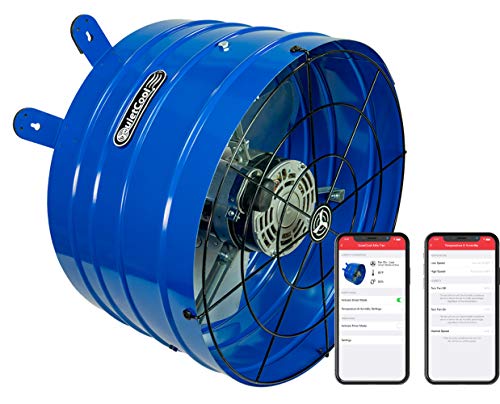
- App, thermostat, and humidistat control
- Up to 1,945 CFM on high
- Plug-and-play two-speed design
Best For: Gable-vent attic ventilation with smart control
Most Energy-Conscious ERV
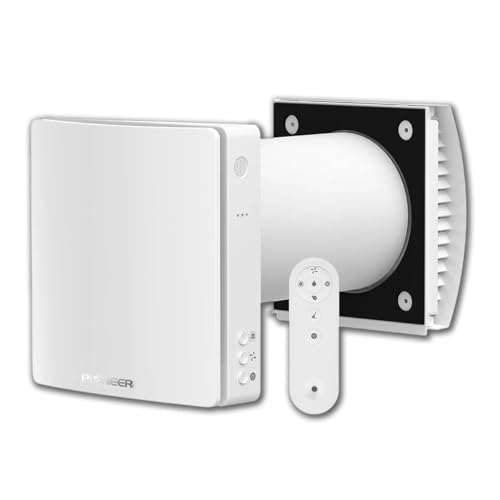
- 97% heat recovery
- Uses as little as 6 watts
- Wi-Fi control with F7 filtration
Best For: Quiet, efficient single-room fresh-air exchange
Whole-Home Automation Pick

- Wi-Fi climate programming
- EC motor for efficient operation
- Up to 1,600 CFM listed airflow
Best For: Automated whole-house or attic exhaust ventilation
Room-by-Room HVAC Control

- App and voice airflow control
- 7-day room scheduling
- No-drill drop-in installation
Best For: Room-level control of existing central HVAC airflow
Best Scheduled Exhaust Control

- Schedules precise hourly ventilation
- Includes ventilation and delay settings
- Supports bathroom fan and light switch setups
Best For: Bathrooms needing automatic exhaust scheduling
Best Wi-Fi Register Fan
Smart Wi-Fi Register Booster Vent

- Thermostat-driven automatic fan adjustment
- Wi-Fi app and button control
- Quiet 140 CFM airflow
Best For: Quiet remote airflow control in a compatible register opening
Best Balanced ERV

- 30–120 CFM adjustable airflow
- Dual brushless ECM motors
- MERV 13 filters included
Best For: Flexible, filtered energy-recovery ventilation
Best Retrofit Controller

- Temperature and humidity automation
- Three-speed solid-state control
- Includes remote and receiver
Best For: Automating compatible variable-speed exhaust fans
Best High-Tech Single-Room ERV
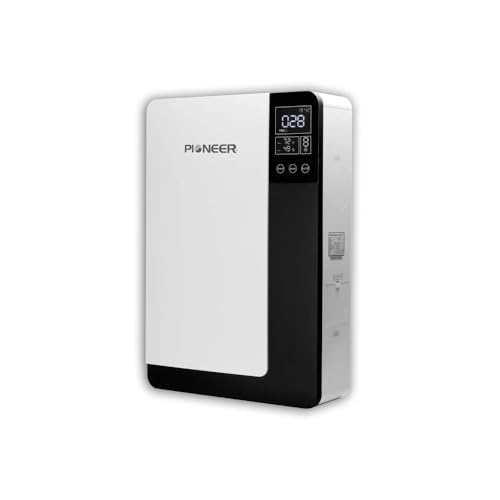
- PM2.5 and CO2 monitoring
- 82% efficient energy recovery
- Wi-Fi, touch, and remote control
Best For: Quiet, monitored ventilation for rooms up to 500 sq. ft.
Smart Attic Cooling Pick – QuietCool AFG SMT PRO-2.0
For shoppers comparing energy-efficient smart home ventilation controllers, the QuietCool AFG SMT PRO-2.0 combines a two-speed motor with app control, thermostat and humidistat functionality, and plug-and-play installation. It delivers up to 1,945 CFM while drawing 120 watts on high.
Best For: Gable-vent attic ventilation with remote smart control and straightforward installation.
Pros:
- Smart app control with thermostat and humidistat functions
- Two-speed PSC motor supports adjustable airflow
- Up to 1,945 CFM at 120 watts on high
- Plug-and-play design includes a 20-foot power cord
Cons:
- Designed for attic and gable-vent ventilation rather than room-by-room HVAC control
- High-speed operation uses more power than low-speed operation
The AFG SMT PRO-2.0 is a practical choice when your priority is smart attic exhaust ventilation without hardwiring. Its two speeds and environmental controls provide useful flexibility for managing attic conditions.
Most Energy-Conscious ERV – Pioneer 50 Single-Room ERV
The Pioneer 50 is a strong option among energy-efficient smart home ventilation controllers for single-room fresh-air exchange. Its ductless ERV uses an average of 8 watts, recovers up to 97% of heat, and adds Wi-Fi control, filtration, and built-in CO2 monitoring.
Best For: Single rooms needing quiet, filtered fresh air with minimal energy use.
Pros:
- Up to 97% heat recovery helps limit heating and cooling losses
- Low input power of 6 to 8 watts across listed speeds
- Wi-Fi app, handheld remote, and onboard controls
- F7 filter and washable prefilters help capture dust and other contaminants
Cons:
- Airflow is limited to up to 35.3 CFM
- Single-room design may require two units for balanced operation benefits
- Requires wall installation and a suitable 6-1/4-inch air duct opening
With low power consumption, heat recovery, and automated CO2 monitoring, the Pioneer 50 is especially well suited to bedrooms or other occupied rooms where quiet, continuous ventilation matters.
Whole-Home Automation Pick – AC Infinity CLOUDWAY T12
The AC Infinity CLOUDWAY T12 brings programmable control to whole-house attic ventilation, making it a notable choice among energy-efficient smart home ventilation controllers. Its PWM-controlled EC motor supports quieter, more efficient operation, while the Wi-Fi app manages temperature, humidity, VPD, schedules, timers, and speed.
Best For: Whole-house or attic exhaust ventilation with detailed climate-based automation.
Pros:
- Wi-Fi app provides remote monitoring and advanced programming
- Temperature, humidity, and VPD automation options
- Brushless EC motor is designed for quieter, more energy-efficient operation
- Offers up to 11 power levels and listed airflow up to 1,600 CFM
Cons:
- Listed noise level is 62 dBA
- Fixed installation and 12-inch duct size require a compatible setup
- Rated wattage is listed as 250 watts
The CLOUDWAY T12 stands out for control depth rather than simple plug-in convenience. It is a capable fit for users who want app-based climate data and multiple automation modes for a larger ventilation system.
Room-by-Room HVAC Control – Flair Smart Vent 6×10
The Flair Smart Vent takes a different approach to energy-efficient smart home ventilation controllers by regulating existing HVAC airflow at individual registers. It uses app, voice, and sensor data to open or close the vent, supports 7-day room schedules, and installs without drilling or wiring.
Best For: Homes seeking room-level temperature control from an existing central HVAC system.
Pros:
- Automates airflow using thermostat and room-temperature data
- Supports app control, voice control, and 7-day scheduling
- Drop-in replacement for compatible floor, wall, and ceiling vents
- Battery powered with included C batteries
Cons:
- Requires a Flair Bridge and a temperature sensor for each room
- Does not provide ventilation or fresh-air exchange by itself
- System compatibility and 6×10-inch register sizing must be confirmed
Flair is best viewed as a smart airflow-balancing accessory rather than an exhaust or ERV. Its room-by-room scheduling can help direct heating or cooling where it is needed, provided the required bridge and sensors are added.
Best Smart Register Booster – AC Infinity AIRTAP T4
The AC Infinity AIRTAP T4 is a practical choice for shoppers comparing energy-efficient smart home ventilation controllers for a 4 x 12-inch register opening. It automatically responds to HVAC activity, offers temperature-based triggers, and can help improve airflow in rooms with hot or cold spots.
Best For: Rooms with uneven temperatures and compatible 4 x 12-inch duct openings.
Pros:
- Automatically opens when the HVAC system activates and closes when inactive.
- Provides 10 speeds, temperature monitoring, timers, and customizable heating or cooling triggers.
- Supports the included IR remote, Alexa and Google Home voice control, and app-based alerts and automations.
- Uses a brushless PWM-controlled motor rated at 18 dB and up to 120 CFM.
Cons:
- Fits exclusively in 4 x 12-inch duct openings.
- Requires corded electric power and built-in installation.
The AIRTAP T4 combines detailed controls with quiet, automated airflow management. Measure the opening carefully before buying, since its specialized fit limits compatibility.
Best Scheduled Exhaust Control – AirCycler SmartExhaust SE1-W
The AirCycler SmartExhaust SE1-W offers scheduled bathroom ventilation control for shoppers seeking energy-efficient smart home ventilation controllers. Its microprocessor tracks fan operation, delivers programmed hourly ventilation, and can continue fan operation after the light is switched off.
Best For: Bathrooms where consistent scheduled exhaust and light-switch-linked fan control are priorities.
Pros:
- Provides separate ventilation and delay settings.
- Automatically subtracts manual fan operation from the programmed hourly ventilation time.
- Can replace a bathroom fan and light switch, with adjustable post-light-off operation.
- Uses a microprocessor-controlled design with screw terminals and IP54 specification.
Cons:
- Designed for bathroom fan and light switch setups rather than register boosting.
- Its programmed control may require more setup than a basic switch.
This controller is focused on dependable, scheduled exhaust rather than whole-home airflow management. It is a sensible fit when bathroom ventilation timing and automatic run-on are the main goals.
Best Wi-Fi Register Fan – Smart Wi-Fi Register Booster Vent
This smart register booster is aimed at shoppers comparing energy-efficient smart home ventilation controllers for a 4 x 10-inch register opening. Its dual thermostat design adjusts fan operation in response to room conditions, while Wi-Fi app control allows remote adjustments and programming.
Best For: Compatible 4 x 10-inch registers where quiet, app-controlled airflow adjustment is useful.
Pros:
- Uses thermostat-driven automatic on/off operation and real-time fan-speed adjustment.
- Offers button control plus mobile app access over Wi-Fi.
- Produces up to 140 CFM with stated noise as low as 16 dBA.
- Steel construction and two-way airflow are designed for broad coverage and durability.
Cons:
- Fits only 6 x 10-inch register vents according to the supplied product notes, despite the 4 x 10-inch title.
- The notes do not specify compatibility with Alexa or Google Home.
Its quiet operation, thermostat automation, and Wi-Fi access make this an appealing option for targeted room comfort. Verify the actual register dimensions before purchase because the supplied sizing information conflicts.
Best Balanced ERV – Intelli-Balance Elite Plus
For homeowners comparing energy-efficient smart home ventilation controllers, the Panasonic Intelli-Balance Elite Plus is a flexible ERV with adjustable airflow, energy recovery, and optional connected controls. Its brushless ECM motors automatically adapt speed for quieter, more consistent ventilation.
Best For: Whole-home or room-specific ventilation where balanced airflow, filtration, and flexible installation matter.
Pros:
- Adjustable airflow from 30 to 120 CFM with balanced, positive, or negative pressure settings.
- Dual brushless ECM motors are designed to maintain airflow while operating quietly.
- Includes dual MERV 13 filters and supports ceiling, wall, or floor mounting.
- Compatible with an optional Wi-Fi module, touchscreen control, and low-voltage timer.
Cons:
- Wi-Fi connectivity requires an optional module.
- Its broad installation and control options may require more planning than a basic exhaust fan.
Choose this model when you want customizable ventilation performance and energy recovery without giving up installation flexibility. It is especially appealing for projects that may later add smart controls.
Best Retrofit Controller – Smart Remote Exhaust Kit
The iLIVING ILG8SFRC is a practical option for energy-efficient smart home ventilation controllers when you already have a compatible variable-speed fan. It combines programmable temperature and humidity control with automatic cycling, speed adjustment, and a 24-hour timer.
Best For: Bathrooms, garages, workshops, warehouses, and kitchens using compatible variable-speed exhaust fans.
Pros:
- Automatically cycles the fan based on selected temperature and humidity levels.
- Offers low, medium, high, and automatic speed control through the solid-state controller.
- Dual temperature sensors monitor conditions at the receiver and remote location.
- Includes the receiver, remote, six-foot power cord, and batteries.
Cons:
- Compatible with variable-speed fans only.
- It controls an existing exhaust fan rather than serving as a complete ventilation system.
- The controller is corded and intended for indoor use.
This kit makes the most sense as a retrofit control solution. Its thermostat, humidistat, timer, and remote can help automate ventilation, but compatibility with the existing fan should be confirmed before purchase.
Best High-Tech Single-Room ERV – ECOasis 150
The Pioneer ECOasis 150 stands out among energy-efficient smart home ventilation controllers for single-room air-quality management. It combines Wi-Fi control with PM2.5 and CO2 monitoring, automatic eight-speed adjustment, filtration, and an 82% efficient energy-recovery heat exchanger.
Best For: Bedrooms, living areas, and other rooms up to 500 square feet where quiet, monitored fresh-air ventilation is a priority.
Pros:
- Built-in PM2.5 and CO2 monitoring can automatically adjust ventilation.
- Uses an 82% efficient heat exchanger while consuming 35W.
- Four-stage filtration includes activated charcoal and HEPA H10 filtration.
- Supports app, touchscreen, and wireless-remote control, with noise levels from 23 to 37.9 dB(A).
Cons:
- Designed for single-room, ductless wall-mounted installation.
- Its smart monitoring and multiple control options may be more than needed for simple exhaust ventilation.
- Filter performance depends on maintaining the included filtration system.
For buyers prioritizing connected monitoring and indoor-air-quality feedback, the ECOasis 150 is the most feature-rich choice here. Its low power draw, energy recovery, and quiet operation suit occupied living spaces better than utility-room applications.
How We Picked the Best Energy-Efficient Smart Home Ventilation Controllers
We selected these Energy-Efficient Smart Home Ventilation Controllers and compatible ventilation systems by comparing their control methods, installation formats, airflow roles, automation features, and likely energy-saving benefits. The list includes app-connected fans, thermostat and humidistat controls, programmable timers, register boosters, whole-house systems, and energy recovery ventilators. Because these products serve different parts of a home, the best choice depends on whether you need fresh-air exchange, exhaust, attic ventilation, or improved delivery from an existing HVAC system.
We also considered practical details such as installation complexity, duct or opening compatibility, noise expectations, remote access, and whether a product can operate automatically instead of relying on manual switching.
Quick Comparison
- Best for whole-home airflow: AC Infinity CLOUDWAY T12.
- Best for fresh-air exchange: Panasonic Intelli-Balance Elite Plus ERV.
- Best for single-room ventilation: Pioneer 50 or Pioneer ECOasis 150.
- Best for attic ventilation: QuietCool AFG SMT PRO-2.0.
- Best for HVAC registers: Flair Smart Vent or an AC Infinity AIRTAP booster.
- Best for exhaust automation: AirCycler SmartExhaust Time Switch.
- Best for remote fan control: iLIVING Smart Remote Control Kit.
Key Buying Factors for Energy-Efficient Smart Home Ventilation Controllers
Choose the Right Ventilation Job
A booster fan improves airflow through an existing register, while an exhaust fan removes stale or humid air. An ERV exchanges indoor and outdoor air while helping moderate temperature and humidity. Attic and whole-house fans address larger air volumes and require different installation conditions. Identify the problem before comparing features.
Check Sizing and Compatibility
Verify register dimensions, duct size, voltage, mounting location, airflow rating, and available clearance. For ERVs and whole-house systems, consider room size, duct routing, outdoor-wall access, and local ventilation requirements. A smart controller cannot compensate for an undersized or poorly matched fan.
Compare Automation Features
Temperature and humidity sensors are useful for demand-based operation, while timers help manage bathrooms, laundry rooms, and intermittent exhaust. Wi-Fi control adds scheduling and remote access, but confirm app support, network requirements, and whether the unit can still operate locally if the connection fails.
Consider Sound and Operating Cost
Look for published noise ratings and adjustable speeds when the fan will run near bedrooms or living areas. Efficient motors and automatic controls can reduce unnecessary runtime, but actual savings depend on climate, installation quality, duct resistance, and how the system is used.
Who Should Buy Which Energy-Efficient Smart Home Ventilation Controllers?
Choose the QuietCool option for smart attic heat management, or the CLOUDWAY T12 when you need broader whole-house circulation. Select a Pioneer unit or Panasonic ERV when controlled outdoor-air exchange is the priority. Flair and AIRTAP products suit rooms with uneven HVAC delivery, while the 2026 smart register fan is aimed at app-based register boosting.
For scheduled bathroom or utility-room exhaust, the AirCycler timer is the straightforward choice. The iLIVING kit is better for adding remote, programmable control to a compatible exhaust fan. Before buying, confirm the product’s dimensions and installation requirements, then prioritize the automation features that address your actual comfort or air-quality problem.